



















By Howard Whiteman
Murray State University
Most of us can relate, in one way or another, to the iconic scene in A Christmas Story when Ralphie and his younger brother Randy first set their eyes on the presents under the tree that Christmas day. Although Ralphie is looking for his prized Red Ryder BB gun, Randy just wants to play with his new toys. I can relate to both, but it is the latter than reminds us the most of the joyful exuberance of Christmas day for kids. Celebrations like Christmas, Eid al-Fitr, Hanukkah, and Kwanzaa are many things to many people, but for kids it is often a time to play until we just cannot play anymore.
It is not just humans that play in this way: other animals do it all the time, and not just our dogs and cats. A few years ago I was helping friends try to fill their elk tag on an inactive strip mine in eastern Kentucky. Although there wasn’t a lot of sign, we noticed the elk had been using some ponds regularly, so we set up above them and waited for the action to begin. What happened next was something none of us will ever forget.
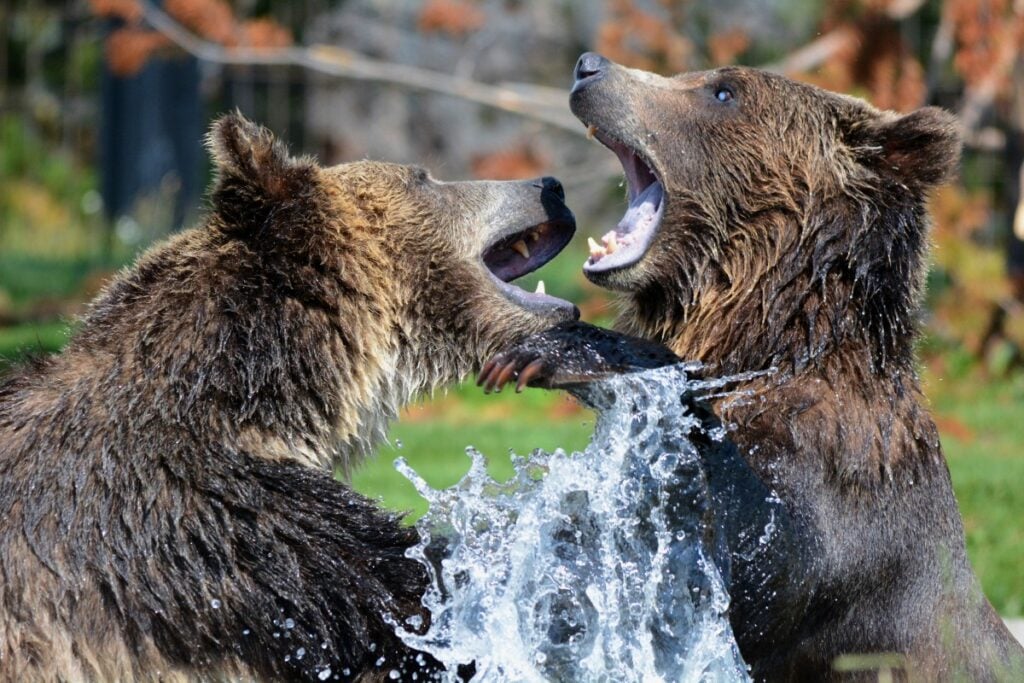
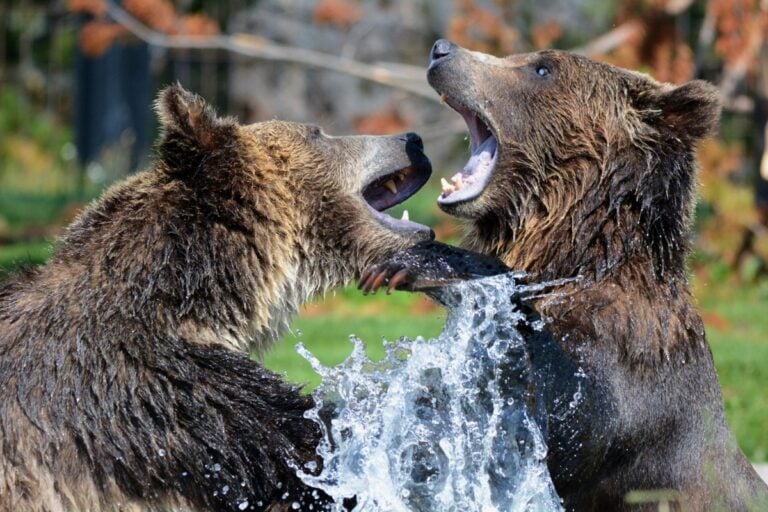
Rather than elk, it was two bears that emerged from the surrounding forest and approached the ponds. One bear was larger than the other, and I surmised at the time that it was a sow and her almost full-grown cub. The younger bear splashed in the water and mud, and then ran up to the sow. Suddenly, they were both on their hind legs, literally dancing with each other. The younger bear’s paws were full of mud, and he wasted no time spreading it all over his mom. It was obvious that they were having fun, and they alternated between chasing each other and dancing, each time on their hind legs, for the next 20 minutes. It was a show like I’ve never seen before.
Such play, however, is not unique just to bears and humans. That same fall I watched two young fox squirrels play “keep away” with a tiny corn cob. Using my binoculars from my tree stand, I could see that the cob didn’t have any corn left on it. The way they chased each other along the forest floor and up and down trees—all while the lead squirrel was trying to hold onto the empty cob with its mouth—made it clear they were just having fun. Squirrels chase each other all the time, often to sort out territorial disputes or to find mates, but the young ones are clearly doing it for the same reasons our kids do. They often alternate between who is the chaser and who is chased, and are simply playing with each other. The same could be said for many other mammals, including otters, raccoons, and deer.
Like A Christmas Story once again, many of us have known kids that play with their food, and other animals are again no exception. I once watched a young pine marten, which is a member of the weasel family, play with a vole he had trapped in a log. The marten was clearly there for the food, but he seemed to revel in the chase, as he pushed the vole from one side of a log to the other, literally playing a deadly game of hide and seek for 10 minutes, the marten’s tail twitching in anticipation. After finally capturing the vole, he played with it for a bit while it was still alive, exactly like cats will do, before finally dispatching and eating it. Many species play with their food in a similar way, from orcas playing catch with a seal or leopards, lions, and other large cats allowing their cubs to play with wounded prey, or even doing it themselves.
One could argue that the marten was not much different than the average human hunter. Many of us revel in the chase, and “play” with our prey, outwitting ones that we don’t ever plan to harvest, like young bucks or jake turkeys. Hunting with primitive weapons — particularly traditional bows with wooden arrows — is another way humans play with their prey, when a high-powered rifle would be much more efficient. Catch and release fishing, particularly with a fly rod, might be the ultimate example of this sort of play. Like many other animals, we enjoy the chase and the challenge while honing our skills.
Of course, nothing promotes playtime like toys. Children are often inundated with them this time of year, but let’s be honest: adults still play with toys, ours are just a lot more expensive, whether it be a new car, boat, golf clubs, or shotgun. Other animals play with toys as well. Those of us with pets often have crates — sometimes two of them — filled with dog or cat toys. Besides the fox squirrels I watched, bears, tigers, penguins, seals, and many other species play with toys, both in the wild and in captive situations like zoos.
Some species even make their own toys. I’ve found a few beaver toys over the years, basically wooden carvings strewn about near their ponds, and clearly having no other purpose than a plaything. One form I have found several times looks like a football, with the ends chewed into cones. Another toy was more intricate, and shaped like a dog bone. That beaver had spent quite a bit of time making it. It would be interesting to know whether the parents were making those toys for their offspring, of if the kits created them by themselves.
Whether we play with toys or each other, there are real benefits of play. Playing helps young animals learn how to navigate the world, and to hone skills like chasing, fighting, hunting, and even killing. It also begins the process of setting up dominance hierarchies that are often useful for social interactions later in life. In some species, reindeer games can set the stage for future relationships with other individuals, including mating, competition for resources or territories, and predation. Anyone that remembers high school will likely agree.
One way in which human play differs from other animals is in organized sports. Beavers may play with wooden footballs, but the only beavers scoring touchdowns are at Oregon State. Many sports, and the competition they bring with them, evolved from ritualized battles, allowing the participants to hone some of the same skills that they might need under less pleasant circumstances. Speed, strength, and strategy are all traits that are equally important on a football field, a basketball court, or the battlefield. Some equestrian sports also spring from this military background. Dressage, for example, began in ancient Greece, as soldiers on horseback became one with their horse, allowing them to make the very intricate moves necessary to stay alive and attack others with spears or swords, all while balancing on a horse’s back. Today dressage is literally ballet on horseback and is amazing to see, even if the participants have traded armor and spears for formal attire and top hats.
No matter what benefits can be gained from the experience, it is always fun to watch children of all ages, or the other animals we share the planet with, when they are at play. This is true whether it is your own kids, your pets, squirrels playing keep away, dancing bears, or the your favorite sports team. Reindeer games aren’t just for select individuals without shiny noses; they are for all of us, at all times of the year. Given all that is going on right now in the world, now is as good a time as any to enjoy a little play time, no matter how you do it.
Howard Whiteman is a professor of wildlife and conservation biology, director of the Watershed Studies Institute, and the Commonwealth Endowed Chair of Environmental Studies at Murray State University. He is a columnist for the NKyTribune.