












The riverboat captain is a storyteller. Captain Don Sanders shares the stories of his long association with the river — from discovery to a way of love and life. This a part of a long and continuing story.
By Capt. Don Sanders
Special to NKyTribune
Looking back into the ever-deepening well of river memories, so much is available to remember. Just reach in and grab a handful.
January was never the best month on the river, with bitter cold, floods, accidents, and destruction. A month better spent enjoying warmer climes elsewhere. But life goes on on the river. Somebody has to be out there, like it or not.
My grandmother, Edith LaVelma Rice Sanders Rosenfeldt, loved the river from the time she grew up along the Ohio River, where she soon recognized the various steamboats by their distinctive whistles. As a lass, Edith followed her older brothers, who dove and swam from the Greene Line Steamer’s wharfboat at New Richmond, Ohio.
One summer afternoon, Edith fell, or was shoved off the floating, wooden warehouse and dock into the river. She recalled being swept beneath the wharfboat and seeing objects on the river bottom by hazy sunlight filtering through the dimly lit water.
Edith couldn’t swim. Fortunately for her and future generations, a friendly hand reached out and pulled her from beneath the wharfboat.
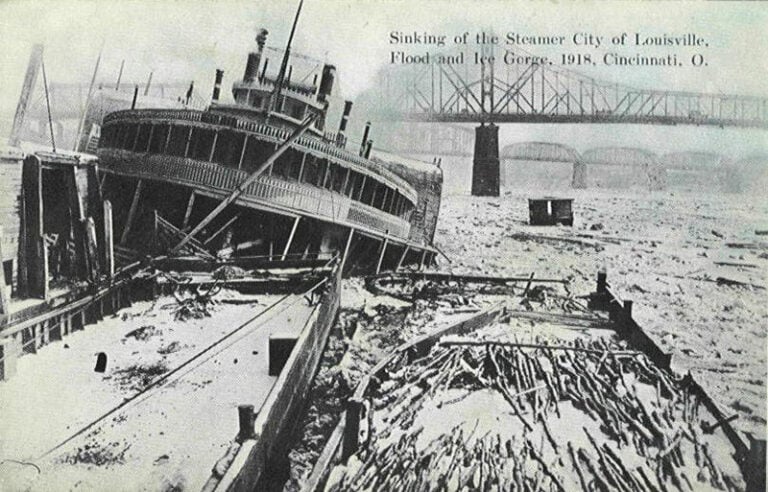
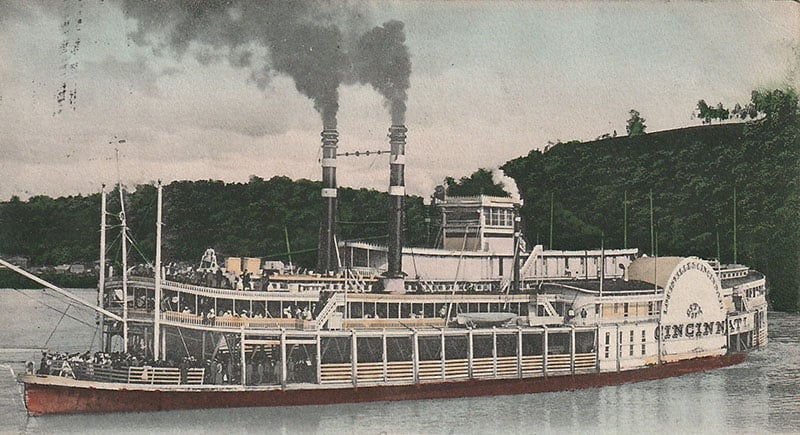
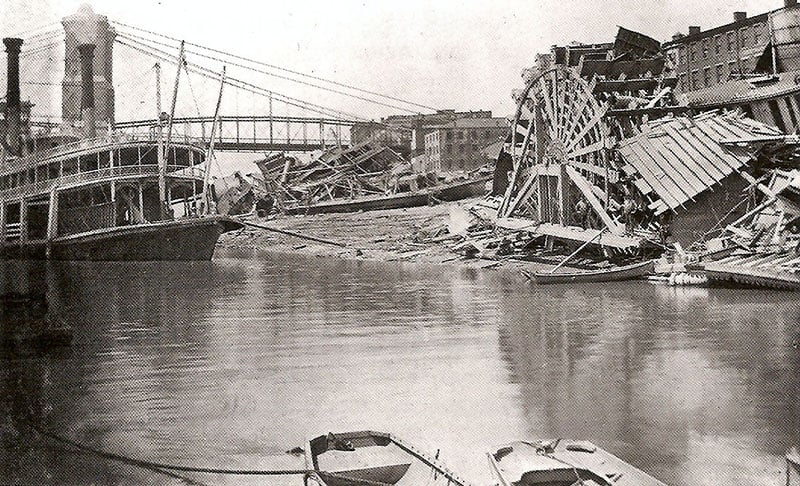
Grandmother’s most poignant river memory, though, recalled the last week of January 1918. Ice covered the Ohio River below Grandmother Edith’s kitchen windows in her home alongside the Roebling Suspension Bridge at the foot of Greenup Street, where it intersected Front Street in Covington, across the river from where the sidewheelers CITY OF LOUISVILLE (Way1095) and the CITY OF CINCINNATI (Way 1066) nestled in against the worsening temperatures and river conditions.
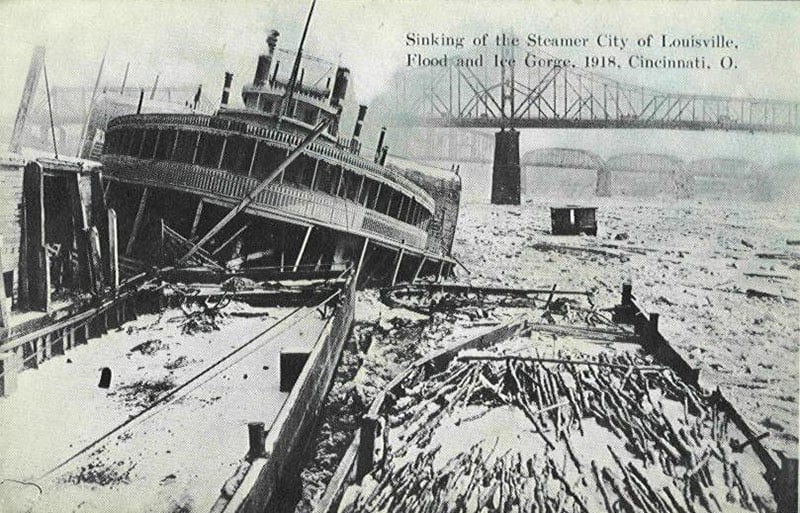
“I watched those great-big steamboats go under the ice,” Grandma recounted on several occasions.
Edith coveted her front-row seat to the biggest show in town, the Ohio River, where the flow of commerce passed beneath her windowsills decades before radio, television, the internet, and smartphones distracted people from participating in the world around them.
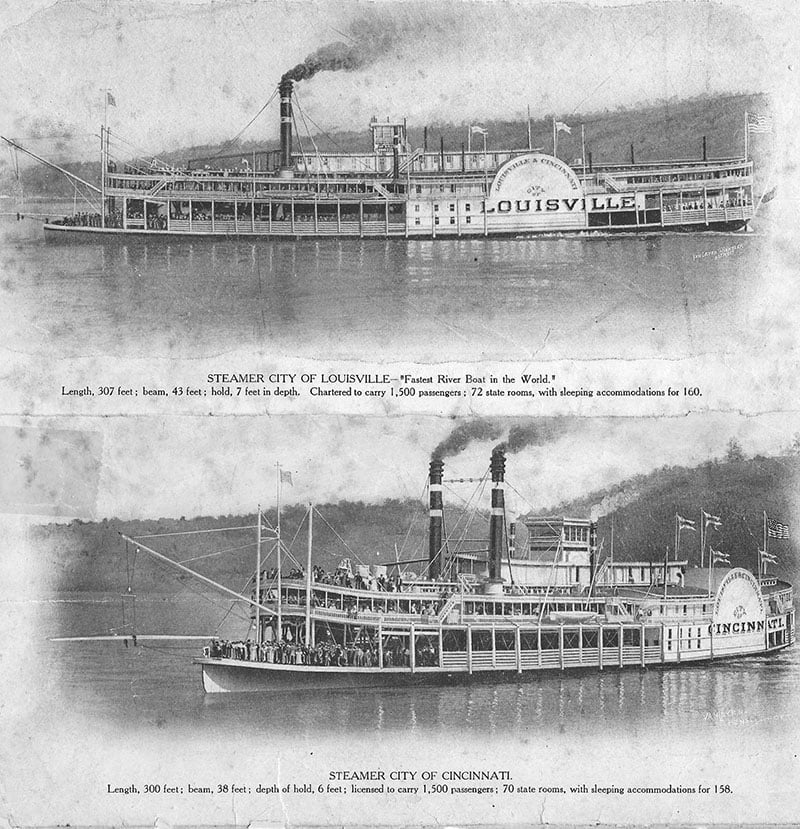
The sidewheelers CITY OF LOUISVILLE (COL) and CITY OF CINCINNATI (COC), both “brag boats” belonging to the Louisville & Cincinnati Packet Line, exclusively served the Louisville and Cincinnati market. The COL, built by Howard Shipyard in 1894, at 301 x 42.7 x 7-feet with Frisbie-built steam engines with 30” diameters and 10-foot piston strokes, had one or two more boilers than her companion.
Also built at Howard five years later, in 1899, the CITY OF CINCINNATI, 300 x 38 x 6-feet, had steam engines from the Anchor Line’s CITY OF HICKMAN, with one or two fewer boilers. The COC usually took a “back seat” to her Falls City companion. Of the two, I typically favor the COC more, though I worked with Captain Albert S. Kelley, whose first piloting gig was aboard the COL, named for his hometown.
After the demise of the COC and the COL, regular steamboat passenger connections between the two Ohio River cities never regained their prominence. By that late date, railroads had firmly established themselves as the preferred mode of travel for long-distance trips. The ice of January 1918 was the coup de grâce at the end of a grand and romantic era.
The Great Flood of 1937 occurred throughout much of January and into the beginning of February that year. The entire length of the Ohio River suffered its worst high-water episode in recorded history. However, oral histories of Native Peoples describe floods covering present-day Greater Cincinnati and Northern Kentucky “from hills to hills on both sides of the river.”
Damage along the Ohio stretched from Pittsburgh to Cairo, Illinois, with one million people left homeless, 385 were dead, and property losses reached $500 million, or $8.7 billion, today.
According to a presentation I gave aboard the BB Riverboat’s BELLE OF CINCINNATI in 2018:
”The flood was particularly difficult for Greater Cincinnati, where the river stayed above flood stage (52 feet) from January 18 until February 5 and reached its crest of 79.99 feet on Tuesday, January 26. Communities along the Ohio River in Kentucky, Indiana, and Illinois also faced severe problems. As the flood waters rose, gas tanks exploded, and oil fires erupted on the river. Parts of Cincinnati remained under water for nineteen days, and electricity and fresh water were in short supply. On January 24, after an accident dumped one million gallons of gasoline into the Ohio River from ruptured storage tanks, the water caught on fire in Camp Washington. On the very same day, the city’s water supply ran dry. That day was so terrible, Cincinnatians still remember it as Black Sunday.”
For the full story of the ‘37 Flood, please read my presentation in the article The River: Great Flood of 1937, recounted aboard BB Riverboat Belle of Cincinnati in 2018 from October 2024.
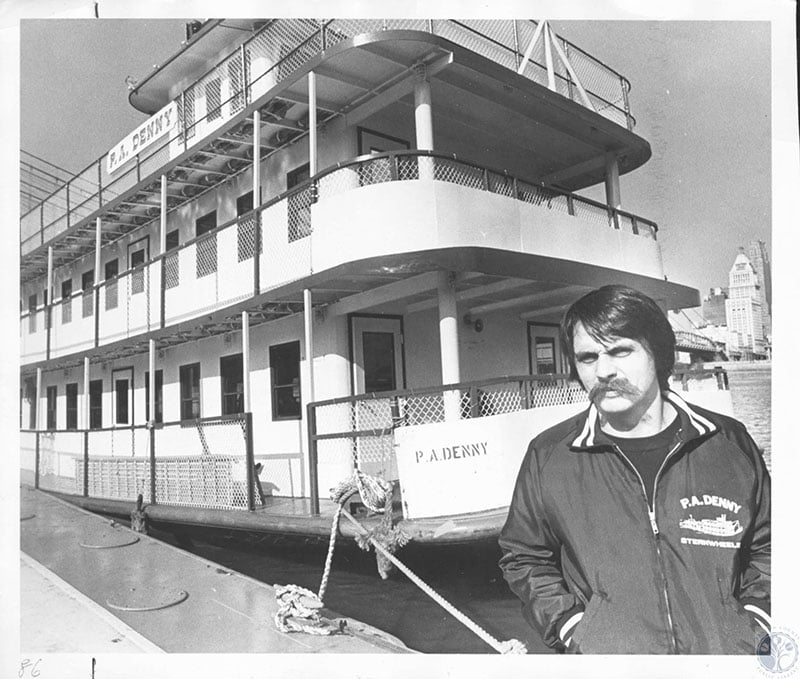
Will the Ohio River freeze or flood again this year, as it did in 1918 or 1937? It could do both, especially with so many uncertain and changing weather patterns and climate changes over the past several years. But the Ohio River hasn’t frozen over completely since 1978, the same year I piloted the P. A. DENNY from Charleston, WV, to New Orleans. In October, we overnighted the DENNY at the MIKE FINK floating restaurant in Covington. Before the morning departure, I found the water around the paddlewheel encased in ice, that early before winter. Nowadays, during October, shorts and T-shirts may still be in style.
As far as another record flood goes, that could still be a possibility. Hopefully, Old Man River stays within his bounds and doesn’t decide to rise and explore the extremities of his properties. We definitely don’t need another fluvial episode like what happened to the Ohio River Valley only 89 short years ago.
However, if another 1937-style flood besieges the river, Captain Ernest E. Wagner’s oft-repeated adage might describe the inundation best:
“It’s Katie bar the door!”
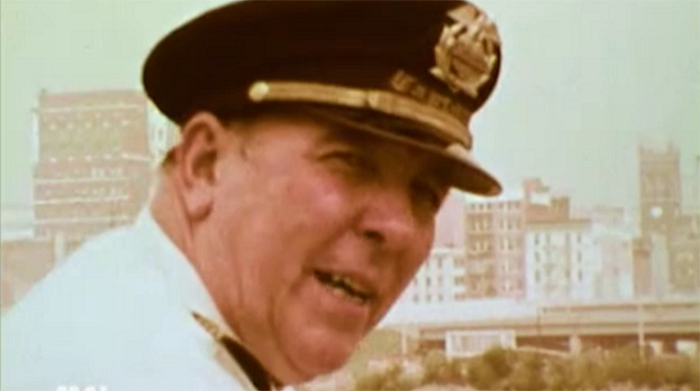
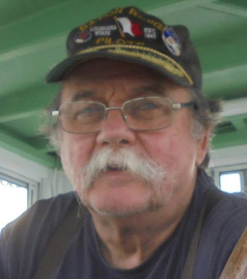 Captain Don Sanders is a river man. He has been a riverboat captain with the Delta Queen Steamboat Company and with Rising Star Casino. He learned to fly an airplane before he learned to drive a “machine” and became a captain in the USAF. He is an adventurer, a historian and a storyteller. Now, he is a columnist for the NKyTribune, sharing his stories of growing up in Covington and his stories of the river. Hang on for the ride — the river never looked so good.
Purchase Captain Don Sanders’ The River book
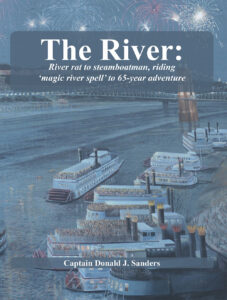
Capt. Don Sanders The River: River Rat to steamboatman, riding ‘magic river spell’ to 65-year adventure is now available for $29.95 plus handling and applicable taxes. This beautiful, hardback, published by the Northern Kentucky Tribune, is 264-pages of riveting storytelling, replete with hundreds of pictures from Capt. Don’s collection — and reflects his meticulous journaling, unmatched storytelling, and his appreciation for detail. This historically significant book is perfect for the collections of every devotee of the river.
You may purchase your book by mail from the Northern Kentucky Tribune — or you may find the book for sale at all Roebling Books locations and at the Behringer Crawford Museum and the St. Elizabeth Healthcare gift shops.
Click here to order your Captain Don Sanders’ ‘The River’ now.