














Last week I entered my class with a burning question. “How many of you have heard of Artemis?” Blank, questioning stares replied. Then one student in the front row raised her hand and said “Do you mean the space mission?”
I have to admit I was surprised, happy, and sad that only one of my students knew about Artemis, having only learned about it myself recently. Surprised because I really thought that the younger generation would have heard about it, happy because I realized that my personal lack of knowledge was perhaps not that abnormal, and sad because here we have the most important space mission in the past 50 years, and no one seems to know about it.
I hope you know about it, or at least have heard something about it, but I have since questioned more students as well as a number of faculty and administrators that are all very science savvy, and no one realized that the Artemis II launch was happening in the next few weeks. Some vaguely knew that a trip to the moon was in the works, but none of them realized that the launch was upon us.
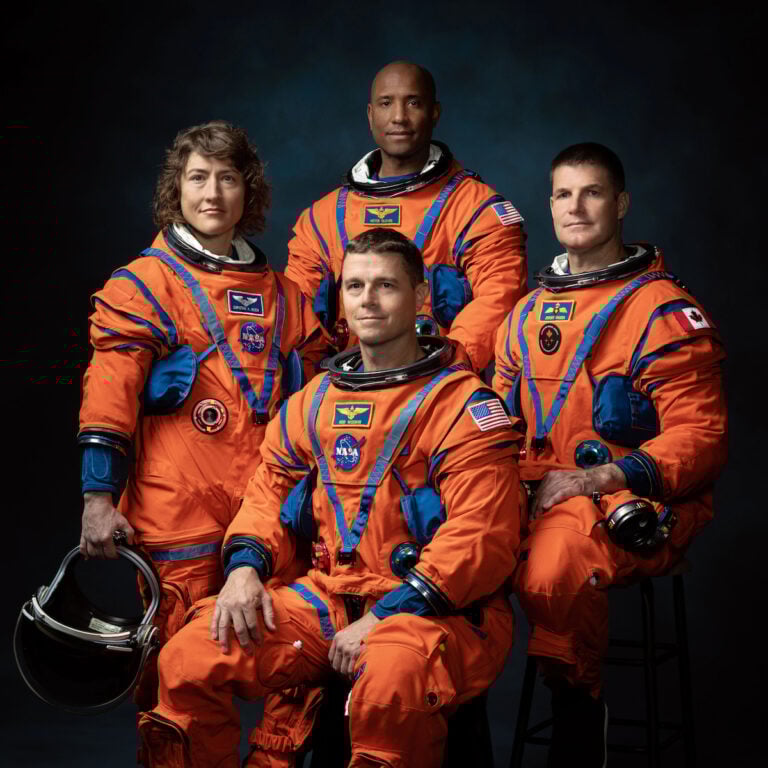
Aptly named after the ancient Greek goddess and twin sister of Apollo, the Artemis II mission will send four astronauts around the moon and test new technology NASA has developed for such travel. The hope is that Artemis II will pave the way for future lunar landings and a base on the Moon, which will make exploration of Mars a viable next step. Artemis I was a successful unmanned test mission in late 2022, but Artemis II is a giant step forward, sending astronauts further away from Earth than we have been since the last Apollo mission in 1972.
Why isn’t all of this a bigger deal? To me, this limited knowledge about Artemis II reveals a lot about the state of science, our government, the media, and our society.
Scientists are famously bad at tooting their own horns, with few exceptions. Communicating and promoting science is critically important to society, as each and every one of us lives better and more productive lives because of the knowledge and technological advances that are produced by scientists and engineers. Science literacy is critically low in the U.S. right now, and yet scientists continue to shy away from learning how to communicate what we do to the general public. The current distrust of science, spread of disinformation, and “doing your own research” trend stems from this lack of communication and understanding. Scientists have to do a better job of making science accessible, interesting, understandable, and even entertaining.
Honestly, though, what is more entertaining than space travel? This isn’t science fiction, part of the Star Wars universe. We are about to travel back to the Moon.
You would think that our government would make a huge deal about this amazing milestone, this tremendous opportunity for new science and exploration, or perhaps just the spectacle. The fact that Artemis II is not being promoted at all suggests a clear disconnect between our government and the value that they place on the science that we fund through our tax dollars.
American leadership promoted our exploration of space during the Apollo missions not only for the scientific and technological benefits that we are still enjoying to this day, but also as a point of national pride, the so-called “space race” with what was then the USSR. Today, China is working hard to land astronauts on the Moon by 2030, yet we have no space race to root for Team America. It’s a lost opportunity of leadership, which would help reunify a very divided nation.
In some ways, I’m more surprised by the media. The lack of media attention on what is one of the greatest science and technology events in the past half-century tells us everything we need to know about American culture and how it has changed over time. Science is rarely at the forefront of America’s thinking, but now it seems to be almost wiped from our brains. It is insult on top of injury that I only learned of Artemis by surfing YouTube, and I’m a scientist; you would have thought YouTube’s preference algorithm would have sent me some Artemis news a long time ago. Ironically, the only reason we have YouTube, social media, and the smart phone we surf the internet with is because of science and technology.
All of these issues spell problems for our society. Our lack of interest in science, our science illiteracy, and the value we put on scientists is a failure of our culture, one with real consequences, sometime fatal.
Aversion to vaccines is not just about individuals “doing their own research”; it’s about public health and the potential for the next plague. Over 7 million people died due to COVID, but it could have been a lot worse without the development and implementation of new vaccines. The unproven “cures” that were promoted at the time didn’t help. Before vaccines, measles was a universal childhood disease, with more than half a million cases each year. It was functionally eliminated from the U.S. in 2000, but due in part to unscientific fears about a vaccine that has been around since before we landed on the Moon, outbreaks have become more common.
Climate disinformation has slowed our transition to a carbon-neutral future. Every day that our society ignores the warnings of climate scientists we go into debt, both in terms of the lives that will be lost and the dollars that will need to be spent to deal with the problems that we have continued to ignore.
This debt accumulates because of corporate profits, avoidance of difficult decisions, and our inability to work together as a nation or a planet on a common goal. Congress learned about climate change from NASA scientists in 1988, yet here we are, living on a slowly burning planet with melting poles and rising seas.
If nothing else, the Artemis missions, like it’s twin Apollo did in the 1960s, tell us that humans can come together and solve problems that were once thought unsolvable. These space missions are a symbol of hope that, with improved communication, we will begin to invest more in science, and solve even more problems, both in space and here on Earth. But none of that will happen if our society doesn’t know, and appreciate, that the problem even exists.
We will learn many things from Artemis II. But perhaps our first lesson is the importance of understanding and communicating science.
Dr. Howard Whiteman is the Commonwealth Endowed Chair of Environmental Studies at Murray State University and an occasional columnist for the NKyTribune.