












Valentine’s Day is saturated with language. Captions celebrate “doing life with you.” Films equate grand gestures with genuine connection. What often goes unexamined is how words function inside relationships.
Communication and social psychology research consistently show that language does more than express information; it constructs reality. Words signal security and power, telling people, (implicitly or explicitly) whether they’re valued, believed or safe — or whether they must shield themselves for love.
Abuse, which isn’t limited to physical violence, is often profoundly communicative, living in patterns of correction, guilt and control expressed through language. It’s often subtly manipulative and cumulative: control disguised as concern and surveillance framed as care. And, crucially, abuse persists precisely because it masquerades as love.
Most directly, in emotionally abusive relationships, damage may be inflicted via word choice — language wielded explicitly to wound. Partners displaying these patterns deploy language with an edge: barbed phrasing, cutting comparisons, or comments uttered (even under one’s breath) without care. Over time, this communication teaches people to chronically brace for harm.
In contrast, partners engaging in emotionally safe expression attune their words during conflict; they consider tone, timing and modality. When words express compassion, conflict can lead to repair.
This isn’t idealized love; it’s safe, caring communication.
Harmful language can do heavier, indirect work if, for example, one partner routinely instructs the other on how the targeted partner “should” act. This might mean dictating how someone navigates personal relationships or interprets experiences; the abuser reframes autonomy as error. Blame, too, can be subtly embedded in language. Statements that make sense superficially (e.g., “if you wanted to, you would,”) flatten complex realities. Over time, these messages erode people’s trust in their own perceptions, communicating that they must decipher and internalize another person’s criteria for love. Healthy communication expands rather than replaces a partner’s trust in their own perceptions.
Language also matters when vulnerability is expressed.
For example, when emotional disclosures are framed as accusations (e.g., “you make me feel this way”), the language doesn’t invite dialogue; it reallocates power. It anchors one person in the role of perpetual victim while stonewalling the possibility of repair.
Imagine a partner sharing those same feelings without assigning blame. Perhaps: “this was painful for me, and I want to work through it together.”
Our words are a choice; another is silence.
Partners employing healthy communication patterns remain engaged when conflict occurs, sharing information without weaponizing silence. Compassion and integrity serve as their North Star and thesaurus. Abuse festers when people build walls around empathy and accountability through things they don’t say.
These patterns are not abstract. I’ve seen loved ones devastated by unkind words from romantic partners. A heartbreaking refrain is “I began to shrink myself.” That’s why I felt compelled to write this piece, as a researcher and as a woman.
If you see yourself in these scenarios, I see you.
I encourage you to reflect: have you unconsciously diminished your needs to preserve peace or protect your partner’s insecurity? If so, the language that catalyzed your shrinking is abuse. Call it by its name.
But there’s hope. Words also can be harnessed for good.
I study the Papageno effect: a phenomenon in which stories of care, connection and realistic paths through distress reduce risk of suicide. Hopeful messages and stories protect people by reminding them that support exists, even when things feel unbearable. (Stigmatizing language increases risk; it’s why naming abuse matters). Although Papageno is typically associated with news coverage, the principles apply to interpersonal dialogue. Communicating hope is protective; it can rebuild what emotional abuse dismantles. I’ve seen it, and I’ve experienced it.
Put simply: words carry enormous meaning.
Because language can either erode safety or protect it, the stakes of everyday communication are clear: it’s a public health issue. The same words that build safety in relationships can remind someone that their pain or confusion isn’t a burden.
This Valentine’s Day, I invite you to ask yourself how your loved ones’ words impact you. Do you feel safe, or are you slowly disappearing? Also: how are you communicating with those you love?
Words matter.
Learn more about suicide prevention at ukhealthcare.com.
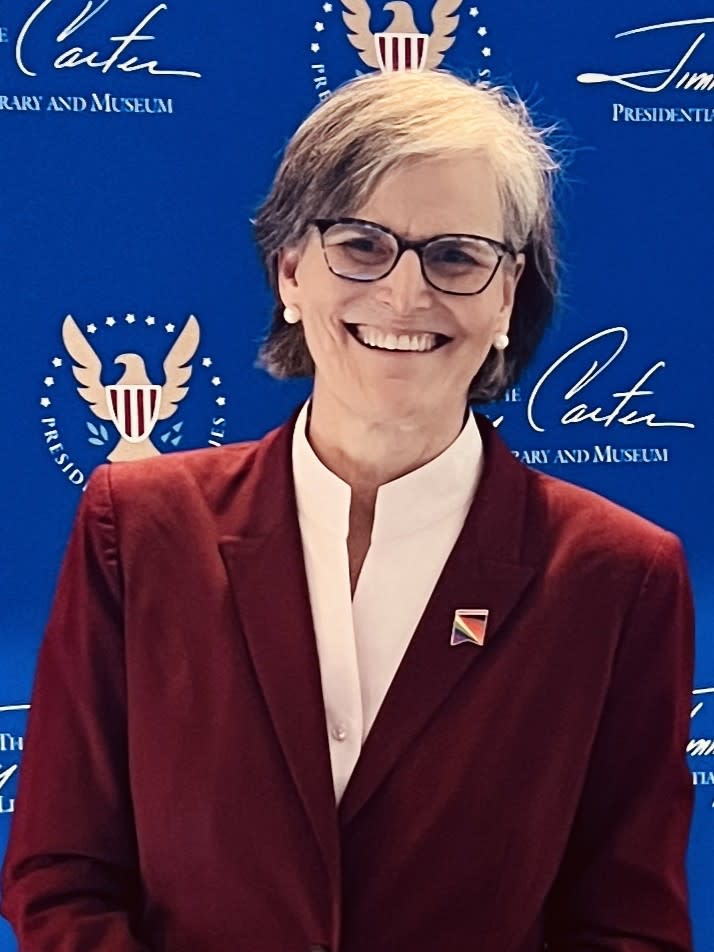
Dr. Sarah Geegan, PhD, is an assistant professor in the University of Kentucky College of Communication and Information and researches how messages shape meaning, attitudes and behavior in suicide prevention and mental health.