






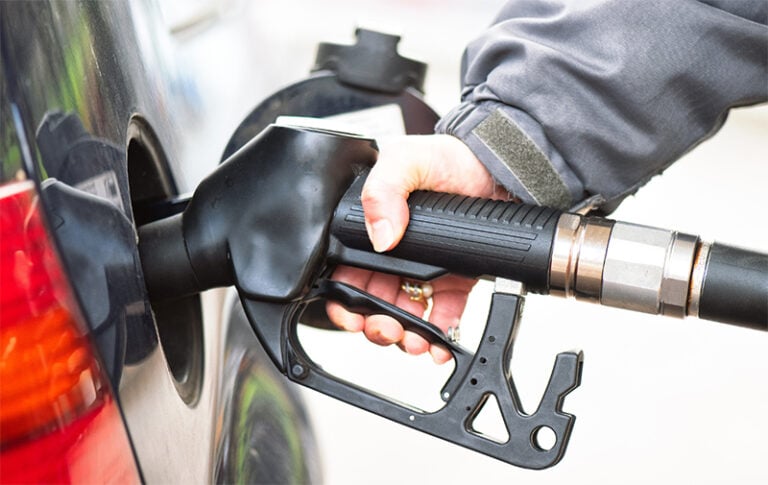







High gas prices have returned sharply during the recent conflict in the Middle East, leaving many drivers facing unexpectedly high costs at the pump.
After a period of relatively stable and low gas prices, the national average price for regular unleaded gas — which had been below $3/gallon since early December 2025 – quickly jumped following the military action in Iran that began on February 28. As of Sunday, March 8, the national average gas price had climbed 47 cents to $3.45 and the average in Kentucky was at $3.11, up 48 cents in the past week.
“As drivers, we can’t control the global fuel market but we can control how efficiently we use every gallon,” said Lori Weaver Hawkins, public and government affairs manager, AAA Blue Grass. “Additionally, there is uncertainty about how high prices will go and how long they will stay high, but there are simple actions drivers can take to improve their gas mileage and save money at the pumps.”
From regular car care to using resources for gas discounts and adapting the way we drive, motorists can follow these tips from AAA to lessen the pain at the pumps:
Vehicle maintenance
• Maintain your car according to the manufacturer’s recommendations. Modern cars don’t need “tune-ups,” but regular service will ensure optimum fuel economy, performance and longevity.
• Take your car to a repair shop as soon as possible if the “Check Engine” light comes on. This indicates a problem that is causing excessive emissions and likely reducing fuel economy.
• Keep tires properly inflated. Underinflation reduces fuel economy, but more importantly, tires low on air degrade handling and braking, wear more rapidly and can overheat and blow out.
The daily drive
• Slow down and drive the speed limit. On the highway, aerodynamic drag causes fuel economy to drop off significantly as speeds increase above 50 mph.
• Avoid “jackrabbit” starts and hard acceleration. These actions greatly increase fuel consumption.
• Avoid extended idling to warm up the engine, even in winter. It’s unnecessary and wastes fuel.
• Avoid prolonged idling in general. If your car will be stopped for more than 60 seconds, shut off the engine to save fuel. Many newer cars have automatic engine stop-start systems that do this.
• When driving in town, adjust your speed to “time” the traffic lights. This reduces repeated braking and acceleration that consume additional fuel.
• When approaching a red light or stop sign, take your foot off the gas early and allow your car to coast down to a slower speed until it is time to brake.
• Accelerate smoothly with light to moderate throttle. This allows the automatic transmission to upshift into higher gears sooner, reducing engine rpm and saving fuel.
• Use cruise control to help maintain a constant speed and save fuel. However, never use cruise control on slippery roads because a loss of vehicle control could result.
• If your car has a manual transmission, upshift as soon as you can without “lugging” the engine. When practical, you can also save fuel by skip-shifting – for example, going directly from first gear to third.
Don’t be “fueled” into wasting gas
• The practices above will help improve fuel economy. Also, keep these more general fuel-saving tips in mind:
• Minimize your use of air conditioning. Even at highway speeds, open windows have less effect on fuel economy than the engine power required to operate the air conditioning compressor.
• Combine errands into one trip and travel during off-peak times when possible.
• If you own more than one car, choose the most fuel-efficient option for each trip.
Other tips and tricks
• Shop around for the best gas prices. Drivers can use tools such as the free AAA mobile app to find and compare current gas prices closest to their location.
• Take advantage of discounts. Fuel retailers, grocery store chains or discount clubs sometimes offer discounts on each gallon of gas purchased or based on your spending or accumulation of points for shopping there. There are also credit cards that provide fuel discounts or cash-back bonuses on fuel purchases.
• In hot weather, park in the shade or use a windshield sunscreen to lessen heat buildup inside the car. This reduces the need for air conditioning (and thus fuel) to cool down the car.
• Remove unnecessary and bulky items from your car. It takes more fuel to accelerate a heavier car, and the reduction in fuel economy is greater for small cars than for larger models.
• Minimize your use of roof racks and remove special carriers when not in use. On the highway, even an empty bike, canoe or ski rack can reduce fuel economy, and a loaded rack or car-top container will have a major effect on gas mileage.
• AAA research has found that unless premium fuel is recommended or required by your car’s manufacturer, it provides no added benefit. Motorists should refer to their vehicle’s owner’s manual to check which type of gasoline is recommended for their engine.
AAA Blue Grass