












By David Rotenstein
NKyTribune reporter
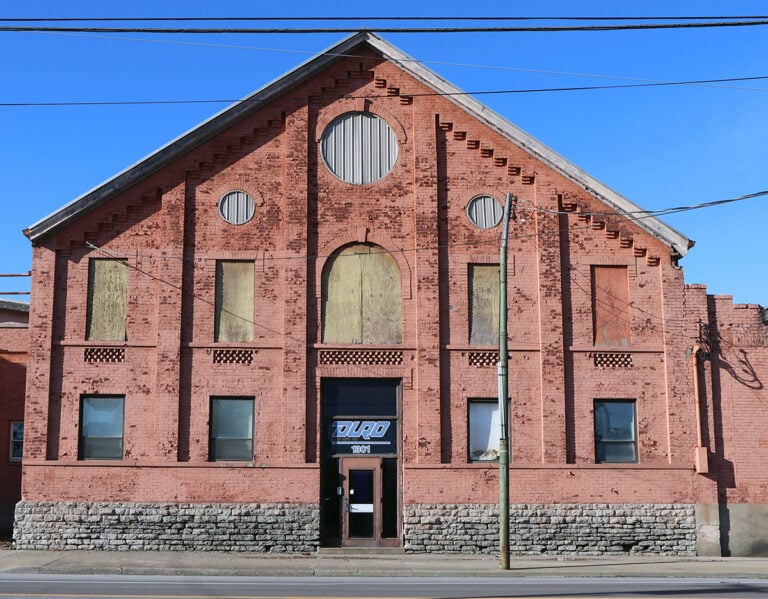
There was lots of talk about history during the recent press conference announcing redevelopment plans for a Covington industrial site. The City of Covington and several partners are finalizing a deal to buy an eight-acre site last used by the Duro Bag Manufacturing Company.
First used more than 150 years ago as a railroad repair facility and offices, it became a production facility for one of the nation’s biggest shopping bag manufacturers.
“This is a site filled with meaning, history and potential,” Kenton County Judge/Executive Kris Knochelmann told reporters at the press conference.
Always interested in a little local history, the Northern Kentucky Tribune wanted to learn more about the property’s past.
The Railroad Years
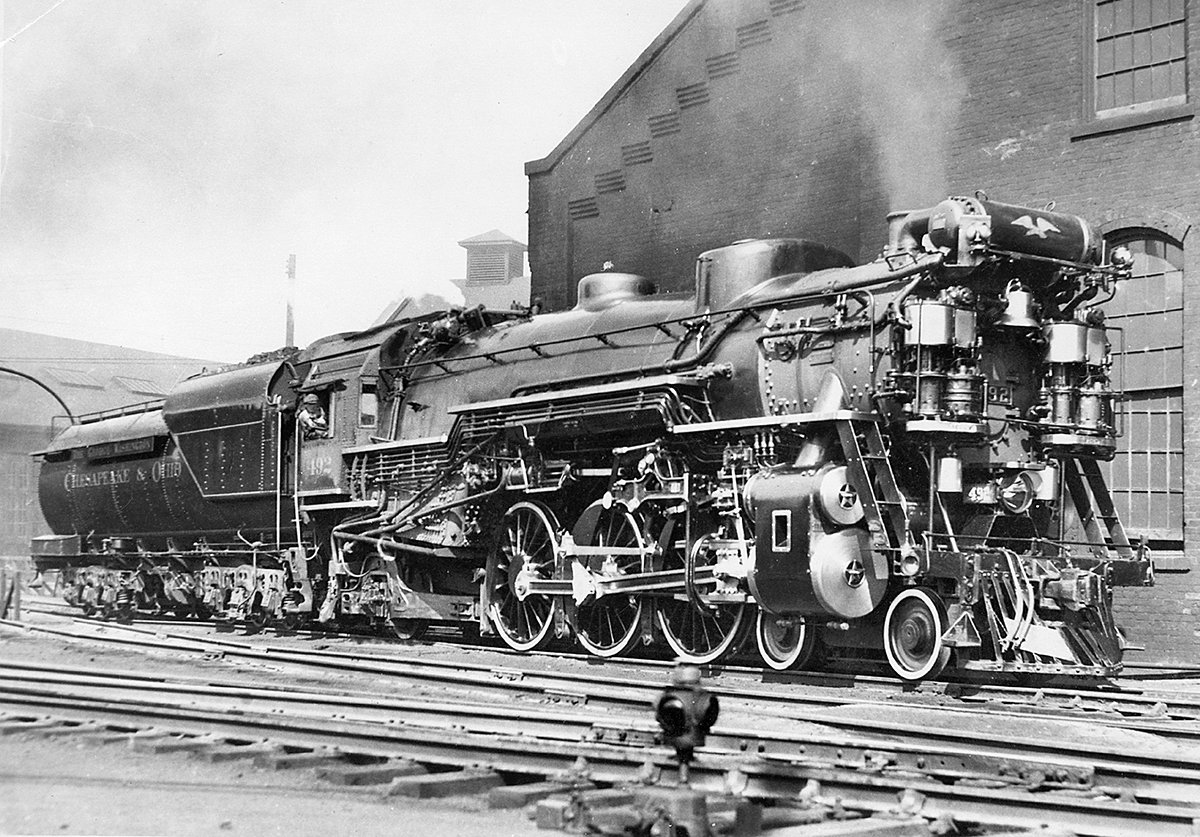
In the 1850s, Covington became the northern terminus for the Covington and Lexington Railroad. Ninety-nine miles of track connected Lexington to Covington by the time the route was completed in 1854.
Passengers and freight not remaining in the city crossed the river into Cincinnati — originally by ferry and after 1867, via John Roebling’s suspension bridge and later railroad bridges.
The history of American railroads is one of frequent name changes, mergers, business failures, and leases for tracks, facilities and rolling stock — the cars used to transport people, livestock, commodities and finished products.
In 1871, the Covington and Lexington Railroad’s name was changed to the Kentucky Central Railroad. By the turn of the 20th century, the old railroad had been absorbed by big trunkline railroads, the Louisville & Nashville and the Chesapeake & Ohio (C&O) railroads. When the railroad industry collapsed in the 1960s, the Chesapeake & Ohio’s freight division became part of the CSX Corporation (now known as CSX Transportation).
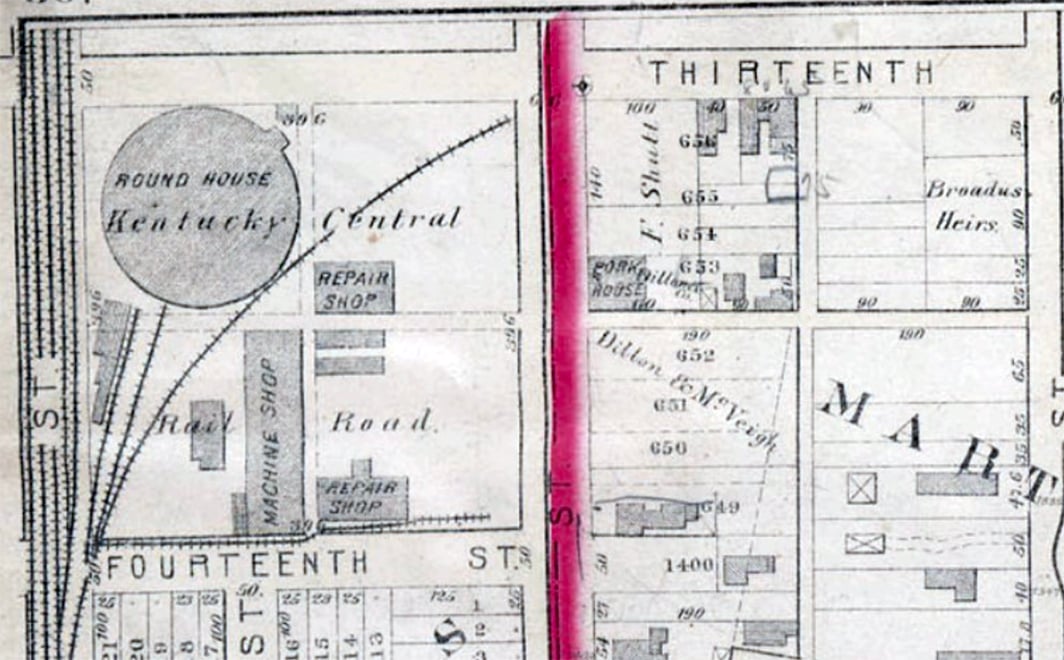
There aren’t many surviving histories of Covington’s railroad facilities. The earliest depiction of repair shops and a roundhouse is a Covington atlas published in 1877. It shows a roundhouse at the corner of 13th and Washington streets, a machine shop and two repair shops.
“The round-house, which is a fine building, can house 30 locomotives,” wrote D.J. Kenny in a Cincinnati guidebook published in 1875.
By 1894, then owned by the C&O Railroad, the roundhouse had been relocated south to the corner of 14th and Washington streets. Fire insurance maps show that it had been changed from a circular to a semi-circular plan.
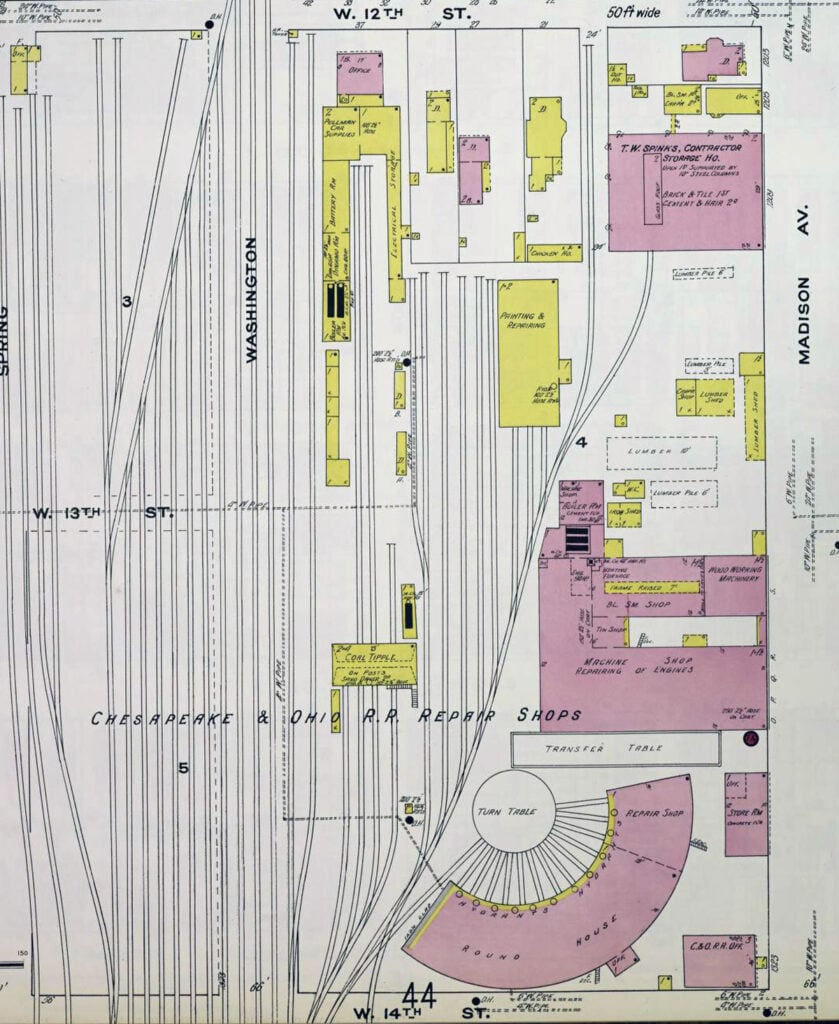
In 1904, the C&O built a brick four-story office building at the complex. A tornado in 1915 seriously damaged the property. The office building and roundhouse were repaired and rebuilt.
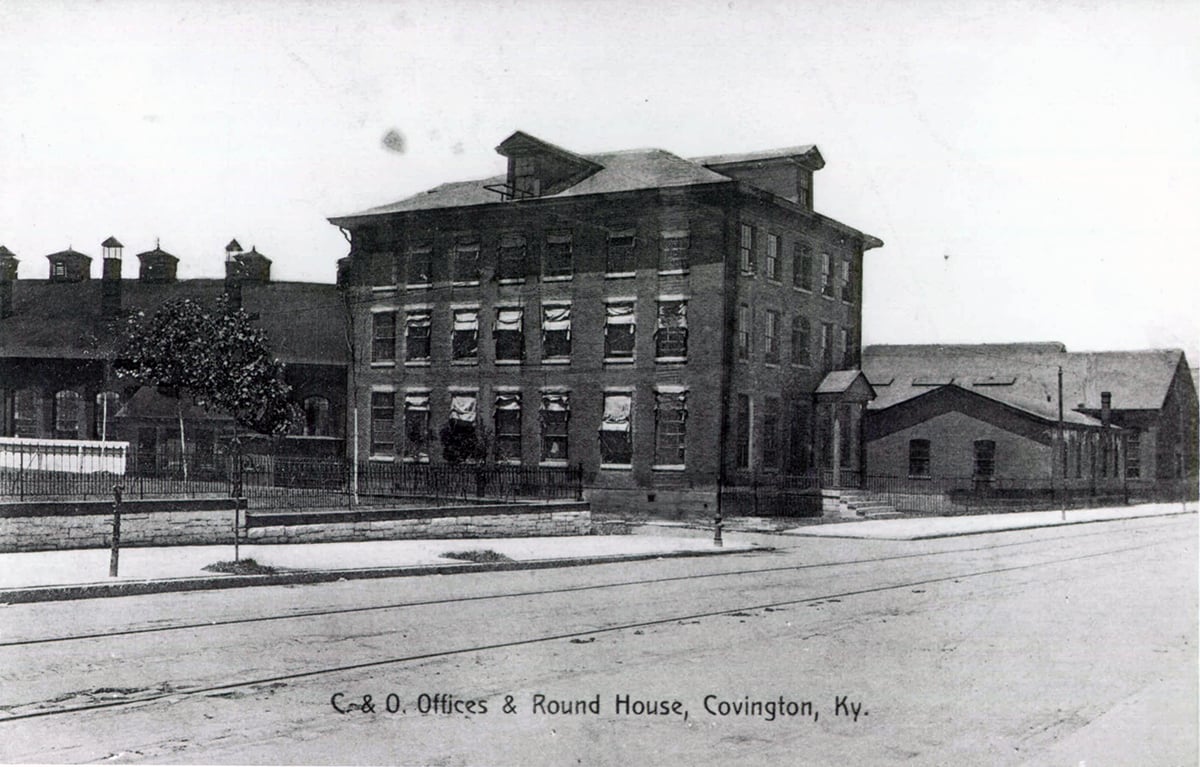
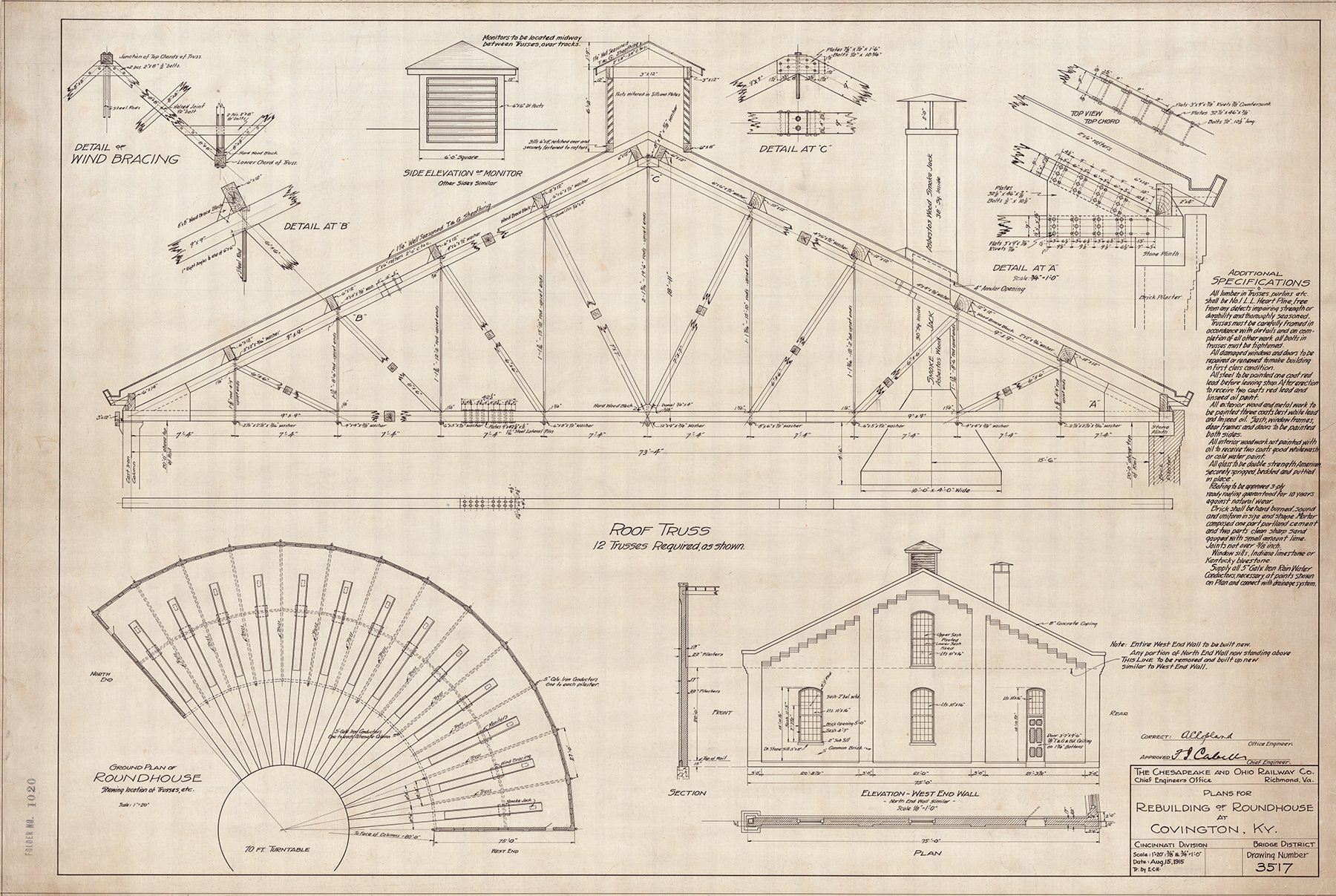
The entire complex remained dedicated to servicing the railroad until 1934. That’s when the C&O leased 1.1 acres to the Triangle Paper Bag Manufacturing Company. The area leased included a 1.5-story brick machine shop fronting on Madison Avenue. It granted the paper bag company the rights to use the property for “industrial, manufacturing, wholesaling, distributing, and storage purposes” for $600 a year for the first five years and then $1,200 annually until 1959.
Covington Became a Major Paper Bag Manufacturing Center
Founded in Cincinnati in 1919 by five partners, the company built a plant in the city’s West End. By 1930, only one of the original partners remained with the company: Edward A. Jacobs, its president and buyer. Ichiel “I.L.” Shor was listed in trade directories published after 1930 as the company’s treasurer.
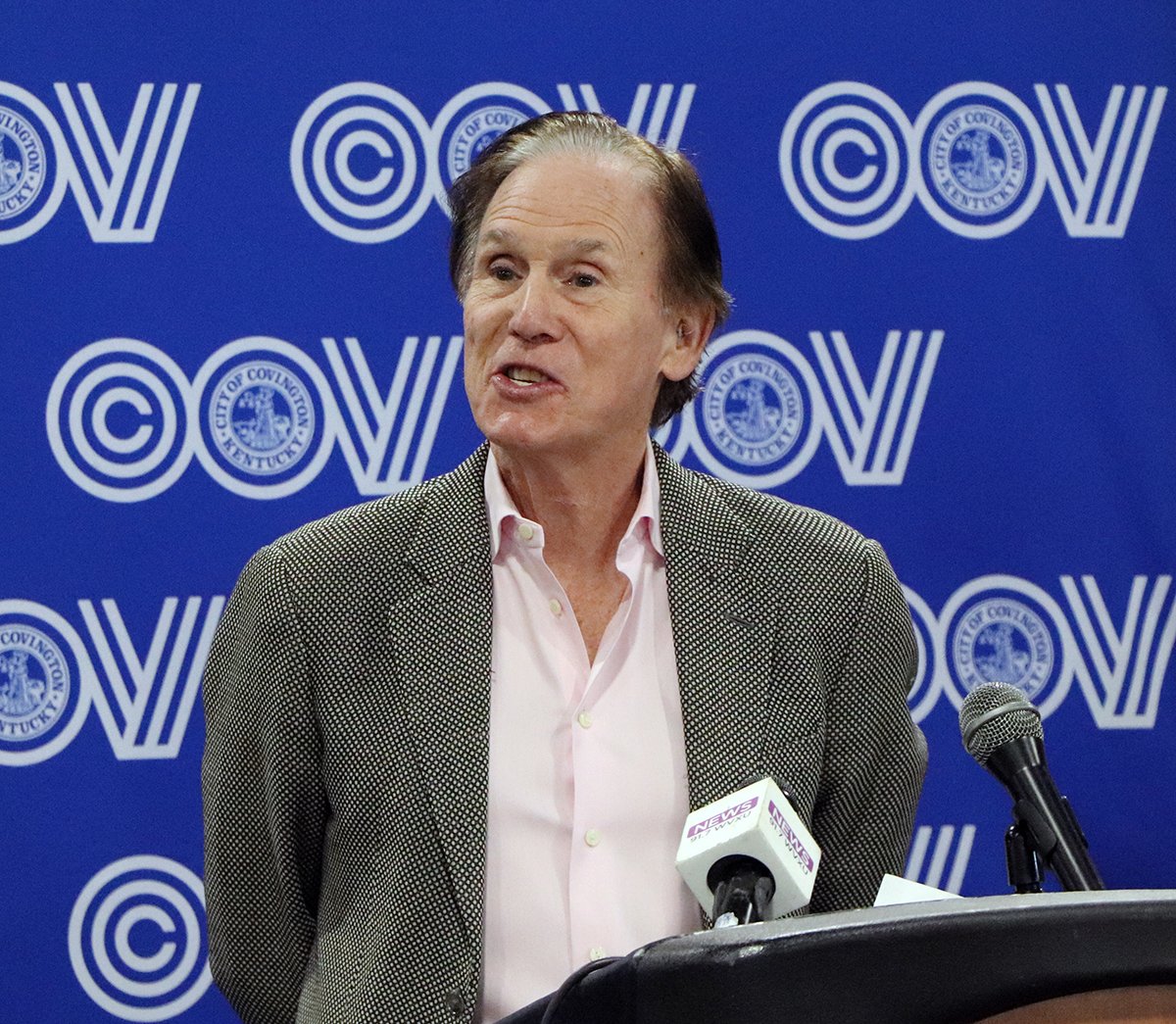
“I’m Jewish, he came from Eastern Europe,” said Charles Shor, I.L. Shor’s grandson and the last owner of the Covington facility that the city plans to buy.
The Shors came to the United States in the 1890s and settled first in Keystone, West Virginia. There, I.L. Shor owned a saloon and lots of real estate, according to census records and historical newspapers.
By 1919, the family was living in Cincinnati. “He was kind of an entrepreneur,” Charles Shor said. “We had a dry goods store and he, I think initially, had a deli or something for people to eat.”
In 1921, Shor’s grandfather founded the I.L. Shor Coal Company in Kentucky.
Getting into the paper bag business was a natural step for a retailer looking to cut costs. Charles Shor never got to ask how his family made the jump from dry goods to paper bag manufacturing.
The company rapidly became a profitable customer for the C&O. Hundreds of railroad cars brought paper from Southern mills to the bag company’s plant. Charles Shor said that the railroad gave his grandfather a good deal for the 1934 lease because of the volume of business the bag company did with the transportation company.
The “Kentucky Post” reported in October 1934 that the company was building a $10,000 addition to the building it leased from the railroad. “The entire plant is being moved from across the river to Covington,” the paper wrote. “It will be housed in the old Chesapeake & Ohio R.R. workshop.”
After completing the move, in 1935 the Triangle Paper Bag Manufacturing Company reorganized as a Kentucky corporation.
Over the next 15 years, the company continued to expand. In 1940, the C&O retired its roundhouse tracks and leased the roundhouse to the Triangle company. It grew to more than 500 employees and became one of the nation’s leading paper bag manufacturers.
Labor Troubles and Industry Changes Churn the Local Economy
As a union plant, there were several prolonged strikes, including one in 1941 when 250 employees walked out after the company denied their requests for wage increases. The strike lasted 24 days and the workers won small increases in pay for new and experienced workers, newspapers reported.
I.L Shor died in 1949 and his son, S. David Shor, took over the business. In 1953, S. David Shor, a former World War II pilot and Charles Shor’s father, split from Triangle founder Jacobs. S. David Shor and another Triangle executive, John Lustgarten, founded the Duro Paper Bag Manufacturing Company.
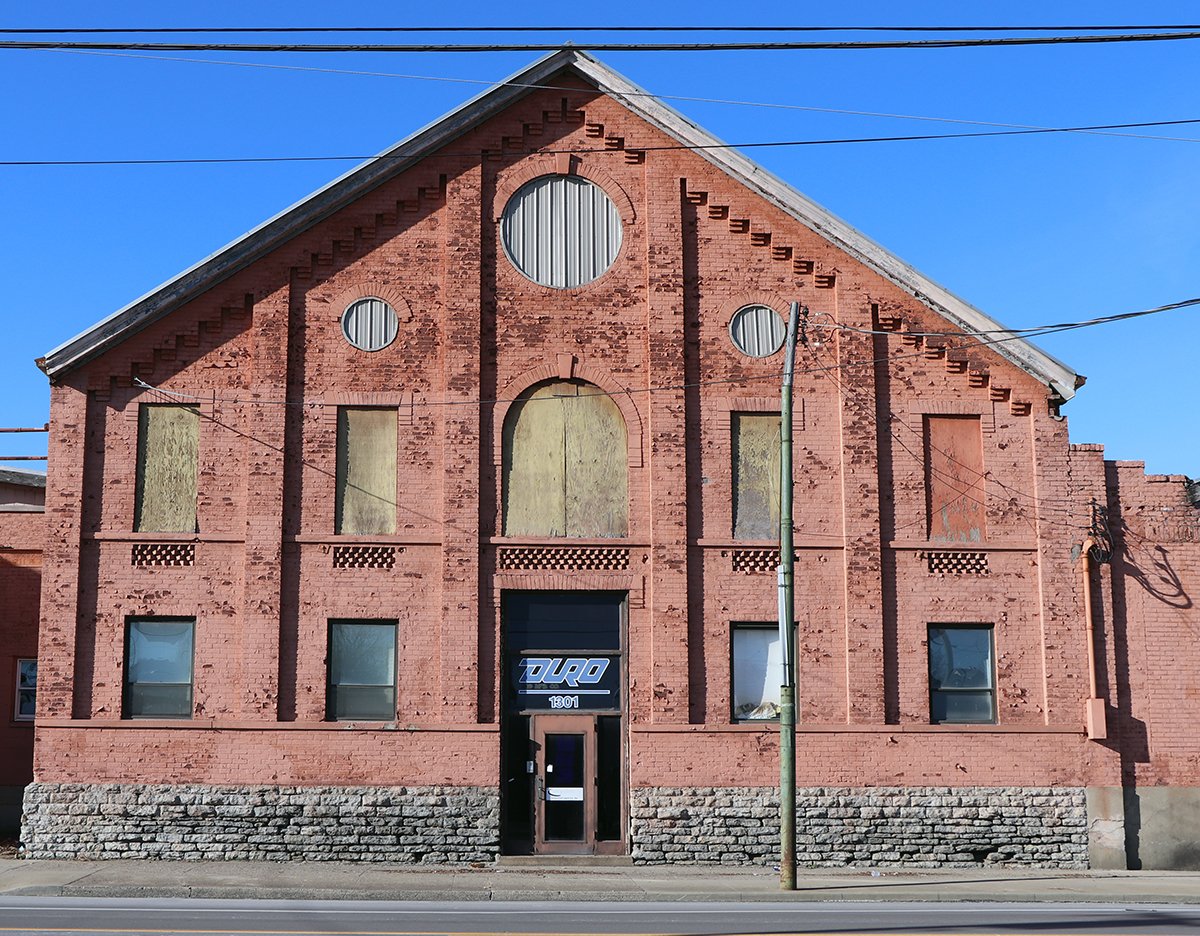
The Duro company leased a building from the Southern Railway company and hired 25 people to operate the new company. “Mr. Shor plans to manufacture grocery and various other types of paper bags for sale within a radius of 300 miles of Cincinnati,” the “Cincinnati Enquirer” reported in 1953.
Duro briefly competed with the Triangle company, which in 1959 was bought by one of its suppliers, the Arkansas-based Crossett Company. The Georgia Pacific Company bought Crossett in 1962 and made Triangle one of its subsidiaries.
Another strike, in 1963, added to Triangle’s troubles. The company was a major Covington employer. Workforce cuts and work stoppages significantly reduced the city’s payroll tax revenues in 1964, according to the “Kentucky Post.”
Crossett (and Georgia Pacific) sold the Covington plant to the New York-based Equitable Paper Bag Company. “The Covington plant doesn’t fit in with our program for the future,” Georgia Pacific told the “Kentucky Post in 1963.
Labor disputes continued and another strike in 1964 shut down the plant for 19 days. The following year, the Shor family returned to Covington when Duro acquired the former Triangle assets, including the lease with the railroad.
Duro kept its Ludlow facility and its acquisition of Triangle added a Boone County plant to the company’s growing portfolio.
Over the next 20 years, Duro maintained its position as a leading producer of bags for the nation’s largest retailers and growing fast-food restaurant chains. Duro struggled to adapt as the retail sector shifted to cheaper plastic bags made in China.
A catastrophic fire in 1977 destroyed Duro’s Ludlow plant and the company focused its operations in Covington and Boone County.
The End of an Era
After David Shor died, Charles Shor became the third generation to lead the company.
“When my father died in 1987, we had a fairly significant loan with First National Bank of Cincinnati,” Charles Shor recalled. “We were losing money every month.”
Charles Shor laid off a third of the workforce, secured new financing and reorganized the company by changing production methods. By then, production had ceased at the Covington plant.
The influx of cash and prolonged negotiations with CSX resulted in Duro buying the Covington property for $675,000. The transaction included all of the railroad property — more than 20 parcels and three alleys — consolidated since the 1850s.
In 2001, the Duro company transferred the property to a real estate subsidiary, Duro Covington Holdings, LLC. Duro continued to use the property for logistics until 2014 when a South Carolina company bought Duro. It has been vacant since then.
An important part of Northern Kentucky’s economy since the 1850s, the former railroad and paper bag facility is poised to begin a new chapter after the deal with Covington closes.