














The dominant philosophy shaping much of American life can be summed up simply: whatever is most efficient, whatever produces results the fastest is the best path forward. This belief has quietly become a moral framework, not just a productivity hack.
Unsurprisingly, it has taken deep root in the health and fitness industry.
Take a moment and consider how gyms market their programs, how nutrition companies promote diets and supplements, and what message sits beneath it all. Nearly every promise hinges on speed: faster fat loss, quicker muscle gain, immediate transformation. The industry is less concerned with whether something works long-term and more concerned with how quickly it can appear to work. This obsession with speed is not new. Variations of it have existed for over a century, and beginning in the 1920s, wave after wave of diets have promised rapid change:
- The Grapefruit Diet
- The Lemon Juice Diet
- The Sleeping Diet (in which participants sedated themselves to avoid eating)
- The Egg and Wine Diet
- The Cabbage Diet
- The Blood Type Diet
- The Raw Diet
- Juice Cleanses
- The Carnivore Diet
These are among the most celebrated fad diets of the past 100 years. And despite their differences, they share one defining feature: they are unsustainable. This does not mean that diets never “work.” In fact, many of them produce impressive short-term results, which is precisely why they gain popularity and public credibility. But the deeper message they sell is this: I can do something extreme for a short period of time and expect lasting change. That belief is undeniably false.
Long-term change is only produced through long-term effort. Extreme measures succeed temporarily because they hijack human psychology. They narrow attention, amplify urgency, and fixate the mind on outcomes alone. This is dopamine hijacking, and it is the main ploy of modern fitness marketing. My contention is simple but uncomfortable: the process by which results are obtained matters more than the results themselves.
If we apply this same idea to learning, we see the exact pattern repeat itself. Imagine two people who both claim they want to learn. One reads fifty books in a year; the other reads ten. Do we know who has learned more? We don’t. Reading volume is not the same as learning. A person can read fifty books and learn nothing beyond the ability to say they read fifty books. Another person can read a single book and be genuinely changed by it because of how they engaged with the material. The difference is not effort or intelligence, but personal investment in the process. Learning only becomes durable when it requires a change in how you think. Without that willingness, information accumulates but understanding does not. Long-term change is not determined by the quantity of work, but by your quality of engagement.
Slow and steady wins the race
This idea is not new. It is not flashy, it is not easily marketable, and yet it is exactly what ancient wisdom has always taught about true transformation. As far back as Aesop’s fable of The Tortoise and the Hare, we are reminded that consistency outlasts intensity. (If you haven’t read it in a while, it’s worth revisiting.) If you are trying to change your lifestyle to become healthier and more capable, avoid the trap of believing that speed is your ally. Speed doesn’t create change; it creates burnout. A more useful question than “What is the fastest route?” is “What is the path that would allow me to never stop?”
That path will look different for everyone, which is why you cannot simply copy someone else’s routine. You cannot outsource true change; you have to carve your own way forward.
A client example
Over a year ago, I worked with a client who was roughly seventy pounds overweight. After about six months of training together, he was frustrated, progress felt slow, but he was unwilling to quit. He trained with me once per week and began walking three additional days. That was it. Over the next three months, he lost more than thirty pounds. As he started to experience the fruit of his effort, something shifted internally. He became curious about his food. He began prioritizing whole foods, increasing protein intake, and limiting nighttime snacking, and before long, he had lost over fifty pounds.
What’s important to understand is not what he did, but how he did it. His transformation started with a pace he could sustain. I didn’t immediately prescribe multiple workouts per week, dietary rules, or rigid structure. He wasn’t ready for that yet, and if he had been forced into it, it likely wouldn’t have lasted. He needed to arrive at those changes internally, at a pace his life and psychology could support. And because of that, the changes endured.
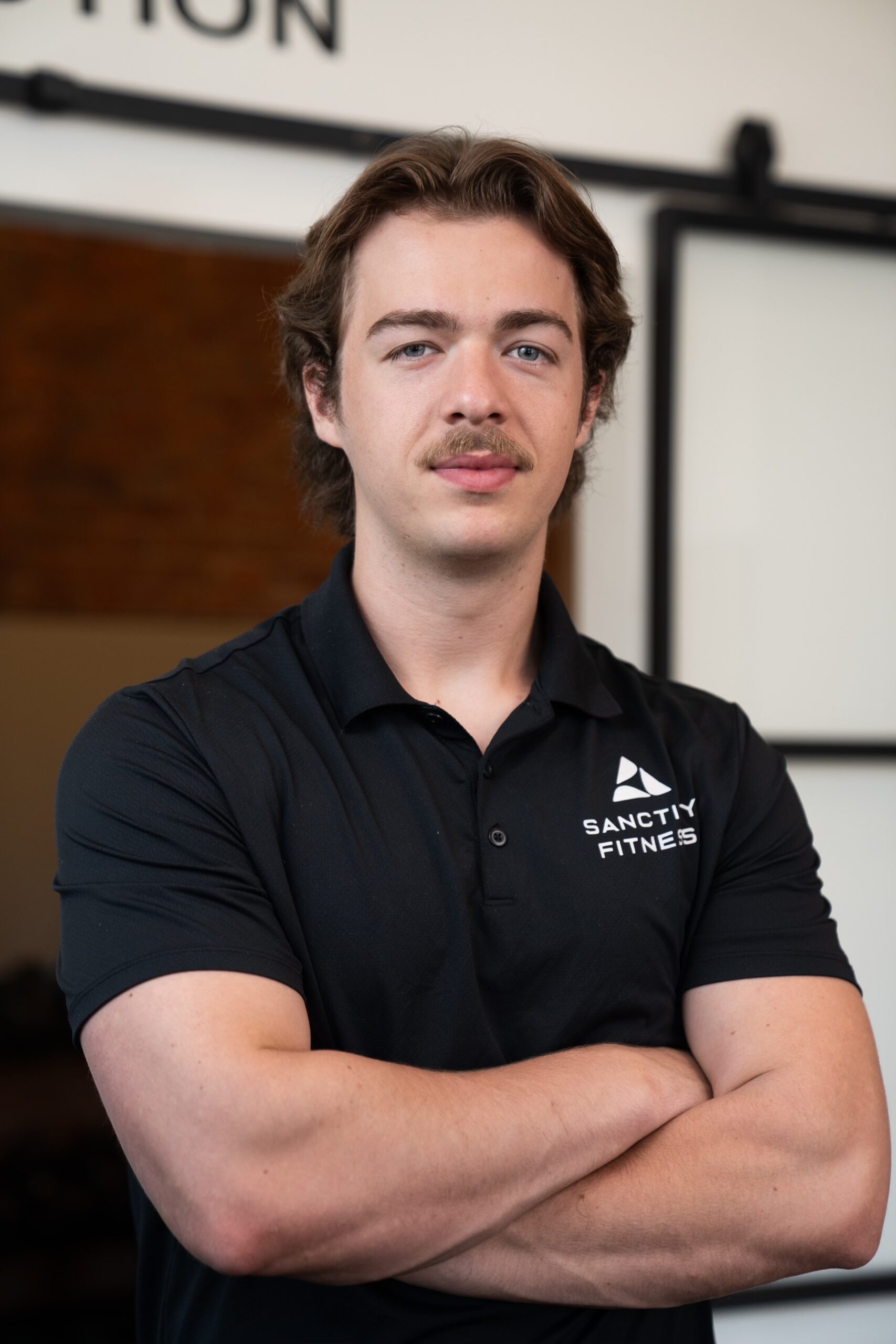
Lee Ramsey has a passion for fitness as a way to help people grow and change into more adaptable, capable and resilient versions of themselves. He is owner of Sanctify Fitness in Covington and a regular fitness columnist for the NKyTribune.