












By John Schlipp
Special to NKyTribune
As the holiday season sparkles across Cincinnati and Northern Kentucky, it’s worth remembering that this river region has long been a cradle of creativity — where artistry and innovation have shaped traditions celebrated around the globe. From legendary musicians to iconic entertainers, our Tri-State region’s influence on holiday culture and customs runs deep.
Sounds of the season: Music and media moments
Artistic voices have crafted the soundtrack of the holidays for decades. WLW Radio, once the most powerful station in America, broadcasted festive programs that united families across the nation.

Rosemary Clooney, born in Maysville, lent her warm voice to Christmas classics that still echo through time. Each holiday season, the glow of the 1954 movie “White Christmas” brings cherished memories of two beloved regional stars — Rosemary Clooney (1928–2002) and Vera-Ellen (1921–1981) — whose talents helped define one of Hollywood’s most treasured musicals.
Rosemary’s velvety voice gave life to Irving Berlin’s unforgettable songs, while Norwood, Ohio native Vera-Ellen dazzled audiences with her grace and precision on the dance floor. In this evergreen classic, Clooney’s smooth duet with Bing Crosby on “Count Your Blessings (Instead of Sheep)” introduced another Berlin gem destined to stand alongside the film’s title song, “White Christmas”—a tune that had already comforted millions during World War II.
Offscreen, Clooney’s life mirrored the film’s sisterly bond. She and her sister, Betty Clooney (1931–1976), began their careers together on Cincinnati’s WLW radio in the 1940s. Soon, the Clooney Sisters toured nationally with the Tony Pastor Big Band. Betty later stepped aside so Rosemary could record as a solo artist for Columbia Records in New York. Returning to Cincinnati during television’s early days, Betty joined Crosley Broadcasting and supported Ruth Lyons’ daytime “50 Club” (later renamed the “50-50 Club”). She also recorded songs for King Records of Cincinnati.
Rosemary’s onscreen sister, played by Vera-Ellen, brought her early training from Cincinnati dance studios to stardom on Broadway and in Hollywood, becoming one of the most accomplished dancers of her era. She partnered with legends like Gene Kelly and Fred Astaire in MGM musicals, though Danny Kaye remains her most iconic dance partner thanks to “White Christmas.”
The movie “White Christmas” continues to enchant audiences with its nostalgic spirit and Midwestern warmth. For Cincinnati and Northern Kentucky, it’s more than a holiday tradition — it’s a celebration of local talent that lifted spirits then and still brings joy to generations around the world.
Our region’s musical heritage also includes an unforgettable recording that became a seasonal staple. Before the Eagles made “Please Come Home for Christmas” a 1978 country-rock classic, the song was born from the bluesy elegance of Charles Brown (1922–1999). Known for his soft-toned, slow-paced nightclub style, Brown infused holiday music with heartfelt melancholy.
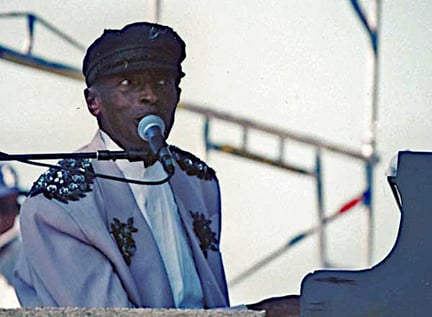
In 1960, while performing in Newport, Brown was approached by Cincinnati’s King Records founder, Sydney Nathan, to create a Christmas tune reminiscent of his earlier hit, “Merry Christmas Baby.” Collaborating with King’s A&R producer Gene Redd, Brown crafted a song that balanced “glad, glad news” with the ache of loneliness — a contrast to the cheer of traditional carols. Recorded at King Records studio (on Brewster Avenue) in the Evanston neighborhood of Cincinnati, the track initially found modest success, especially in East Texas and Louisiana. Its signature church-bell intro, often called “Bells Will Be Ringing,” gave it a distinctive tone.
By 1968, Brown’s R&B version of “Please Come Home for Christmas” had gone gold, selling over a million copies, and by 1972, it topped the national Christmas singles chart. His emotional delivery—marked by lines like “There’ll be no more sorrow, no grief and no pain” — made it one of the few holiday songs to embrace bittersweet themes.
This authenticity paved the way for many covers by artists including Bon Jovi, Willie Nelson, Mariah Carey, Harry Connick Jr., Aaron Neville, and even Nick Lachey’s 98 Degrees. Dubbed by HipHopChristmas.com as “the unofficial but undisputed king of hip Christmas music,” Brown brought a unique voice to the season, whether praising love or lamenting its absence. His Cincinnati and Northern Kentucky connection reminds us that this timeless classic was born from a moment of inspiration in America’s “Roots Music Crossroads” — a soulful gift that continues to ring true every holiday season.
Ruth Lyons: Lighting the holidays with music and compassion
Ruth Lyons (1905–1988) transformed American broadcasting in the 1950s, pioneering the daytime talk-show format and setting the stage for future television icons like Phil Donahue and David Letterman — both of whom began their careers at Crosley’s WLW Midwest television stations in Dayton and Indianapolis.
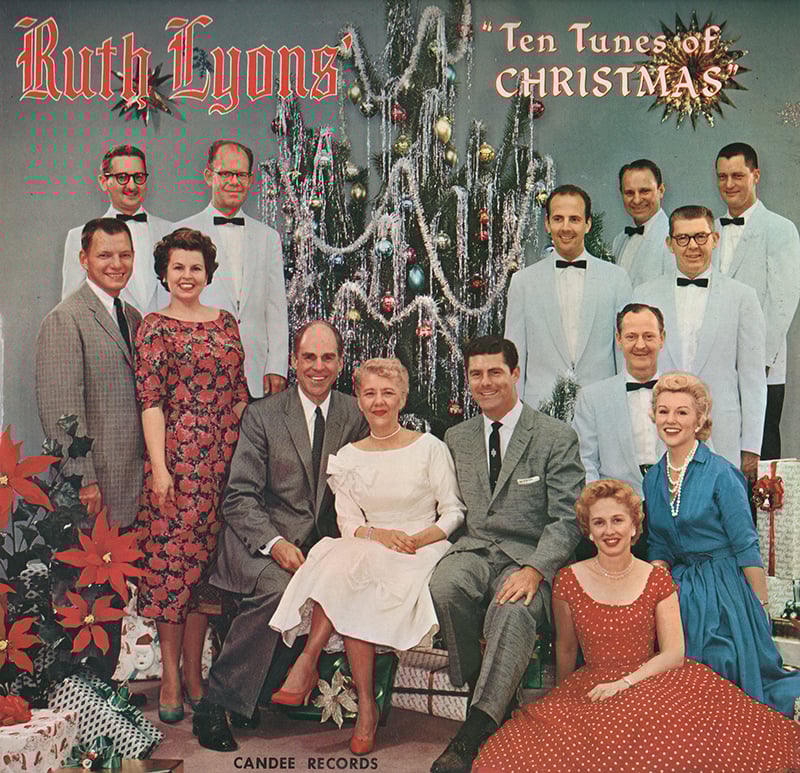
Known affectionately as “Mother” to millions, Lyons was far more than a genial host. She was a gifted songwriter, pianist, organist, and producer who shaped the tone of regional entertainment during television’s golden age.
By 1949, Lyons had become WLWT-TV’s first program director, and two years later, she brought her popular “50‑50 Club” to NBC, extending its cheerful spontaneity to a national audience. This midday variety and talk program—broadcast simultaneously on WLW radio — drew as many as seven million people to tune in across Cincinnati, Dayton, Columbus, and Indianapolis. Her warm, candid style invented a genre that connected directly to homemakers and families, long before the term “daytime television” became standard.
Lyons’ influence reached beyond the screen. Her Christmas songs, such as “Let’s Light the Christmas Tree,” performed by Ruby Wright, and the enduring Ruth Lyons Children’s Fund remain hallmarks of Cincinnati’s holiday spirit. Each December, her holiday music brightened “50‑50 Club” broadcasts with original compositions performed by her talented cast: soprano Marian Spellman, country favorite Bonnie Lou, pop vocalist Ruby Wright, and entertainer Bob Braun of Ludlow.
Lyons’ two holiday albums, “Ten Tunes of Christmas” (1958) and “It’s Christmastime Again” (1963), released on her own Candee Records label, captured the heart of that era. These records—featuring orchestral arrangements by Cliff Lash and the “50‑50 Club Orchestra” — offer a nostalgic blend of warmth and tradition, every melody written by Lyons herself. The former X-Star Network (WVXU-FM radio) later revived these recordings in a 1995 CD compilation, preserving their joyful charm for a new generation.
Cincinnati radio stations such as WMKV-FM still share these timeless treasures each holiday season, pairing Lyons’ songs with stories from those who knew her best. Marian Spellman once recalled singing Lyons’ tender “Christmas Lullaby,” written during the Korean Conflict — a mother’s prayer for peace, safety, and the return of soldiers to come home. It remains one of Lyons’ most heartfelt compositions:
Go to sleep, have no fear,
Hush a bye, mother’s here,
And I’ll pray that soon this world will be safe,
Safe for yours and mine.
And filled with the lovely peace of Christmas time.(Fair use excerpt for historical review from “Sing a Song by Ruth Lyons,” Willis Music ©1959 anthology.)
Other “50‑50 Club” cast highlights included Bonnie Lou’s spirited “It’s Christmas Time Again” and Bob Braun’s sentimental “Always at Christmas Time.” Yet nothing captured the generosity of Ruth Lyons more than the jubilant “Have a Merry, Merry, Merry, Merry Christmas,” performed by Ruby Wright and a children’s chorus. The song often opened her “Holiday at Home” broadcasts, launching the annual Ruth Lyons Children’s Fund drive—a tradition that has raised more than $22 million to brighten hospital stays for countless children across the region with gifts, decorations, and playroom comforts.
More than three decades after her passing, Ruth Lyons’ melody of kindness and community still echo through the Cincinnati region each Christmas — proof that her greatest broadcast was one of heart.
Long before Elf on the Shelf, one song made kids sit up and behave…
The timeless lyrics of Haven Gillespie (1888–1975) to “Santa Claus Is Comin’ to Town,” set to music by J. Fred Coots, remain the undisputed Cincinnati-area yuletide champion. This cheerful anthem from 1934 is the most enduring holiday family classic to emerge from the region. In fact, the American Society of Composers, Authors and Publishers (ASCAP) declared in 2016 that “Santa Claus Is Comin’ to Town” was the most-played holiday song of the past half-century.
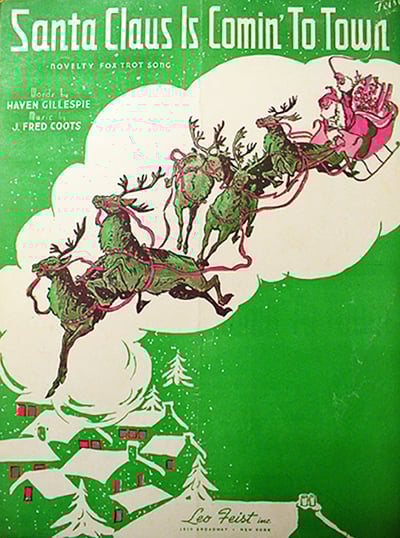
Gillespie, the lyricist behind this eternal Christmastime tradition, was born in 1888 in Covington. With only a fourth-grade education, Gillespie began as a printing apprentice in Chicago before returning to Covington to work as a typesetter for the “Cincinnati Times–Star.” His creative spark eventually led him to Tin Pan Alley in the early 1920s, where he wrote ragtime and patriotic refrains before crafting great American songbook standards that sustained the nation through the Great Depression and World War II.
The story of “Santa Claus Is Comin’ to Town” began on a train ride from New York to Covington, where Gillespie — grieving the loss of his brother — found inspiration in childhood memories and the promise of holiday joy. First performed on Eddie Cantor’s nationally broadcast radio show during the Great Depression, the song became an overnight sensation, selling hundreds of thousands of copies of sheet music within days.
Its playful admonition, “You better watch out, you better not cry,” captured the spirit of Christmas for children everywhere. Though Haven Gillespie wrote many beloved songs, none achieved the universal acclaim of “Santa Claus Is Comin’ to Town.” His Covington roots and creative journey remind us that even a simple idea—born on a train ride home—can become a cherished part of Christmas tradition worldwide.
A common thread: Creativity that inspires
Cincinnati and Northern Kentucky have always been more than geographic points on a map; they are wellsprings of culture, art, and music that ripple far beyond the Ohio River. As we unwrap gifts and hum familiar tunes this season, let’s celebrate the artists, musicians, and dreamers who made the holidays brighter—not just here at home, but around the world.
John Schlipp is a Career Navigator Librarian at Kenton County Public Library specializing in business resources and intellectual property awareness. Whether you’re inspired by famous inventors or musicians from our region, it is a powerful reminder that every great idea or creative work starts with a bold idea—and the right support. Kenton County Public Library offers stories and solutions for entrepreneurs and small business start-ups. Contact John at john.schlipp@kentonlibrary.org.
Paul A. Tenkotte, PhD is Editor of the “Our Rich History” weekly series and Professor of History at Northern Kentucky University (NKU). To browse more than ten years of past columns, visit: nkytribune.com/our-rich-history. Tenkotte also serves as Director of the ORVILLE Project (Ohio River Valley Innovation Library and Learning Engagement). He can be contacted at tenkottep@nku.edu.