
















By Steve Flairty
Special to NKyTribune
Iconic author John Steinbeck is reported to have said: “I guess there are never enough books.” My sentiments, too, and this week I’ll share the ones that have been on my recent reading list. Some are on my stash of books reviewable for Kentucky Monthly, and some are ones I’ve simply wanted to read.
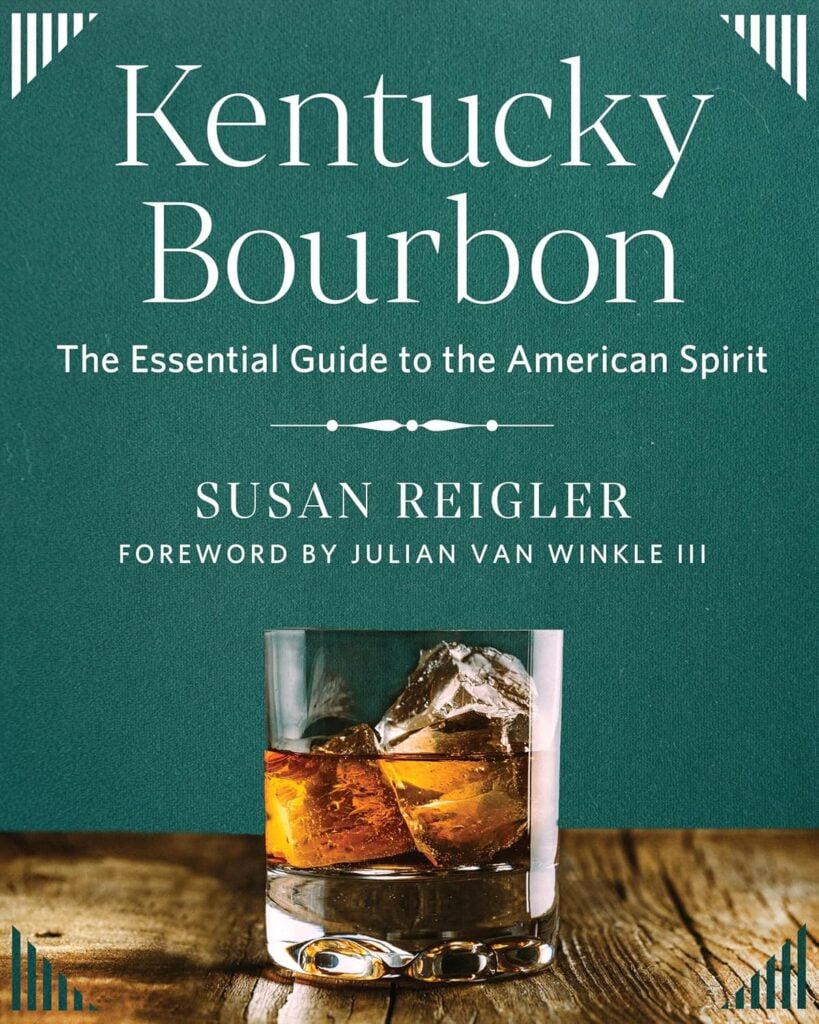
I’ll start with one of good “spirits.” For a detailed and easy-to-read resource on the bourbon whiskey industry in our state, Susan Reigler’s Kentucky Bourbon: The Essential Guide to the American Spirit (Countryman Press, 2025), is one of the best I’ve seen. Reigler looks at 38 of the state’s top distilleries, sharing practical advice to connoisseurs, travelers, and history-lovers. It is also loaded with colorful images of bourbon containers and distillery sites.
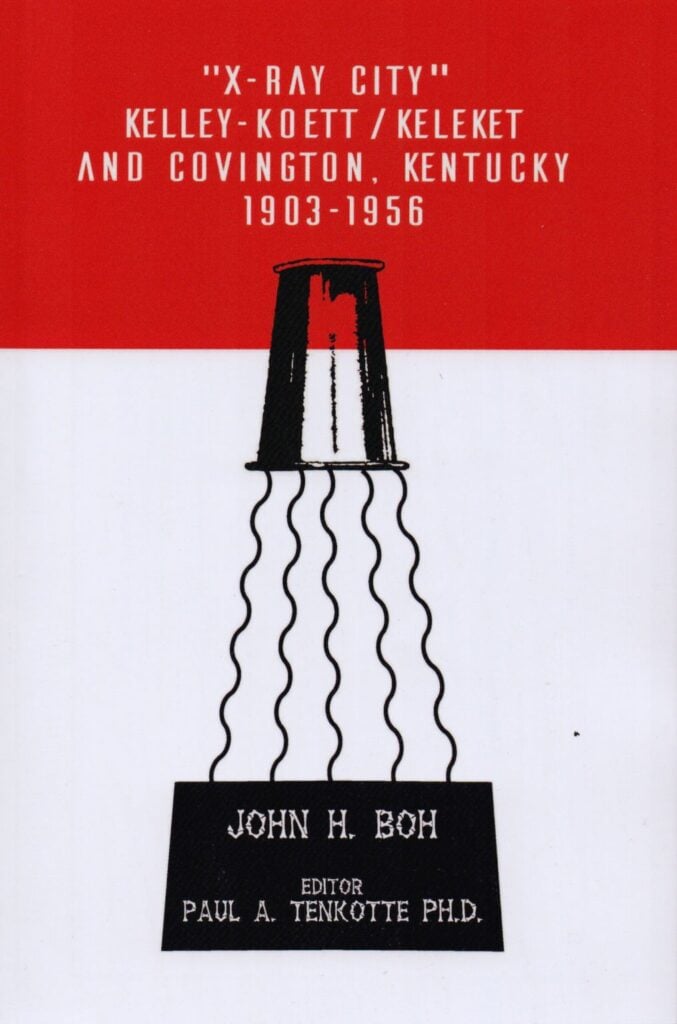
Then there’s one that might interest fans of Northern Kentucky history. It’s authored by John Boh and edited by Paul Tenkotte, a couple of local historians. The book has a lengthy title, “X-Ray City”: Kelly-Koett/Keleket and Covington, Kentucky 1903-1956, which tells one a lot.
X-Ray City covers how two men, J. Robert Kelley, Albert B. Koett, and their associates “firmly established a culture for designing, manufacturing and providing up-to-date x-ray apparatus, accessories and supplies for doctors’ offices, hospitals, medical clinics, laboratories and public agencies.” The book is a 2025 first-time product of the Ohio River Valley Innovation Library and Learning Engagement (ORVILLE), a volunteer-driven initiative collaborating with the Kenton County Library.
In Louisville resident and Presbyterian minister Dwain Lee’s debut novel, Implausible Deception (Butler Books, 2024) the music world is highlighted when the theft of a high-profile violin, the Jackson Stradivarius, occurs. Within the narrative, the author explores society’s reactions to homosexuality and xenophobic tendencies in America.
Rural Woodford County resident Wes Blake, of the community of Nonesuch, has published a 126-page novella called Pineville Trace (Etchings Press, 2024). It’s about an escapee from the Bell County Forestry Camp minimum security prison who travels the country with his best friend, Buffalo, a cat, and tries to make sense of his past, present, and future world. Does he? . . . well, that’s for you, the reader, to decide.
When digging through old, personal memorabilia around your house, you never know what you might discover. You might even find something you can share in a published book. In Our Civil War Letters: The Story of Joseph g. Douthitt, 1862-1864 (Middle Siblings Media Productions, 2023), that’s what Nora C. Young did. She bases her book on sixteen original letters written by her third great-grandfather to his wife and daughter.
Young, in her eighties, took five years to get the book in print. The letters show how the American Civil War was so debilitating to so many Americans, and the letters’ presentations as primary sources makes them authentic reminders of the tragic event.
Ann H. Gabhart is a prolific writer of Christian, historical romance. She lives with her husband on a farm near Lawrenceburg, Kentucky. She released The Pursuit of Elena Bradford (Revell) in 2025, one of many novels she has published over the years, including The Song of Sourwood Mountain, In the Shadow of the River, and When the Meadow Blooms. Her Elena Bradford story revolves around the 22-year-old Elena, whose father has died and left the family in devastating debt. To recover financially, Elena’s mother masterminds a plan to use the family’s remaining funds to attend an expensive resort, Graham Springs, in order to find Elena a husband of wealth, thereby saving her family from ruin.
Gabhart skillfully adds depth to characters and supplies interesting plot twists that will demonstrate why this Kentuckian has a national following. She has won Selah Awards for River to Redemption and Love Comes Home and is a top draw at book festivals.
I like to read a classic or two every year, even if it is not by a Kentucky author or about Kentucky. In the last few years, I’ve tackled Pilgrim’s Progress, All the Kings Men, and last year, War and Peace. On the suggestion of friends, I’m about halfway through A Tree Grows in Brooklyn, the story of a poor tenement family in the early 1900s, and it hasn’t disappointed. I’m hoping you’ll email me and share your thoughts on this known treasure.
One of the most prestigious colleges in early America was Transylvania, in Lexington, reported to be on par with Harvard. John Wright’s book, Transylvania: Tutor to the West, is a book that sat on my shelf for years. I finally got a chance to read it and am so glad. Along with great historical information on the still-thriving university, it gives one a good glimpse at Kentucky’s overall history starting in the late 1700s to the late 1900s. Reading it has spurred my interest in further research on such noted people as Constantine Rafinesque, Henry Clay, and Jefferson Davis, all with strong Transy connections.
And finally, Lexington writer and Wayne County native Roger Guffey sends readers on a three-point journey with his Just a Hoot and a Holler Away. Relying largely on his authentic Appalachian background, Guffey presents, he notes, true stories of “resilience and determination,” short stories “based on real and fictional characters,” and the third part being about Reynard, a witty red fox, who “offers humorous retellings of classic tales, embodying the joy and survival instinct of the Appalachian people.”
Yep, never enough books.