













By Jim Dady
Special to NKyTribune
The Kentucky Supreme Court has set limits on how far the hand of the legislature can reach into local government with its decision December 19 in the case of Coleman v. Jefferson County Board of Education.
Perhaps just as noteworthy is the sharp divide revealed in the small seven-member world of the Court itself. The new decision overruled the Court’s own precedent in the same case of just one year ago.

The dissenters in the earlier case, bolstered by the vote of one new justice, became this year’s majority, leading to the charge by a dissenting justice in the new one that what had changed were not legal principles, but the ideological tilt of the membership.
Decisions of appellate courts may seem remote to the concerns of the everyday Kentuckian. But opinions such as the two in Coleman set a course for relations between the state and local governments, which abound in Northern Kentucky. There are 37 cities altogether in Boone, Campbell, and Kenton counties, 13 public-school districts, and a slew of special districts, including the Kenton County Airport Board, the water and sanitation districts, and intergovernmental bodies such as the Bellevue-Dayton Fire Authority.
The legislation that invoked the Supreme Court’s attention was Senate Bill 1 which passed in 2022. Its backers sought to limit the authority of the Jefferson County Board of Education, which includes the City of Louisville.
SB1 would have transferred authority from the school board and given it to the superintendent in four provisions of the bill:
■ The superintendent was granted exclusive authority over “the general conduct of the schools, the course of instruction, the disciplining of pupils, and the management of business affairs;”
■ The superintendent was to have sole authority to implement rules, regulations, bylaws, and statements of policy, so long as a supermajority of the school board does not disagree;
■ The superintendent was to have sole discretion in the making of contracts of up to $250,000;
■ The board could not legally meet more than once every four weeks.
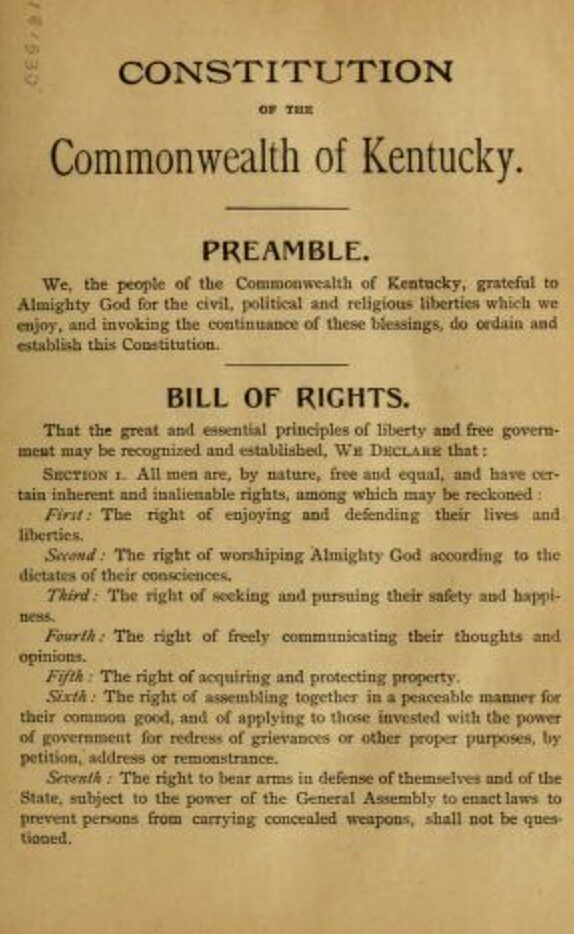
The bill was considered twice by the Supreme Court in its role as decision-maker of what the Kentucky Constitution means, and whether the legislation under consideration complies with it. The 1891 Constitution, an octopus of 263 sections – the federal constitution, even as amended 27 times – is a far shorter document. Kentucky’s basic law once was called a “stump we have to plow around.” Interpreting its multifarious provisions has kept Kentucky’s highest court busy.
The Court’s judgment of 2024 upheld SB 1 in a case identified by the short-hand title of Coleman I. Coleman II reversed Coleman I. Both decisions considered the legislation in light of Sections 59 and 60 of the Kentucky Constitution.
Section 59 says that “the General Assembly shall not pass local or special acts concerning any of the following subjects,” which includes (subsection 25) “To provide for the management of common schools.”
Section 60, which states that “the General Assembly shall not indirectly enact any special or local act in part of a general act, or by exempting from the operation of a general act any city, town, district, or county…”

Taken together, the two sections have come to be regarded as a brake on the legislature’s authority to make law for only one local jurisdiction. The ban on what is called special or local legislation remained in force for generations, even when cities were grouped into classes made subject to legislation as a class.
The ban on special and local legislation was substantially modified by two publications of around 2020. First, then-Chief Justice Laurence Van Meter published a 90-page article in the UK Law Journal that cast doubt upon a long history of decisions enforcing the ban on special and local legislation.
What was intended by the drafters of the 1891 Constitution, he wrote, was a ban on the blizzard of bills affecting just one person or place, and not on those affecting the operation of cities. Cities, unlike individuals, are not endowed with individual rights guaranteed by the federal and state constitutions, such as the right to equal protection under the law. His article, C.J. Van Meter wrote, was intended to “recalibrate the balance” of authority between the judicial and legislative branches, and “help the courts avoid overstating their role in Kentucky’s tripartite government.”

C.J. Van Meter’s article partakes of a long tradition of judicial deference to the political branches. It also is rooted in the conservative judicial philosophy of originalism, which holds that judges should search for meaning in the text under consideration and not consider legal, political, social, and economic forces occurring since the document was enacted.
The field was thus prepared for the second of the significant documents of 2020, the Court’s decision in Calloway County Sheriff’s Department v. Woodall. In Woodall, C.J. Van Meter gave voice to his theory that the Kentucky Constitution, given the political and legal environment when it was written and first interpreted, was not a bar to legislation affecting individual locales. The courts have been reading into Sections 59 and 60 equal-protection rights for cities that do not exist there, he wrote.
The section of the Woodall opinion on special legislation is what is called dicta, from the Latin expression obiter dictum. In the legal lexicon dicta refers to parts of of decisions opinions that do not resolve the case before the court. Dicta is said not to be binding in subsequent cases as legal precedent. Justice Van Meter’s opinion did not mention the parties in the underlying litigation in the section in Woodall on special legislation.
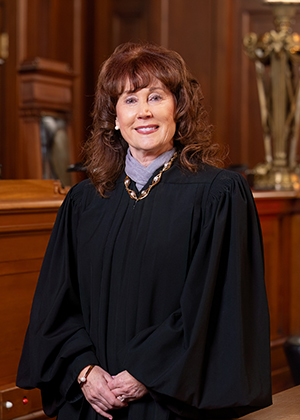
This grafted-on aspect of the new theory grated on Justice Michelle Keller of Fort Mitchell, who concurred with the result but disputed the new theory on special legislation. She wrote that the Van Meter reinterpretation left the Court without a standard of how to measure the limit on how far the legislature could venture in rule-making about an individual locales.
Then in 2024, the first of the Coleman cases – call it Coleman 1 – was taken up by the Supreme Court, which upheld Senate Bill 1 and its provisions regarding the Jefferson County School Board.
The majority opinion written by Justice Shea Nickell of Paducah, cited to Justice Van Meter’s law-review article six times and found its precedential authority in Woodall. Justice Van Meter wrote a concurring opinion. The vote was 4-3.
There was a fierce dissent from Justice Angela Bisig, whose district coincides with Jefferson County, but Coleman 1, appeared to settle the question, and the legislature’s authority to venture further into local affairs seemed assured.
Part of the reasoning of Coleman 1 was that even though Senate Bill 1, written to apply only to a school district in a county where the county and the city it surrounds had formed a merged government, (of which there is only one), it is possible that another such district could emerge in the future, an unlikely scenario, but theoretically possible. Therefore, SB 1 might eventually apply to more than one district, or so the majority reasoned.
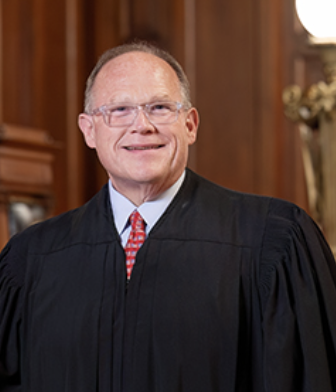
A reasonable interpretation of Coleman I is that by its terms the General Assembly could compel the merger of the four independent school districts in Northern Kentucky’s riverfront cities; that it could vest the mayors of Erlanger or Fort Thomas with powers taken away from their city councils.
Court’s new make-up
After Coleman I was decided, Chief Justice Van Meter retired and was replaced by the former Lexington trial judge Pamela R. Goodwine. In short order, the three dissenting justices in Coleman I, bolstered by the vote of Justice Goodwine, voted to re-hear Coleman, and in a 4-3 decision written by Justice Bisig, the Court in Coleman II, overruled Coleman I.
American courts operate under the principle of stare decisis, legalese for an attitude of deference to prior decisions on the same subject. For a court to overrule itself in the space of exactly one year is unusual. Justice Nickell, now in dissent, unleashed the judicial, scholarly equivalent of a torrent of outrage at the majority’s disregard for stare decisis.
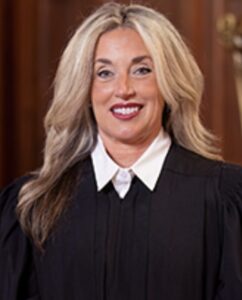
But then, Justices Van Meter and Nickell both signed on to this language in Woodall: “We are mindful of the doctrine of stare decisis, which simply suggests that we stand by precedents and do not disturb settled points of law. Yet, this rule is not inflexible, nor is it of such a nature as to require perpetuation of error or logic.”
The majority in Coleman II established a new test by which to measure whether a legislative act about a local government is permissible under Sections 59 and 60 of the Constitution: whether the legislation conforms to a reasonably articulable purpose and objective.
The Coleman II majority could not find a “reasonably articulable purpose and objective” to SB 1, even after asking for it when the case was reargued. So was SB 1 in the words of the comic TV character as a case “about nothing?” A cynic, or perhaps just a reasonably attentive observer of the political landscape, may see another basis for SB 1, unmentioned in either decision.
It is as old as human beings first acted as a group, since partisan combat became a permanent feature of public affairs, as long as the rivalry between urban and rural has existed in Kentucky. The purpose of SB1 was politics, the cynic might say.

Republicans hold both Kentucky seats in the U.S. Senate and five of six House seats. Republicans enjoy supermajorities in both houses of the General Assembly, and all the constitutional offices except governor and lieutenant governor. Republicans roll up huge majorities in Kentucky in national elections. The last Democrat running for president to carry Kentucky was Bill Clinton thirty years ago. Donald Trump received 64.4 percent of the vote in Kentucky in 2024.
Jefferson County is one of the very few outliers in the almost all-red trend in the Commonwealth. Gov. Andy Beshear won the county in 2023 with 70 percent of the vote. Former Vice President Kamala Harris carried Jefferson County in 2024 with 56 percent, while losing Kentucky in toto by almost two to one. Louisville sends to Congress Rep. Morgan McGarvey, the lone Democrat in the delegation.
The political process is seldom static. It is usually dynamic, moving in one direction or the other. It is not enough for a political faith to advance its own cause, the cynic says; it must aggrieve the other, impair its potency, impede its authority where possible.
When a legislative act visits indignity upon groups or individuals, it has been called in Kentucky a “ripper bill.” SB 1 meets the definition, and perhaps conforms to the contemporary expression, “cancel.”
SB 1 would have effectively neutered the elected school board in Jefferson County and would have thwarted the will of the voters who elected the membership, believing that their board would have the same power and authority as in the other 170 public school districts across the Commonwealth. In the Jefferson County school system, there are 95,000 students, nearly 6,300 teachers across 170 schools. The district is the thirtieth largest in the nation. The seven-member school board is elected to four-year terms by districts.
It has been reported in local Louisville media that Republican lawmakers have been outspoken about wanting to break up Jefferson County public schools.
There is a long tradition in American law of judicial deference to the work of the other two branches, except when acts by those branches collide with the national or state constitution.

Politics in judicial decision-making is less overt than in the other branches, but it is naïve to think that appellate judges don’t bring their belief systems to court and that a set of political judgments is not one of them. Retired Chief Justice Van Meter has been associated with the Federalist Society, a right-leaning legal organization that promotes conservative ideas, candidates, and appointees for judicial office. C.J. Van Meter’s Wikipedia page identifies him as a Republican.
“Judges,” wrote Benjamin N. Cardozo, a U.S. Supreme Court Justice, and a pungent legal writer, “do not stand aloof and chill on distant heights. The great tides and currents which engulf the rest of men turn aside in their course and pass the judges by.”
Justice Keller, who authored the relatively hostile concurrence to C.J. Van Meter’s majority opinion in the Woodall case, was a Democrat until she changed her registration to independent years before running for re-election in 2022 The senior member of the Supreme Court, she has twice been passed over by her colleagues for election as chief justice.
The members of the Supreme Court have their predilections. Some have survived electoral assaults by big-spending out-of-state super-pacs attempting to influence judicial decision-making.
Even the cynic must concede that the disagreements among legislators and judges concerning the big issues raised by the Coleman cases and their antecedents may well be simply the result of honorable, hyper-educated adults seeing the same things very differently.
What may be what is most remarkable about the cases is that the differences were settled not by armed conflagration in the streets, by scandalous insults tossed into the public square gone viral, by millions injected into judicial campaigns by dark-money single-issue advocates, but by civil discussions among judges and advocates eventually reduced to final judgments in the books of law.
But to imagine that appellate judging is done in some airless space sealed off from the political tides washing over country and Commonwealth is to engage in an unlikely dream cordoned off from reality.