













By David Rotenstein
NKyTribune staff writer
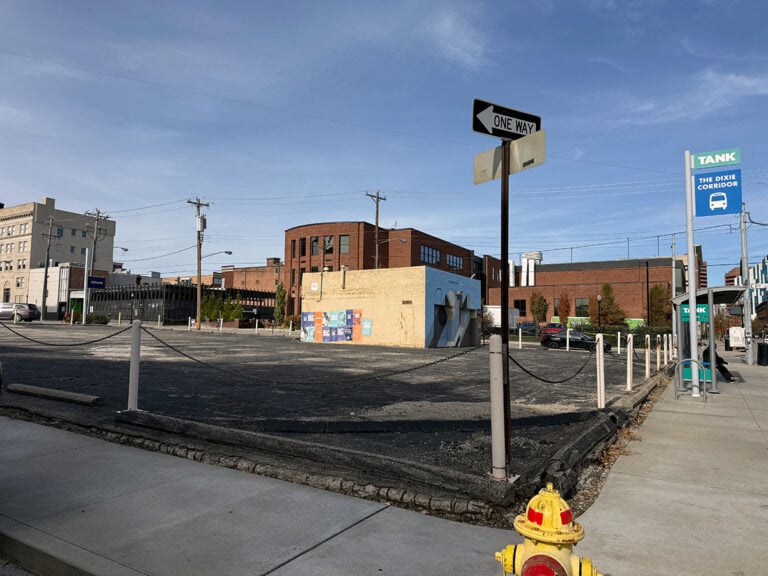
Each fall, Jill Morenz leads two-hour walking tours of downtown Covington highlighting some of the city’s best- and least-known ghost stories. As she walks by the surface parking lot at the intersection of Pike and Scott streets, she casually mentions that the property — prime downtown real estate — has been vacant for a long time, partly because of a hidden and flooded space beneath the asphalt.
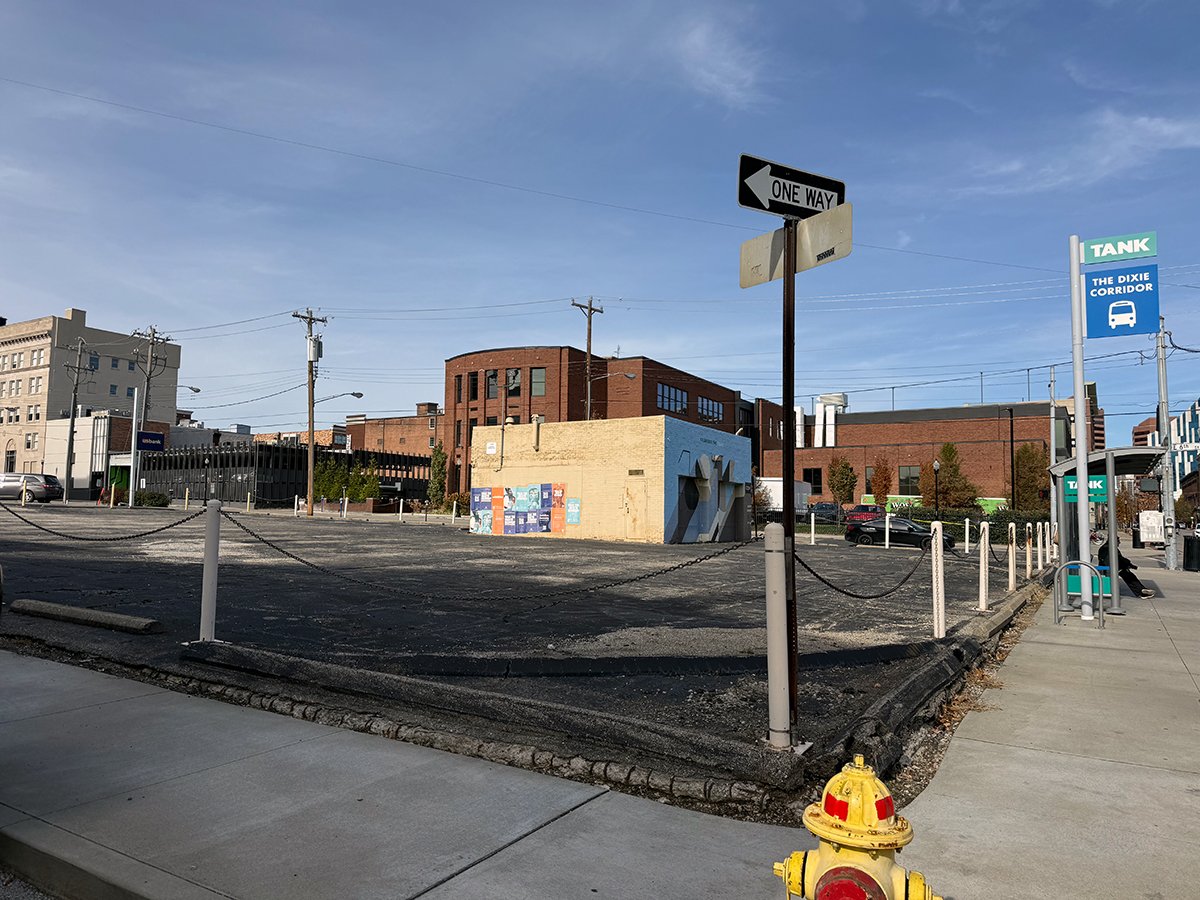
“There’s tunnels under there,” Morenz said in an interview after one of her 2025 tours. “You just walk across the parking lot and you’re like, oh, I wonder why nobody’s put anything here.”
The parking lot fits well into Morenz’s tour: it’s haunted by the ghosts of an old brewery and a failed hotel project. She recalled when she first learned about some of the property’s history. Morenz, who now runs Aviatra Accelerators, was working for the Catalytic Fund. The lender was working with a developer who wanted to build a five-story condominium building on the site and there was one big stumbling block.
“[They] couldn’t get approval, and then it suddenly became clear why, because it’s just not stable enough to support anything big on there,” Morenz explained.
Morenz and others familiar with the site and its history of abandoned development bids tend to chalk up its longevity as dead space to the flooded space beneath the parking lot and the costs involved to deal with it.
The story may be a little more complicated than that, according to developer Tony Milburn.
“It actually would have wound up saving us some money because if you pull the cap off and the columns out, basically your underground area is already excavated for you,” he explained.
Milburn and his partners had planned to build a project called Cooper Condominiums. The proposal called for constructing a 6.5-story, 28-unit with underground parking.
So if it wasn’t the cost to deal with the flooded underground space, what killed the project? Milburn said that the Covington market couldn’t support the project in 2018.
We were trying to do higher end condos,” Milburn said. “When we looked to what we could sell the condominiums for, the numbers just didn’t quite pan out.”
But what about the flooded space? What’s the story behind that?
Brewing Beer and Legends
In the late 1880s, the John Brenner Brewing Company built a large brewery complex at the intersection of Pike and Scott streets. It was a prime spot, close to major roadways that could support wagons bringing raw materials to the brewery and taking away filled kegs and bottles. There was even an abundant underground water supply.
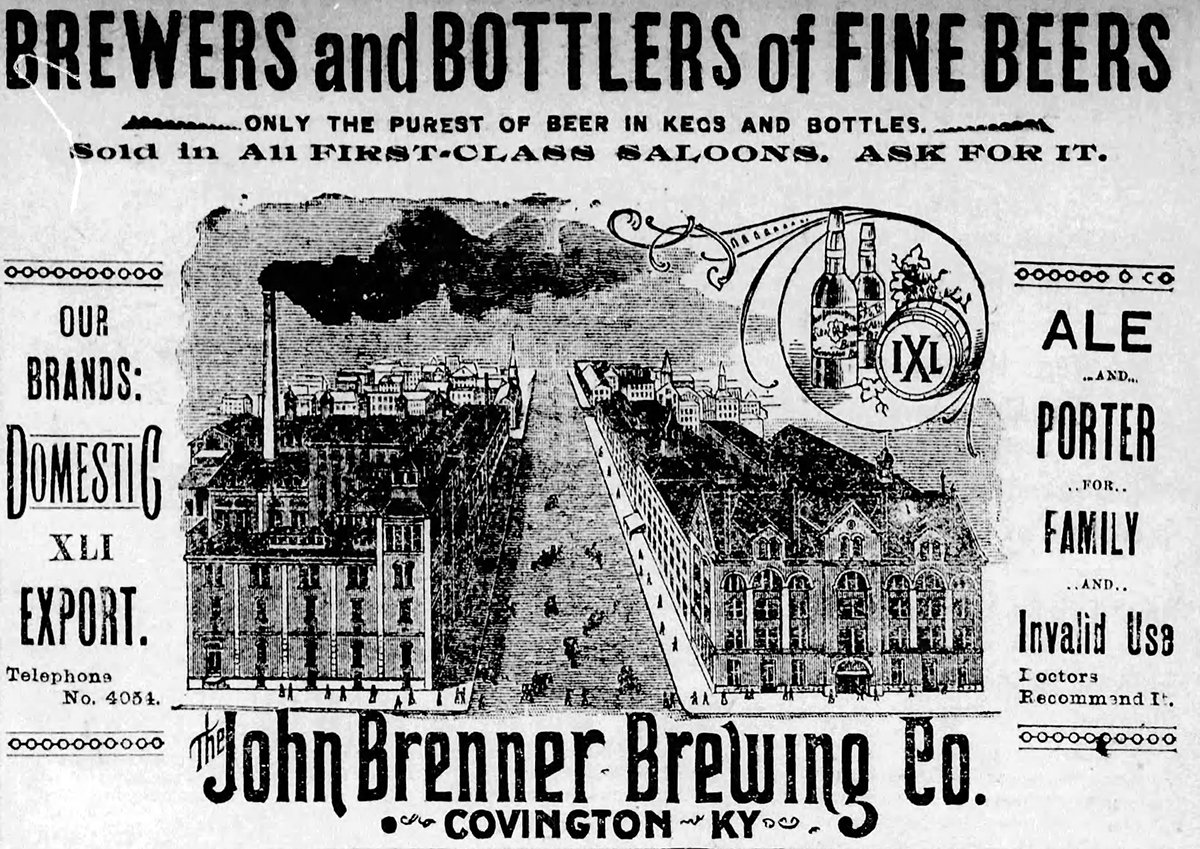
Brenner declared itself bankrupt in 1911 and the Milwaukee-based Philip Jung Brewing Company bought the brewery. In 1913, the Jung company signed a contract to sell the facility to the Bavarian Brewing Company. The sale contract read: “The said Philip Jung Brewing Company, its successors and assigns shall not forever use for the purchase, sale, manufacture, holding or handling, in any way, fermented malt liquors or other malt liquors, or for a brewery, or brewery purposes.” According to a history of Northern Kentucky breweries, beer production ended there in 1918.
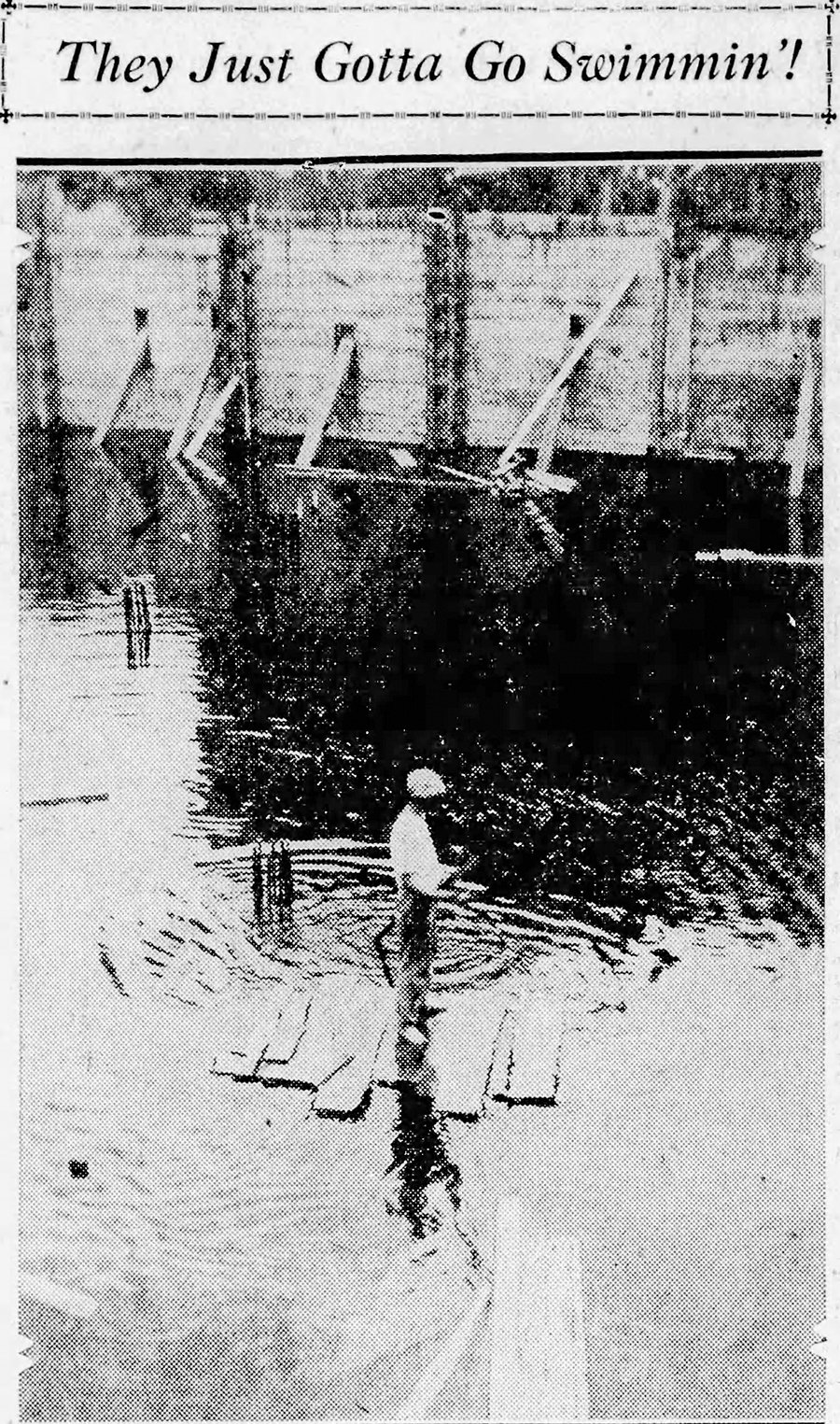
In 1928, more than a decade after the property was last owned by a brewery, the Covington Hotel Company bought it and began demolishing the brewery buildings. The wrecker hired to do the work sold the scrap brick, lumber and metal.
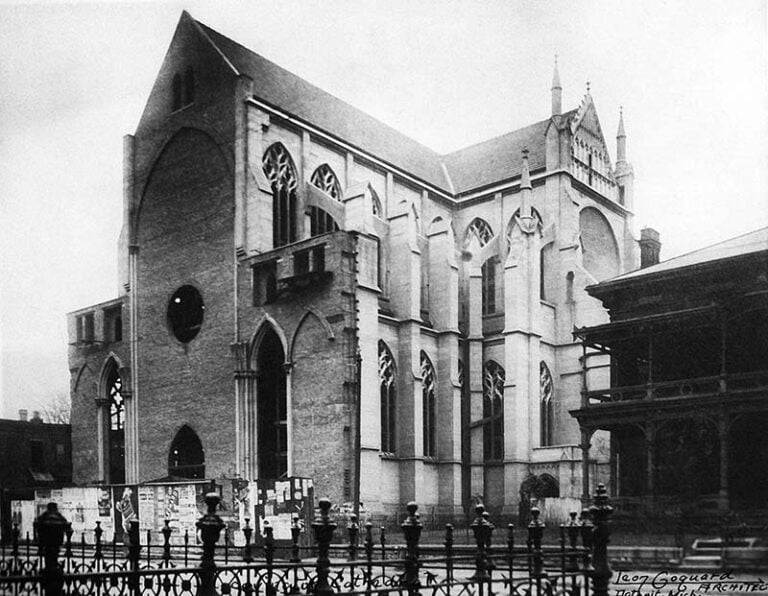
Incorporated in late 1927, the company failed to raise more than $700,000 to build a nine-story, 230-room hotel atop an underground garage. Contractors went unpaid and litigation ensued.
Meanwhile, Covington’s dreams for a hotel were dashed. There had not been one in the city for many years. A traveling pastor who had a speaking engagement in Covington in September of 1929 rubbed salt in the wound in an interview with the Cincinnati Enquirer. He told the reporter why he was staying at a Cincinnati hotel: “I had come to this hostelry because they have no hotel in Covington.”
By that time, the hotel project had been abandoned. Covington’s dreams of a grand hotel had turned into little more than a gaping hole in the ground that became a swimming pool during heavy rains. “The Kentucky Post” jokingly dubbed the site Covington’s “hole-tel.”
As the courts settled failed hotel project’s accounts, local philanthropist William Devou bought the property from one of the hotel company’s creditors, the Carl Construction Company. Devou paid $49,991 for the property. He appointed a bank trustee for the property and ordered that all profits be used to fund maintenance at Devou Park.
Devou died in 1937 and the trustees continued to manage the property until 1980. In 1941, the trustees leased the property to the Pure Oil Company. The 10-year lease gave the company the right to purchase the property after 10 years, which it exercised in 1951.
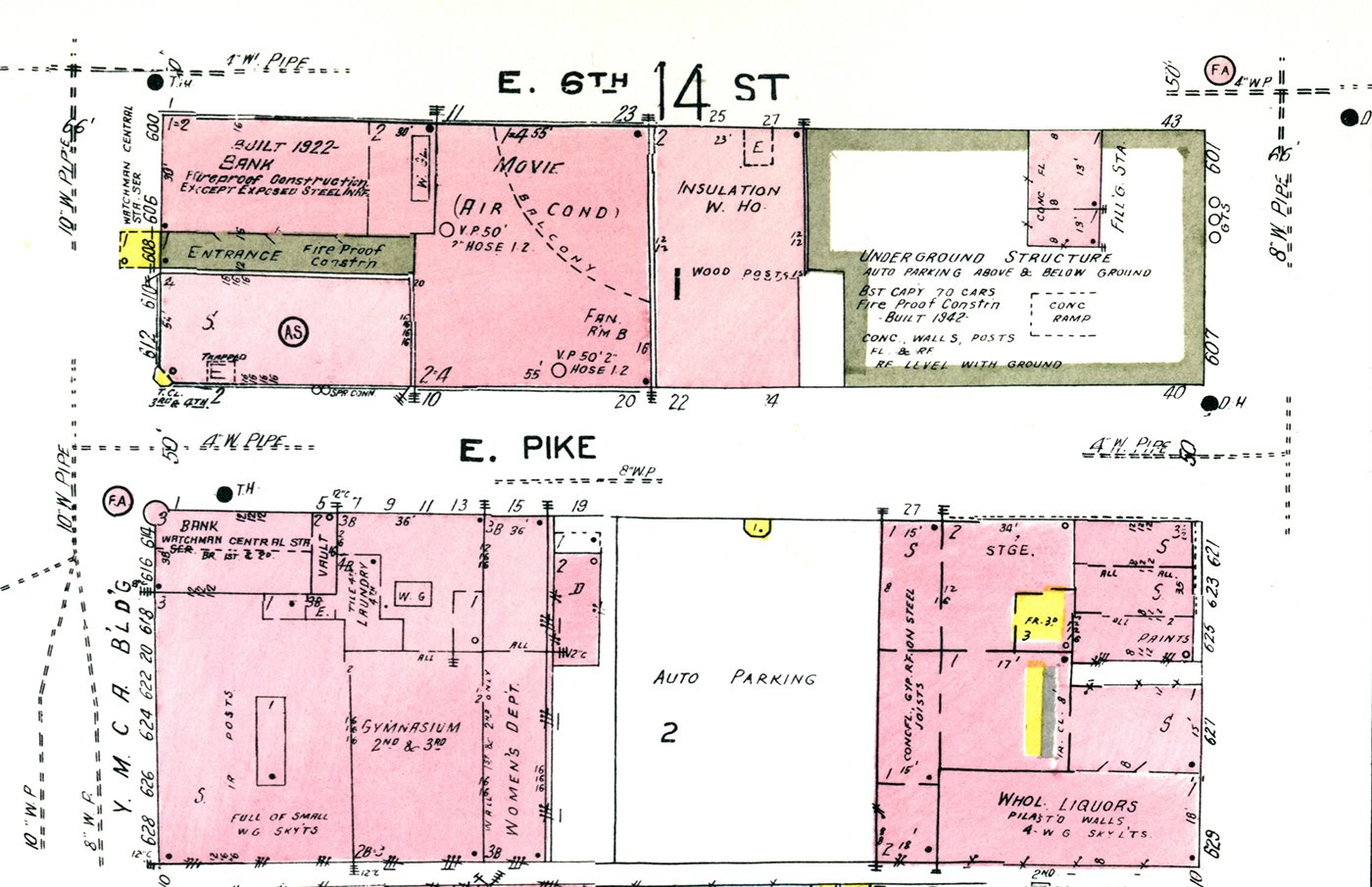
Pure Oil built a service station at the property and converted the underground space into a 70-space commercial parking garage. A series of franchise owners continued to operate the service station and parking lot until 1980, when Pure Oil’s successor, the Union Oil Company of California, sold the lot to the Peoples Liberty Bank and Trust Company.
Crumbling Infrastructure and Plans
According to city records received through an Open Records Act request, the earliest redevelopment proposal for the property landed in 1980, shortly after the sale. The surface lot continued to be used until deteriorating beams and water intrusion in the underground portion made it unsafe.
“There’s an underground stream throughout the entire city,” said retired Covington City Engineer Terry Hughes. He said that the water beneath the parking lot and in the basement of the former brewery office building across the street at 621-625 Scott St. is coming from the Ohio River.
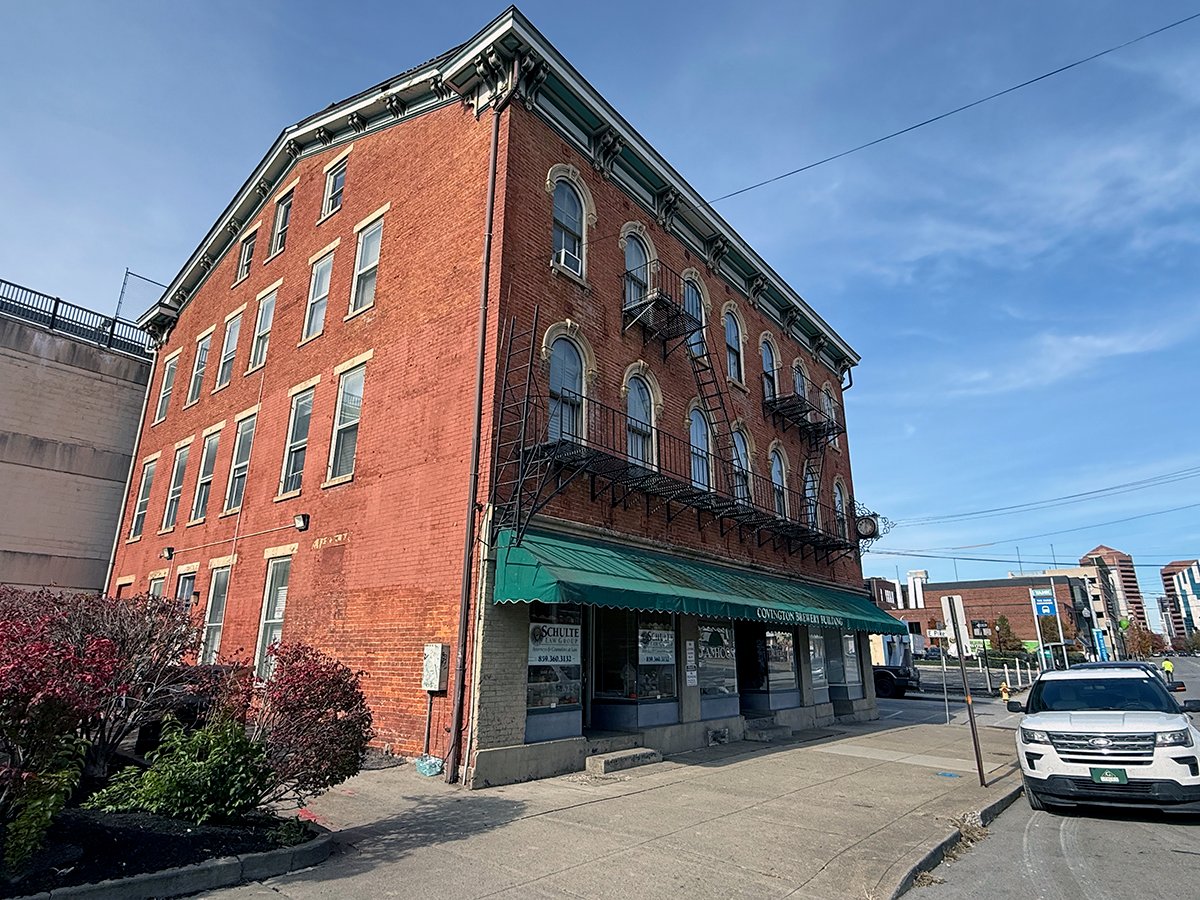
Now known as the “Brewery Building,” the four-story brick building is the only survivor from the original brewery complex.
Whatever the actual water source, lots where the former brewery was located have flooded underground spaces. “Supposedly, there was an underground tunnel that went from there [Brewery Building], that was part of it, into the actual underground storage for beer,” Hughes recalled.
The tunnel is visible in old fire insurance maps and Joe Stevie, one of the lot’s current owners, confirmed that the tunnel is still there.
Hughes never went into the Brewery Building basement. Stevie did because he almost bought the building.
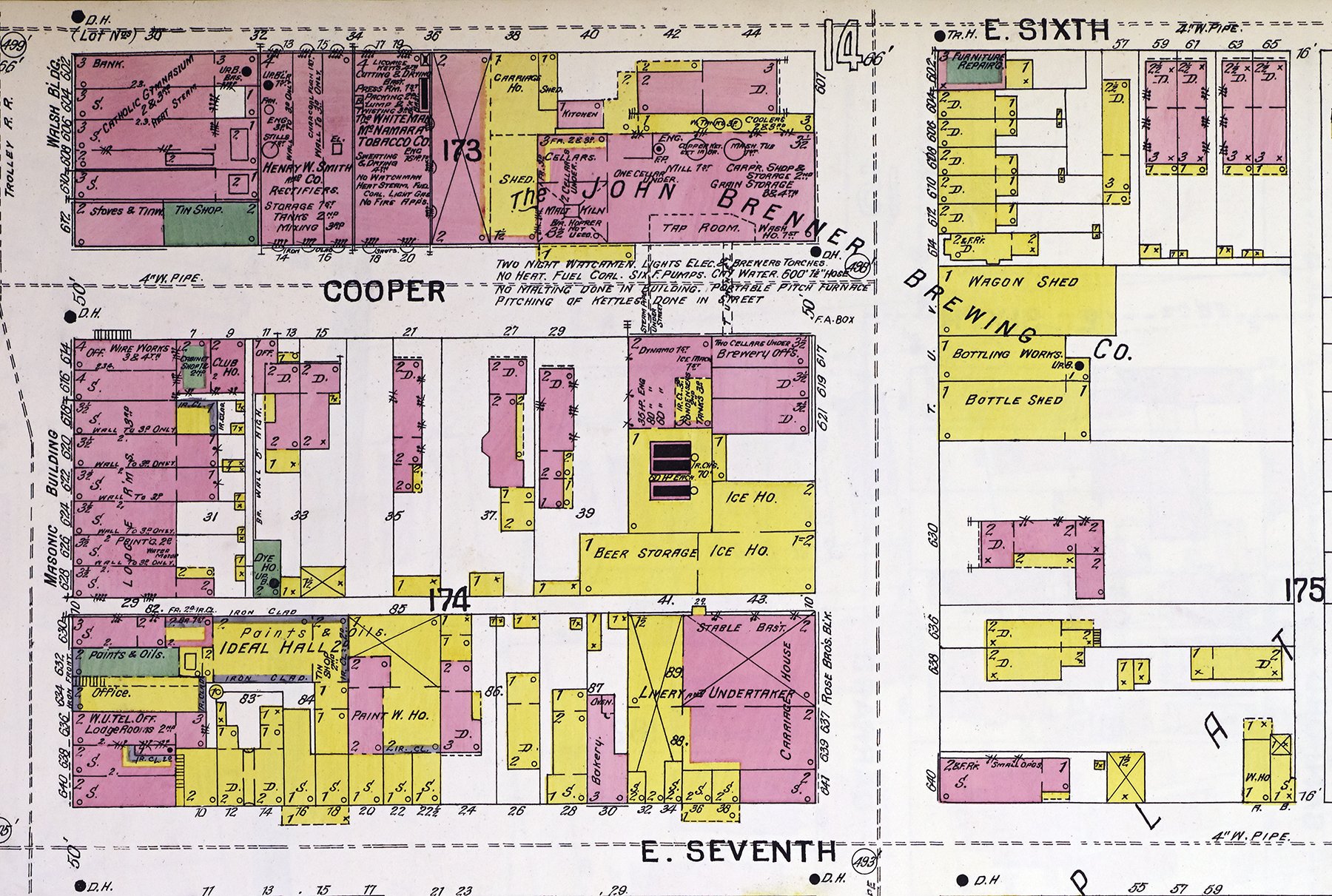
“You can still see that tunnel,” he said. “It has two sub-basements and there’s a tunnel in that basement that leads under Pike Street, and it goes in about 20 feet, and then it’s concrete blocked off.”
The Brewery building’s deepest basement is fully flooded. Developer Damien Sells saw it firsthand when, tethered to a rope, he descended into the former brewery’s basement. Stevie has videos on his phone documenting the time he walked through the flooded underground parking lot.
Stevie and three partners — Tyler Watkins, Guy van Rooyen and Mohammed Ehteshami — formed 608 Madison LLC and bought the property in 2024. Their preliminary plans include a mix of residential and commercial and a larger underground parking garage.
“The property has some significant abatement issues around it that are going to have to be remediated,” Watkins explained. “We’re going to have to completely implode that abandoned underground parking structure before we can build ours.”
The partners have lots of experience working magic with old buildings. Their projects include the Hotel Covington and the Eilerman Building, which fronts Madison Avenue behind the vacant Scott Street lot. Watkins and van Rooyen also just began converting Cincinnati’s historic Lunken Airport terminal into a boutique hotel.
As for the former brewery property’s history, that’s something that Stevie and Tyler Watkins, another partner, have spent a lot of time digging through.
“We’re both nerds about wanting to know this history,” Watkins admitted.