















By Patricia A. Scheyer
NKyTribune reporter
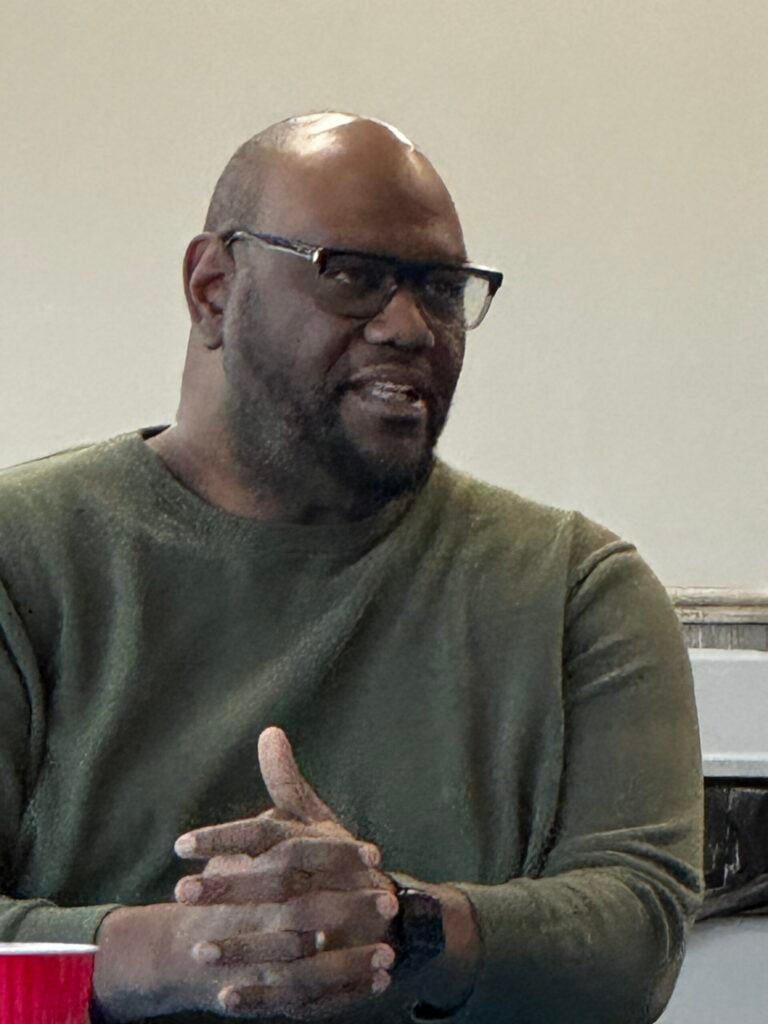
Covington Mayor Ron Washington led a discussion at the February Mayors’ Meeting, held at the Independence Senior Center in Independence.
Washington told the group that the House bill 495, which was before the Kentucky General Assembly, was recently withdrawn.
The bill was about local occupational license fees, and its goal was to amend rules for how wages are apportioned to local governments, and also to handle related refund claims. The purpose was to define terms, and set requirements for local occupational license fees, especially regarding where the employee wages are taxed.
The bill specified that 100 percent of the employee wages that are associated with a corporate office be apportioned to the local government where that office is located. The sole exception is wages for work performed at satellite offices which would be excluded from this specific apportionment rule.
Washington talked about this bill, saying it represents a real and growing fiscal problem facing cities like Covington due to the fact that remote and hybrid work has fundamentally changed how local tax is sourced, without taking into consideration where that economic activity is actually based.
“What we are asking the General Assembly to consider is that if a corporation with more than 1000 people, and they have received some sort of incentive from the city, that we be allowed to collect the payroll taxes,” said Washington.
While a particular reason for the withdrawal of the bill was not given, it was assumed that the concerns from local governments or businesses regarding the complexity of the proposed refund mechanisms might have prompted a need for further revision.
Mayor Washington thought he would propose a solution with the refund mechanism, saying that Covington’s Director of External Affairs and Senior Counsel Sebastian Torres helped him to understand that if a company, such as Fidelity Investments, was offered incentives to locate in Covington, Covington would get the taxes, but if an employee worked in another city, they would have to get a refund from that city since the city that offered incentives would basically be the home city. The team is working on a new version of the bill that will be filed in the near future.
In the case of a company which was located in a specific city, but the employees were working out of another city, there would not have to be a refund, depending on if the company had been given an incentive.
“Cities like Covington invest public dollars to attract major employers because those companies create jobs and generate the payroll tax revenue that supports essential city services,” said Mayor Washington. “When a company receives incentives to locate here but then shifts large portions of its workforce to remote or hybrid work, the city still provides the maintenance, emergency services and infrastructure that support that corporate presence, yet the tax revenue disappears. That leaves our residents footing the bill after the employer has already benefited from public investment. Bills that seek to address the significant loss of revenue suffered by many of our cities are rooted in restoring fairness and predictability, so cities can plan responsibly and ensure that incentives deliver the return taxpayers were promised. For Covington and other cities which may be competing with Indiana, Ohio and Tennessee, a legislative solution is critical to long term financial stability and responsible fiscal planning.”
Washington allowed that everyone in the room probably had a different opinion on the bill and he was correct, as all of the mayors listened intently, but were not sure that the process for the refunds could be done as simply and efficiently as Washington and Torres said that it could be. They also brought up that there would be cost involved with installing such a program and who would foot the bill for that.
“The situation has hit our city rather hard,” Washington continued. “Over the last five years our city has lost about $16 million. And as many of you do, when you’re incentivizing a company, you are talking about all the great things that are happening in our city, but we incentivize the deal. So we go to our taxpayers and we tell them, this company is going to come to town, so we’re going to give them a tax break. But they are going to bring all these things. We may have to build them new sidewalks, new planters, give them a reduction, and in some cases, work with our state and county partners, and even build bridges to get them to come here. And in our eyes, it is unfair that there was a promise made, but there wasn’t a promise kept.”

Torres said that this revenue gap is not the result of job losses or reduced economic activity in the city. Instead the loss stems from a change in systemic wage sourcing methodology that fails to account for where company offices are located, and where their operations are supported.
Erlanger Mayor Jessica Fette asked what would happen if the company had been given incentives from two different, but adjoining cities, how would you determine which city would get to collect the taxes.
Torres fielded the question, saying there is language in the bill, specifying which city would be able to collect, and that language was actually inserted into the bill by J. D. Chaney, from the Kentucky League of Cities, in order to prevent one main office location from taking the tax dollars from another office location.
Another question was why should occupational taxes be paid somewhere in the jurisdiction other than where it is worked? It was mentioned that there will probably be lawsuits filed because of the constitutionality and the due process proportion of it.
Another issue that was brought up was the relationship of the new rule to TIF districts. Several mayors suggested that it would result in their cities losing more money.
“The problem is this,” said Torres. “We have this behemoth across the river that is willing to take up any corporate entity that we can get, and find a site on the other side of the river, right? So we are very, very cautious about getting inventive in the ways we can put chains on the ankles of corporations that might want to come because we know on the other side of the river they’re not going to give up as much as we have.”
Torres invited anyone to give him a call if they have any questions about it, and he will help in any way he can.
Crestview Hills mayor Paul Meier said that the session is half over now, and he suggested that maybe they should keep discussing the options in the interim between legislative sessions, since it is probably too late to get the bill into shape to file it this time.
The mayors went on to other subjects but it was obvious they were not completely sold on the new and revised bill, although they could see some benefits in it.