














Employment-related lawsuits remain one of the most frequent and expensive liabilities for U.S. businesses. While attention often focuses on termination or workplace conduct, what I have found is that many claims quietly begin much earlier — during hiring.
Courts increasingly scrutinize whether employers exercised reasonable care, placing hiring managers squarely in the spotlight. In most cases, these lawsuits aren’t born from bad actors, but from skipped steps, inconsistent practices, or “quick decisions” that only look efficient until they are scrutinized in a court room.
 Keven Moore works in risk management services. He has a bachelor’s degree from the University of Kentucky, a master’s from Eastern Kentucky University and 25-plus years of experience in the safety and insurance profession. He is also an expert witness. He lives in Lexington with his family and works out of both Lexington and Northern Kentucky. Keven can be reached at kmoore@higusa.com
Hiring is one of the most controllable drivers of Employers Risk Liability (EPL) and negligence claims, yet it carries growing legal risk. In many organizations, hiring functions like maintenance on critical equipment — when it’s rushed or skipped, failures become inevitable and can become very expensive. With rising discrimination and failure-to-hire claims, EEOC enforcement has intensified. Internally, EPL loss data shows the average defense and settlement cost is $160,000 per claim, before accounting for operational disruption and reputational damage that follow when hiring controls break down.
For example, just recently BWW Resources, LLC which owns and operates a Buffalo Wild Wings restaurant in Douglasville, GA agreed to pay $47,500 to resolve a religious discrimination lawsuit filed by the U.S. Equal Employment Opportunity Commission. According to the EEOC, a job applicant who wore long skirts due to sincerely held religious beliefs inquired about a server position and was told the restaurant was hiring.
However, the general manager allegedly mocked her beliefs. After submitting an application, the candidate was not interviewed or contacted. An assistant manager later stated she would not be hired because long skirts were considered unusual attire for servers in a sports bar. The restaurant subsequently hired several other servers instead.
According to the EEOC’s allegations, the issue became clearer when the applicant’s daughter asked why her mother had not been hired. An assistant manager reportedly explained that the restaurant would not employ her because long skirts were considered unusual attire for servers in a sports bar. He even questioned what sports bar features servers in long skirts — a remark that ultimately supported the claim that the decision was based on the applicant’s religious attire rather than her qualifications.
The EEOC determined that the restaurant declined to consider or hire the woman to avoid accommodating her religious practice of wearing long skirts, and that this conduct violated Title VII of the Civil Rights Act of 1964. Title VII prohibits religious discrimination in the workplace.
So the question that their management probably faced after the fact was, “what are the proper hiring practices that could have prevented this lawsuit?”
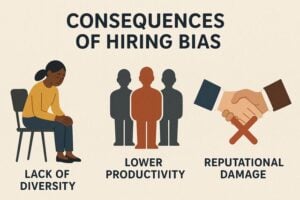
Employment lawsuits rarely stem from a single bad decision; they more often arise from preventable missteps during hiring—ignored red flags, shortcuts, or inconsistent practices. Courts closely examine whether hiring managers exercised reasonable care.
Many claims could be avoided through basic controls, documentation, and oversight. When managers bypass procedures or lack training, they inadvertently expose themselves and their organizations to significant legal and financial risk.
The importance of pre-employment screening
Negligent hiring claims commonly arise from inadequate pre-employment screening. Courts have held employers liable when background checks, reference checks, or job-related verifications were skipped or poorly performed, allowing disqualifying histories to go undiscovered. Hiring managers demonstrate reasonable care by completing interviews, verifying references, and conducting required checks. Proper screening is not administrative—it is a core riskmanagement control.
Objective, job-related hiring decisions matter
Subjective or inconsistent hiring decisions trigger litigation. Claims alleging discrimination or failure to hire are harder to defend when managers rely on impressions instead of objective criteria. Job descriptions, standardized interviews, and consistent evaluations show qualificationbased decisions; deviations unintentional create risk that decisions appear arbitrary or discriminatory.
Compliance with employment laws during recruitment
Hiring managers is the first defense against employment law violations but often lack training. Improper questions, misclassification, or misunderstanding protected characteristics trigger lawsuits. Knowing legal boundaries, documenting decisions, and involving HR when uncertain reduces risk; uninformed actions frequently become evidence.
Documentation is a critical defense tool
When hiring decisions are challenged, memories fade and verbal explanations fail and this is when maintaining documentation is critical to be able to defend your case. Maintaining interview notes, criteria, screening results, and approvals shows reasonable care and creates a defensible record; without documentation, even fair decisions can appear questionable.
The role of HR and oversight
Many lawsuits occur when hiring policies exist but are not followed. Managers acting without HR oversight often miss compliance issues. HR review promotes consistency and legal adherence. Involving HR reduces exposure, providing oversight to identify risks in highrisk hiring decisions.
Training prevents costly mistakes
Employment litigation often results from lack of training, not intent. Managers unfamiliar with EPL, discrimination, and retaliation risks may unknowingly create exposure. Regular training helps managers recognize risk, follow policy, and escalate concerns, positioning organizations to prevent claims before they arise.
Addressing red flags instead of ignoring them
Negligent hiring liability often arises when visible red flags are ignored. Concerning histories, missing information, or questionable references become costly when managers proceed anyway, rather than pausing to assess risk, escalate concerns, or decline highrisk hires
In conclusion, employment litigation often begins with informal hiring shortcuts that undermine otherwise sound policies. When steps are bypassed, organizations lose critical defenses — regardless of intent. These claims are often times become very costly and disruptive, consuming leadership time and damaging reputation beyond insured losses. Like with any risk management strategy, prevention is the most effective strategy. Hiring managers play a pivotal role by following approved workflows, conducting proper screening, making objective decisions, documenting actions, and involving HR. Think of it like buckling a seatbelt: it feels optional — until it suddenly isn’t.
Be Safe My Friends