








By Glenn Bramble
Special to NKyTribune
Kentucky held unique importance in the history of the Underground Railroad, especially as a border state, that is, a slaveholding state that did not secede from the Union during the Civil War.
Its geographical position along the Ohio River placed it directly between slave states to the south and free states — including Ohio, Indiana, and Illinois — to the north.

This made Kentucky a critical gateway for freedom seekers. Many enslaved people from Kentucky and neighboring states used routes that crossed the Ohio River into free territory. In addition, the state’s divided loyalties meant that some Kentuckians actively supported slavery, while others, particularly in Northern Kentucky towns, aided escape efforts. The tension between pro-slavery and anti-slavery forces made Kentucky one of the most dangerous, yet essential, regions in the Underground Railroad network.
Maysville
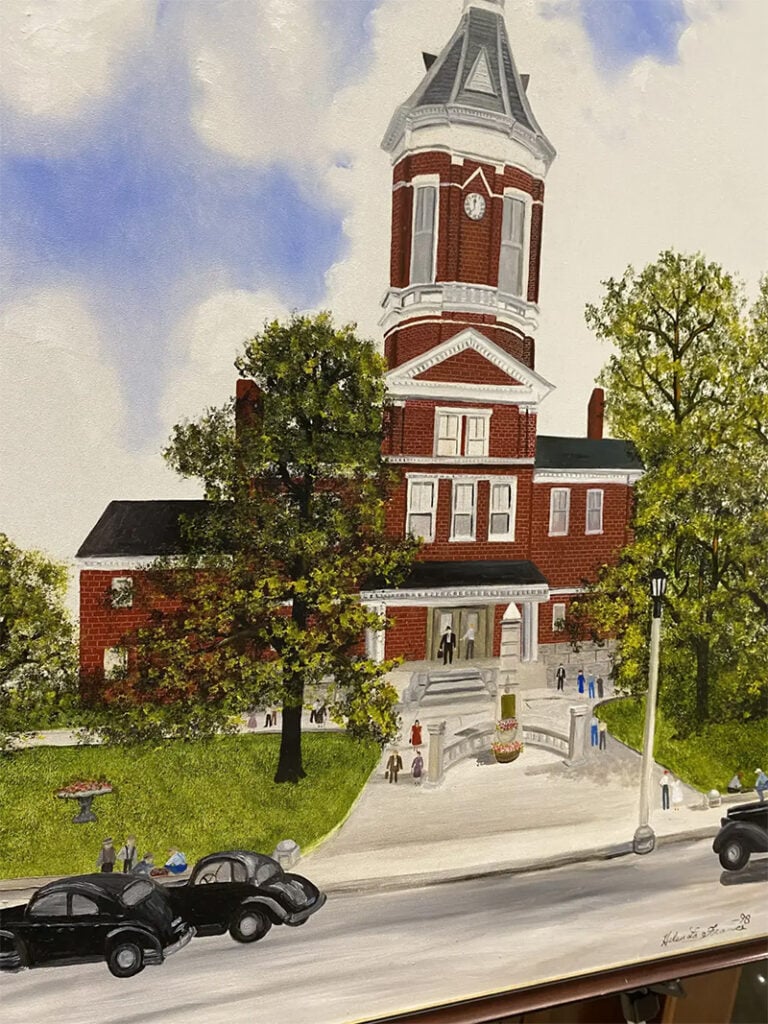
Maysville along the Ohio River was an important point on the Underground Railroad, principally the result of geography. Long before European settlers arrived, animals forded the river, as did Indigenous Peoples. As early as 1775, explorer Simon Kenton built his cabin at the confluence of Limestone Creek and the Ohio River. Incorporated in 1787, Maysville functioned as one of the original gateways to settlement west.
By 1789, “30 flatboats were landing at the town each day.” By the late 1790s, Maysville was connected by ferry across the Ohio River to Zane’s Trace, an early road across the Northwest Territory beginning at Wheeling, West Virginia [then Virginia]. And by 1835 the Maysville and Lexington Turnpike, following an old buffalo trace, connected the Ohio River to Central Kentucky. For much of Kentucky’s history, Maysville was a vital part of the state’s connections to the Ohio River and to the transportation and trade networks that the Ohio River Watershed provided (John Klee, “Maysville,” “The Encyclopedia of Northern Kentucky”)

Maysville’s geography also influenced its importance to the Underground Railroad. With Kentucky being a slave state and Ohio a free state, border towns like Maysville furnished plenty of opportunities for enslaved peoples to escape to freedom. This was particularly true for the overall Maysville region because it was situated upriver from Ripley, Ohio. Ripley developed as a center of abolitionist sentiment in the Ohio River Watershed. Crossings in the region made it an important point for those seeking freedom.
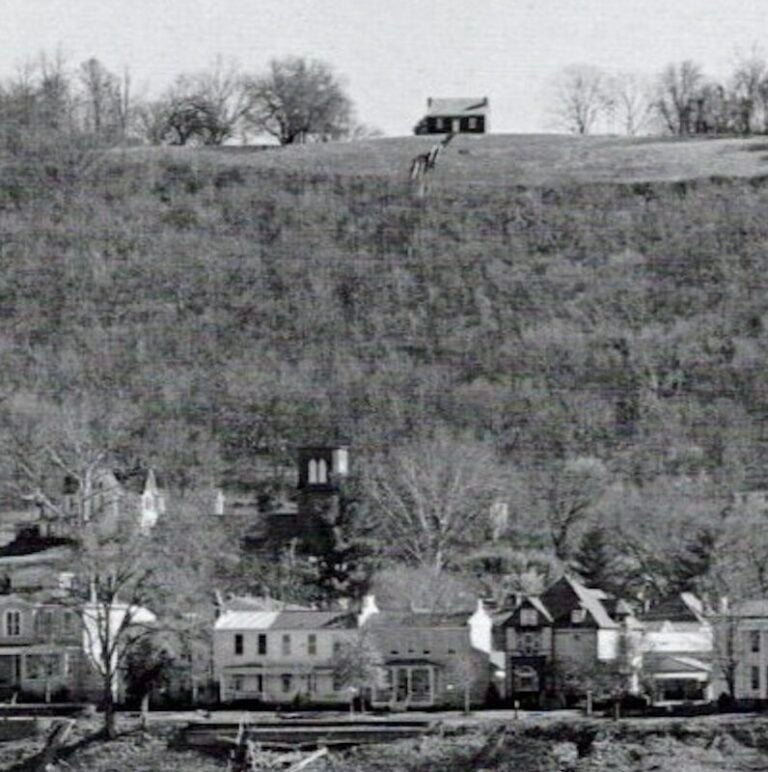
One of the most influential figures in Ripley’s abolitionist movement was John Rankin (1793–1886). Rankin moved to Ripley in 1822 and built his famous house on the hill overlooking the town about six years later. From their home on the hill, the Rankin family built a stairway down to the riverbank to ease the efforts of visitors. Rankin also cleared trees so that he could burn a lantern to provide a lighthouse for escaping slaves crossing the river. As a Presbyterian minister, Rankin delivered many sermons in Kentucky and Ohio about the evils of slavery, as well as published multiple letters and pamphlets. While he was away preaching and building support for the abolitionist movement, his family operated their underground railroad “station,” helping enslaved people to freedom. At one point, Kentucky enslavers even put a bounty on John Rankin’s head.

Tice Davids
The underground railroad is also linked with the town of Maysville at the most basic level through the story of Tice Davids. In 1831 Tice was fleeing from his enslaver in the Maysville area when, out of desperation, he dove into the Ohio River and started to swim across. His enslaver searched the Kentucky bank and was able to find a skiff to follow Tice and to keep him within sight. He watched him climb onto the Ohio shore, following behind him. Then Tice scrambled up the bank and into the bushes, where he disappeared without a trace. After searching in vain to find Tice, the exasperated man returned home empty handed. The enslaver often retold the story, concluding that, “He must have gone on some underground road.” The “rail” supplement to the term — “Underground Railroad” instead of “underground road” — was presumably a later accretion. Of course, no conclusive proof of the origins of the term “underground railroad” can be definitively located. Rather, this often-recounted story was for many years believed by some in Kentucky to have been the origin of the phrase (Emilius Oviatt Randall and Daniel Joseph Ryan, “History of Ohio: The Rise and Progress of an American State,” 1912.)
Helpful locals
As a border state, Kentucky was a hotbed of the abolitionist movement. With Ohio just across the river, the morality and justifications for slavery were constantly being called into question. The result was that some Kentuckians, particularly in places like Maysville where the residents had a visible reminder each and every day, had a complicated relationship with both slavery and abolitionism.
Arnold Gragston was a “conductor” on the underground railroad for four years and claimed to have helped two to three hundred slaves escape to freedom. Born an enslaved person in Mason County, Kentucky on Christmas day in 1840, Arnold lived on a plantation owned by Jack Tabb. Tabb, who presumably thought that Arnold wasn’t necessarily very good at tasks, nevertheless provided him an unusual amount of unsupervised time. Once Arnold began working as a conductor, he was frequently and visibly missing from the farm, rowing freedom seekers across the river to Rankin’s house in Ripley. According to Gragston years later, “I don’t know to this day how he [Tabb] never knew what I was doing; I used to take some awful chances, and he knew I must have been up to something; I wouldn’t do much work in the day, would never be in my house at night, and when he would happen to visit the plantation where I had said I was goin’ I wouldn’t be there. Sometimes I think he did know and wanted me to get the slaves away …” (Federal Writers’ Project: Slave Narrative Project, Vol. 3, Florida, Anderson-Wilson with combined interviews of others. 1936.).
Jack Tabb himself was a complicated person. The 1860 U.S. Census for Mason County lists him as John L. Tabb, 64 years old, living with his wife Hannah in the “Lower District” of Mason County. The slave schedules for that census list nine enslaved people on Tabb’s land, including an 18-year-old Black male, possibly Gragston. Over seventy-five years later, Gragsdon recounted that Tabb allowed Sandy Davis, an enslaved person, to teach all the slaves on Tabb’s plantation reading, writing, and arithmetic. This would have been rather unusual since many enslavers of the time forbade educating slaves. Even more complex was that Tabb was a public friend of the well-known abolitionist John Fee. However, Tabb was not beyond beating his own enslaved people, although Gragston believed that he did so “that the other owners wouldn’t say he was spoilin’ his slaves” (Federal Writers’ Project, p. 147).

Gragston further explained that Tabb “would let us go a-courtin on the other plantations near anytime we liked, if we were good, and if we found somebody we wanted to marry, and she was on a plantation that b’longed to one of his kin folks or a friend, he would swap a slave so that the husband and wife could be together. Sometimes, when he couldn’t do this, he would let a slave work all day on his plantation and live with his wife at night on her plantation. Some of the other owners was always taking about his spoilin’ us” (Federal Writers; Project, p. 147).
Arnold Gragston rowed many freedom seekers on moonless nights, where he would “meet ‘em out in the open or in a house without a single light. The only way I knew who they were was to ask them ‘What you say?’ And they would answer, ‘Menare.’ I don’t know what that word meant — it came from the Bible. I only know that that was the password I used and all of them that I took over told it to me before I took them” (Federal Writers’ Project, p. 150).
One evening in 1863, four years after beginning to row freedom seekers across the Ohio River, Gragston carried “about twelve on the same night. Somebody must have seen us,” he stated, “because they set out after me as soon as I stepped out of the boat back on the Kentucky side; from that time on they were after me. Sometimes they would almost catch me; I had to run away from Mr. Tabb’s plantation and live in the fields and in the woods. I didn’t know what a bed was from one week to another. I would sleep in a cornfield tonight, up in the branches of a tree tomorrow night, and buried in a haypile the next night …” (Federal Writers’ Project, p. 153).
Finally, deciding that “I could never do any more good in Mason County,” Arnold and his wife “one night quietly slipped across [the river] and headed for Mr. Rankin’s bell and light.” Ultimately settling in Detroit, Michigan, he and his wife had 10 children and 31 grandchildren. He was 97 years old at the time of his interview (Federal Writers’ Project, p. 153).
Kentucky’s stressful and strained relationship with slavery, abolitionism, and the Underground Railroad was related to its location along the Ohio River Watershed, an intersection point of slave and free states. Open to cultural and political influences from both the South and the North, its place in the history of the underground railroad was much more nuanced and complicated than perhaps north of the Ohio River. Blacks, Whites, abolitionists and sometimes even enslavers themselves made up a patchwork quilt—a functioning if somewhat misnamed “Underground Railroad” — that enabled enslaved peoples to seek their freedom.
Glenn Bramble is a graduate student working with the Master of History program at Northern Kentucky University.
Paul Tenkotte, PhD is Editor of the “Our Rich History” and professor of history at Northern Kentucky University. He also serves as Director of the ORVILLE Project (Ohio River Valley Innovation Library and Learning Engagement). He can be contacted at tenkottep@nku.edu.