











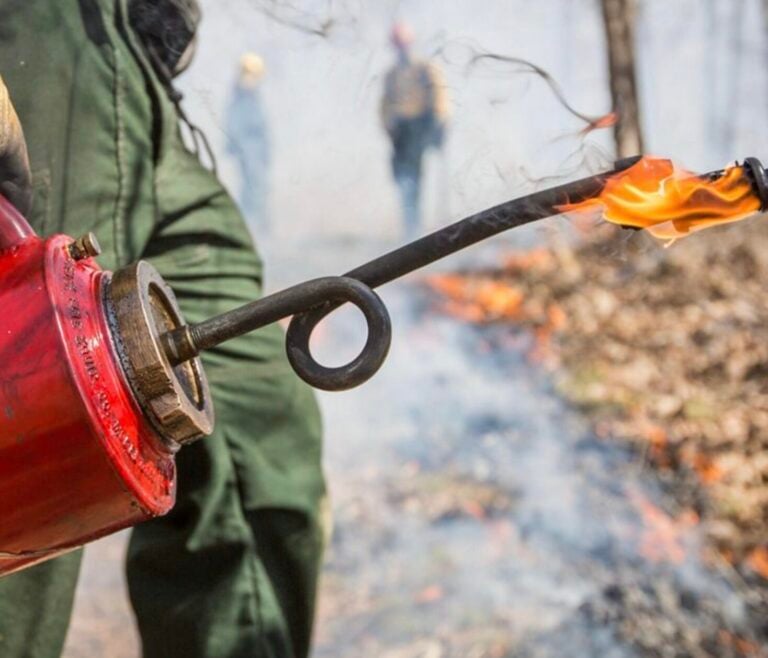


While winter is just beginning to release Kentucky from its icy grip, warmer days are close at hand. That means The Nature Conservancy is preparing for prescribed fire season, which typically runs from February through April. People who live near TNC’s Kentucky public nature preserves or in the Appalachian Mountains may soon see smoke in the air as TNC and its conservation partners conduct controlled burns to restore habitats such as forests and grasslands.
Fire is an important conservation tool for Kentucky. Most of our forests and grasslands are adapted to frequent, low-intensity fires. These fires reduce excess fuels such as leaf litter and tree limbs, and encourage oak, hickory, grasses and wildflowers and other native species to grow and thrive on the forest floor. Reducing excessive fuels also lowers wildfire risk. Fire creates and maintains important habitats for many wildlife species. The Northern bobwhite quail is a good example.
“Many species are in decline in the Appalachian Mountain area because of a loss of woodland and grassland habitat,” says Chris Minor, director of land management and fire manager for TNC in Kentucky. “Many of our forests are overstocked with trees, reducing forest health and limiting the diversity of plants and animals.”
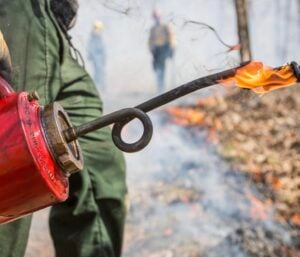
Prescribed fire conducted in the right way, under the right conditions and in the right areas, can help bring these species back by opening up the forest floor and allowing sunlight in. Without prescribed fire or other means of proper forest management practices, we will continue to lose important species.
“Prescribed fire is an essential tool for maintaining healthy forests and wildlife habitat,” says Ryle Benke, fire management officer for the Daniel Boone National Forest.
“By working together with partners across Kentucky, we can safely and effectively use fire to reduce wildfire risk and improve ecosystem resilience at the landscape level. Partnerships, like the one we have with The Nature Conservancy, enhance our collective impact and ensure that fire remains a positive force for both people and nature.”
Professional fire managers develop burn plans, also known as ‘prescriptions,’ that take weather conditions, moisture content and current conditions into account, install fire breaks around burn units, and utilize professionally trained staff in appropriate numbers for safe burning. Teams follow up to make sure the area is safe before leaving.
“The ecosystems we conduct controlled burns in evolved with fire,” says Zach Pickett, stewardship coordinator for TNC in Kentucky. “Fire is a natural tool for maintaining these systems. It’s also a lot more efficient than thinning forests manually—especially on larger units. Prescribed fire is a great tool for disturbance, which is always a part of healthy natural systems.”
Controlled burns are carefully planned to maximize ecological benefits while minimizing any nuisances such as smoke. Each burn has a specific plan that lays out goals, conditions under which a burn will occur and how the burn will be conducted. Experts monitor the weather and only make a final call to burn at the last minute if all conditions are favorable.
“Prescribed fire is critical for many of Kentucky’s priority wildlife species, including quail, wild turkey, elk, pollinators, and numerous songbirds,” says Jacob Stewart, Fire Management Officer with the Kentucky Department of Fish and Wildlife Resources. “Fire opens up the forest floor, stimulates native grasses and wildflowers and creates the diverse habitat structure these species need to feed, nest and raise young.”
All participating fire personnel completed an annual training in January to ensure a safe prescribed fire season.
“Prescribed fire is a proven way to safeguard Kentucky’s natural heritage,” says Heidi Braunreiter, Prescribed Fire Program Coordinator at the Office of Kentucky Nature Preserves (OKNP). “It allows us to restore fire-adapted ecosystems, reduce wildfire risk, and maintain the diverse species and habitats that make our state unique.”