














Picture this. You’re cruising down the highway, belting out your favorite song like you’re auditioning for “Carpool Karaoke,” when suddenly you hear a beep as if you were just kicked off stage of The Gong Show. Then before you know it, your steering wheel gives a little shimmy and nudge, as if your car is saying, “Nice try, but let’s keep it between the lines, Mr. American Idol!”
The question is do these lane departure and crash avoidance systems actually work? Or are they just another excuse for automakers to add more buttons, more buzzers, and more acronyms to your dashboard? Let’s dive into the history of this technology and the evidence that modern car safety features are saving more lives.
Lane departure crashes killed 17,791 people in 2014 — about 54% of all traffic fatalities. Fast forward to 2024, and that number dropped to an estimated 12,500–13,000, or roughly 32–33%. While lane departure remains a leading cause of death, the decline over the past decade highlights the effectiveness of safety technology and better roadway design.
Recent National Highway Traffic Safety Administration (NHTSA) data shows overall traffic fatalities (Jan–June 2025) at an estimated 17,140 deaths, down 8.2% from the same period in 2024. That’s a lot of lives saved, and a lot of insurance claims avoided.
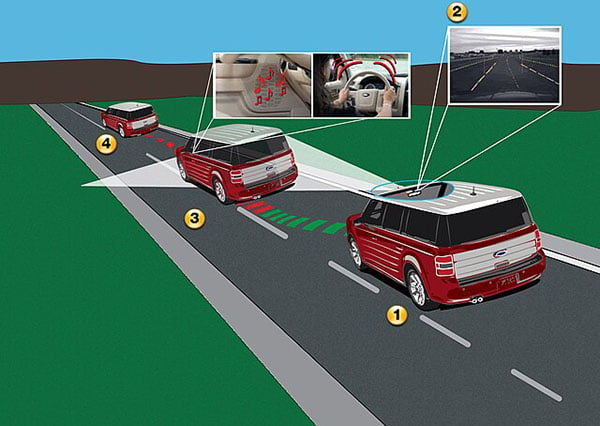
Lane departure warning systems (LDWS) are designed to warn drivers when their vehicle begins to move out of its lane — unless the turn signal is on. These systems target the main causes of collisions: driver error, distractions, and drowsiness.
The concept was first fitted to a Rover SD1 in England by British inventor Nick Parish in 1988 and patented in 1989. The first production LDWS in Europe was developed by the U.S. company Iteris for Mercedes Actros commercial trucks, debuting in 2000. Today, these systems are available on many new cars, SUVs, and trucks.
In 2009, the NHTSA began studying whether to mandate lane departure and frontal collision warning systems on automobiles.
Then there is the lane keeping assist (LKA) which is a newer feature that, in addition to warning, it automatically helps keep the vehicle in its lane. Some vehicles combine adaptive cruise control with lane keeping systems for extra safety. While these features create a semi-autonomous experience, most require the driver to remain in control due to the limitations of lane-keeping technology.
Let’s break down the main players in automotive safety:
 Keven Moore works in risk management services. He has a bachelor’s degree from the University of Kentucky, a master’s from Eastern Kentucky University and 25-plus years of experience in the safety and insurance profession. He is also an expert witness. He lives in Lexington with his family and works out of both Lexington and Northern Kentucky. Keven can be reached at kmoore@higusa.com
• Lane Departure Warning (LDW): Your car’s polite way of saying, “Excuse me, you seem to be drifting. Would you like to reconsider your life choices?” It alerts you when you unintentionally cross lane markings without signaling.
• Lane Departure Prevention (LDP): For those who ignore the polite nudge, LDP is the assertive friend who grabs the steering wheel and says, “Nope, we’re staying in our lane today.”
• Crash Avoidance Systems (automatic emergency braking, forward collision warning): The superheroes of the bunch, detecting imminent collisions and either warning you or slamming on the brakes faster than you can say “Oh no!”
Studies show these systems can prevent thousands of fatal crashes each year by reducing run-off-road and head-on collisions, which are among the deadliest crash types.
And here’s the kicker. Nearly nine out of 10 drivers now keep lane departure systems switched on, reflecting growing trust in their safety benefits. Turns out, people like not crashing.
Not everyone was immediately sold on these systems. Early versions relied heavily on audible alerts, which many drivers found about as pleasant as a toddler with a toy drum set in the back seat. The result? Many drivers turned them off faster than you can say “lane departure.”
Automakers got wise. They introduced haptic feedback — subtle vibrations in the steering wheel or seat — making alerts less jarring and more effective. They also made it harder to turn off these features, moving them into vehicle settings menus instead of easy-to-reach buttons. The result? Activation rates for lane maintenance systems jumped from 51% to 87% over the past eight years.
Before you start thinking your car is invincible, let’s talk limitations:
• Specific Scenarios: These systems shine in situations like unintentional lane drift on highways. In complex urban settings, or when drivers deliberately change lanes without signaling, effectiveness drops.
• Driver Reliance: Some drivers may over-rely on technology, treating their car like a self-driving Uber. Spoiler alert: It’s not.
• System Variability: Effectiveness depends on the automaker’s implementation. Some systems only warn, while others actively intervene. So, if your car just beeps and doesn’t steer, don’t expect it to save you from every mishap.
Lane departure warning systems and lane keeping systems rely on visible lane markings. They typically cannot decipher faded, missing, or incorrect lane markings. Markings covered in snow or old lane markings left visible can hinder the ability of the system.
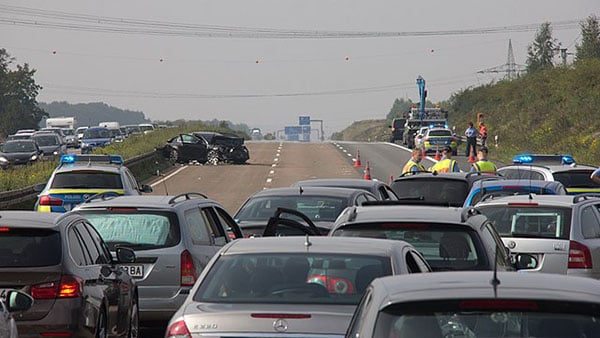
These warning systems also face legal limitations regarding autonomous driving. They require constant driver input and are limited to assisting the driver, not driving the vehicle. The biggest limitation is that they are not in complete control of the vehicle and “cannot replace good driving habits.”
So, do lane departure and crash avoidance systems work? Absolutely. They’re not a substitute for attentive driving, but they’re a powerful backup—like having a guardian angel who’s really into road safety.
Widespread adoption and consistent use are already contributing to fewer severe accidents and fatalities. As technology improves, we can expect even greater benefits.
As cars get smarter, safer, and occasionally sassier, lane departure and crash avoidance systems are leading the charge. They’re not perfect, but they’re making a real difference—saving lives, reducing injuries, and giving us all a little peace of mind.
So the next time your car gives you a warning beep, take it in stride. Give a nod of appreciation—it’s simply looking out for your safety and could help you avoid a costly mishap or an awkward stare down from the driver next you in the other lane that you just about swerved into.
Be safe my friends.