















By Liam Niemeyer
Kentucky Lantern
An environmental advocacy group that seeks to protect endangered species is suing the U.S. Fish and Wildlife Service to force a decision from the agency on whether to protect an imperiled salamander found only in Appalachia.
The Center for Biological Diversity in a federal lawsuit filed Thursday alleges the wildlife management agency failed to protect the yellow-spotted woodland salamander by missing a deadline to make a decision on whether the salamander should be protected under the Endangered Species Act.
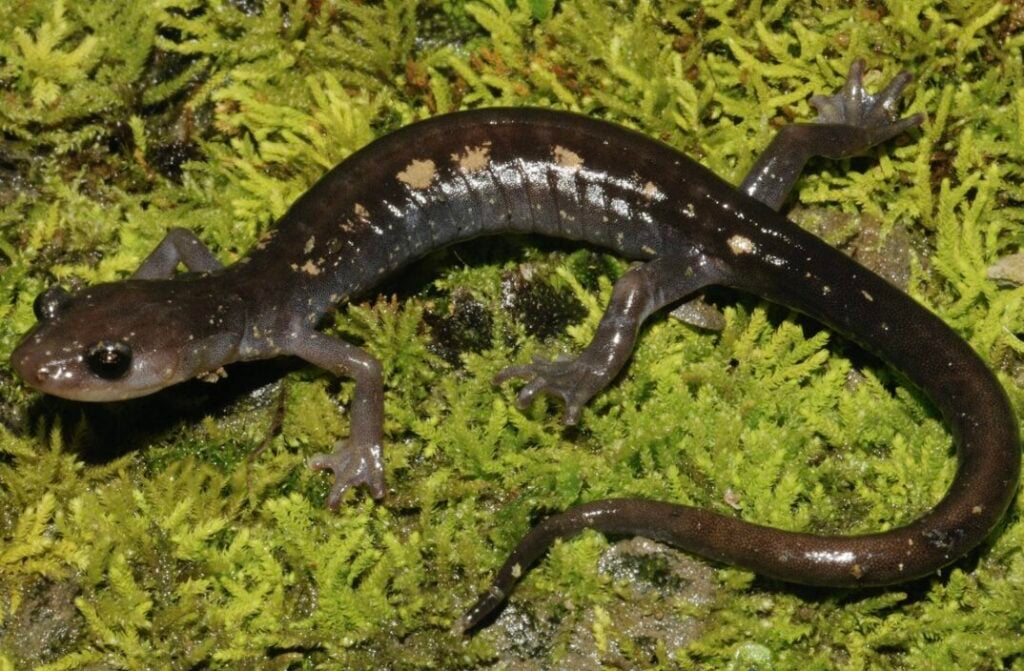
The center stated in a press release there were only a few hundred of the salamanders remaining, endemic to Appalachian states including Kentucky, West Virginia, Tennessee and Virginia. The lawsuit asks for a judge to force the agency to make a decision on whether listing the salamander under the Endangered Species Act is warranted.
“These are some of the most imperiled salamanders on the planet and they can’t wait any longer for protections,” said Will Harlan, a senior scientist for the center. “Without federal action these salamanders will go extinct on our watch.”
The center along with other organizations including Kentucky Heartwood, Kentucky Waterways Alliance and Appalachian Voices petitioned the agency in 2022 to protect the salamanders.
Taylor Pool, a regional spokesperson for the agency, did not immediately respond to requests for comment about the lawsuit Thursday afternoon.
The lawsuit states yellow-spotted woodland salamanders are found in shale and sandstone “making it particularly vulnerable to habitat loss and fragmentation from mining because these areas are targeted by mountain top removal mining.”
The lawsuit also states the salamander is found on 21 isolated rock outcrops in Appalachia and that new surface mining permits were issued near salamander populations in Eastern Kentucky in Harlan and Letcher counties.
“The salamander has already lost significant portions of its range to mining, and it will continue to face destruction, modification, and curtailment of its range,” the lawsuit states. “Other threats include overutilization, disease, predation, invasive species, pollution, and impacts from climate change. Its vulnerability is compounded by its low dispersal.”
Liam Niemeyer is a reporter for the Kentucky Lantern, a part of States Newsroom, the nation’s largests state-focused nonprofit news organization. It is republished here under Creative Commons license.