
















By Patricia A. Scheyer
NKyTribune reporter
PARK HILLS
Park Hills city council talked about the city’s procurement policy, or purchasing policy, which is an organization’s standardized procedures for purchasing goods and services. In the case of cities, a procurement policy is generally set by the state.
Kentucky just notified cities that they have changed the amount of money that is used as a standard to have to bid out the project or not from $40,000 to $50,000. Mayor Kathy Zembrodt told council members in a caucus meeting that City Attorney Daniel Braun recommended that the city just adopt the state’s procurement code so that every time the state changed it, the city would not have to formally adopt it again, because whatever was in the state policy would automatically be in the city’s policy.
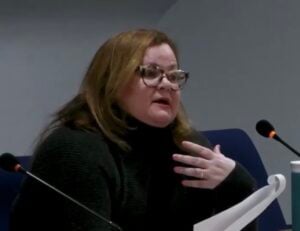
Council member Sarah Froelich said she had introduced the subject of how the city presents the procurement at a previous meeting to anyone who would like to look it up and read it. So at the caucus meeting she brought it up again, saying she really wanted council to look at the process she proposed and give it consideration. She said it outlines a phased approach from modernizing the city’s procurement government structure and later the procurement policy itself, and the goal is to first establish durable governance and adoption mechanisms before reviewing substantive purchasing rules. She said she would like to improve transparency and institutional continuity, and improve flexibility for future updates. This would all be done in three phases.
Mayor Zembrodt tried to explain why Attorney Braun wanted the process to be in an ordinance, and that is because when anyone wants to see the procurement policy they can get to an ordinance faster and easier.
Froelich argued that what the city should have is a clear process so anybody can understand how to look it up. Zembrodt said that’s why they want it in an ordinance, so people can look it up easily. Council member Pam Spoor said she liked the idea of making the procurement policy an exhibit to the ordinance, because then it is codified. She said that might have been the flaw in how they put the procurement policy in before, explaining that they didn’t have the policy as an exhibit.
There was disagreement as to how the code should be recorded in order for it to be easy for residents to look it up if they need to refer to it.
The budget was also discussed, and council members suggested ways that some of the budget could be improved.
Lights on the roadway were discussed.
BOONE COUNTY
Boone County Commissioners voted to pull two items from the consent agenda to discuss further; one was the transfer of $1.15 million to the general fund for the purpose of buying police cars, and the other was the treasurer’s report. The transfer had a contingent item on the agenda, also, a resolution that allows the county to buy 25 more cars at a price locked in last year. Commissioner Chet Hand said he thought an item should not be on the consent agenda if it has a contingent resolution, and County Administrator Matthew Webster said that was a reasonable request. The treasurer’s report had a number that was negative, but Webster explained that number will change as soon as the golf course opens.

A resolution passed approving the purchase of a Remote Operated Vehicle for the Boone County Water Rescue Team.
Another resolution passed which approved the RFP for the Tennis program management and instruction services to ATKB Tennis.
A resolution passed which accepted and approved the guaranteed maximum price budget and project budget for the Emergency Management and Public Safety Communications center project, and authorized Judge Moore to execute the budget agreement with Pepper construction. The cost for the project came to $9,691,376, and the total project cost is $11,380.409.
A resident, Brian Mauer, came to protest any agreements the county might have with the federal authorities, and he said Boone County might not have the authority to stop what is happening federally, but they do have the power to stop it in Boone County.
Another resident, Bob Cicero, stood up to tell the court he approves of what the county is doing, and to keep up the good work.
COVINGTON
Sebastian Torres, Director of External Affairs and Senior Counsel for Covington, gave a brief presentation Tuesday evening on three bills that are or have been in front of the Legislature this session. The first was Senate Bill 112 having to do with short term rentals. He reminded commissioners that they as a city have spent about 4 years on public meetings and public discussion trying to find rules that would be good for Covington, and discourage buyers from out of town who want to come in and buy up property and turn areas into boutique hotel districts that are not good for the city.
He said the city had found a good balance and now the state would like to preempt local rule. He advised the commission to formally oppose the legislation. Mayor Ron Washington read a resolution to oppose the legislation and it passed unanimously.

The second bill is House Bill 495, an economic retention incentive act, which was withdrawn. However, Representative Stephanie Dietz listened to concerns and refiled a new sharper version version of the bill, he said. The amended version specifically seeks to allow the city to retain occupational fees related to employees who spend 30 percent or more of their time in the city, or are related to a corporate office location that features 1000 or more jobs associated with it, or have previously received the benefits of an economic incentive to that corporate location. He said the city, in the wake of remote work, still has to provide municipal services to those office locations, even though up to half of the employees might work remotely. There is one employer in the city that would fall under this bill, he told the commissioners, that the city has lost over $10 million in occupational fees due to their remote work practices, and they had received economic incentives. He recommended supporting this bill. Mayor Washington read the resolution and it passed unanimously.
The third bill had only been filed about ten days ago, he thought maybe sparking a suspicion of trying to get the legislation passed quickly and under the radar. It is House Bill 612 which seeks to impose taxes on alcoholic beverages sales and preempt local government authority. It seeks to place a 4 percent tax on sales, and places the 4 percent tax on all alcoholic sales. The city has received many complaints from bar owners, liquor stores, and businesses who say that a 6 percent sales tax plus another 4 percent broad tax will be another nail in the coffin as they struggle to survive, and it kills their margins. The strategy, according to Torres, is to restructure alcohol laws by the legislature, and shift taxes off of wholesalers, and he said he recommends opposing it.
Vice Mayor Shannon Smith spoke up, recusing herself from the vote because she is a small business bar owner, and she shared a little of the gravity of the impact of the bill. She is an alcohol beverage law attorney, most of the representation on this is the KDA, or Kentucky Distillery Association, which represents manufacturers, then the wholesalers, and then the mom and pop stores. This tax, she said, is being assessed to the people who have the least power to fight back. Some cities already have another tax on top of the 6 percent, so with the four percent extra that could add up to as much as a 15 percent gross tax, and that cost will be passed on to the consumer, discouraging them from buying their product. She said she would encourage every city to oppose this. Mayor Washington read the resolution, but also said ‘without a doubt it would be a gut punch to our city.’ It passed with one abstention.
TAYLOR MILL
In a short caucus meeting Wednesday morning, Taylor Mill commissioners, minus Mayor Daniel Bell who was in Frankfort to help the city with legislation before the assembly, listened to an update on the Taylor Mill sidewalk project phase three from City Administrator Brian Haney. He said it is expected that the last parcel requiring right of way acquisition should be completed by the end of the week. After this part of the project is completed, the final review and approval of the project by the state will occur, and then the project should go to bid in the next several months. He said the city is hopeful that the entire project will be completed before the end of this year, even with all the setbacks that have occurred.

Commissioners discussed the need to rename a small section of Wayman Branch road that was cut off from the original road when Pride parkway was constructed. Even though there are only two homes left on this section of the road, the stubbed street still goes by the name Wayman Branch. Commissioners have been asked to decide on a name and vote on it at the March Commission meeting.
CAO Haney updated the commissioners on a timeline for the Fiscal Year 2027 budget presentation. Right now, he said, he is working with the staff and department heads to reconcile department requests within an overall city budget. First reading of the budget will take place at the April commission meeting.
Another discussion was held about a request from a developer for an exemption of the requirement for a sidewalk to be constructed along all roadways adjacent to the development. The subdivision is located at Ezra Drive and Taylor Mill Road. City zoning allows the commission to grant an exemption to the sidewalk requirement if they would decide that the sidewalk exemption is justified. In the case as it was presented, the sidewalk would connect to no other sidewalk as no sidewalk currently exists on that side of Taylor Mill Road, and the city has no plans to construct one. The city’s sidewalk is located on the opposite side of Taylor Mill Road. The commissioners’ discussion favored the exemption. This topic will be discussed in more detail and then voted on at the March commission meeting.
Commissioner Rose Merrit brought up the city employees medical benefit plan, and the need to reevaluate the seeming high level of coverage that the city currently offers. Commissioners asked Haney if he would survey other cities to find out the level of medical insurance they offered to their employees for comparison, and then report back to them. This report will be part of the Fiscal Year 2027 budget process.