










By Andy Furman
NKyTribune staff writer
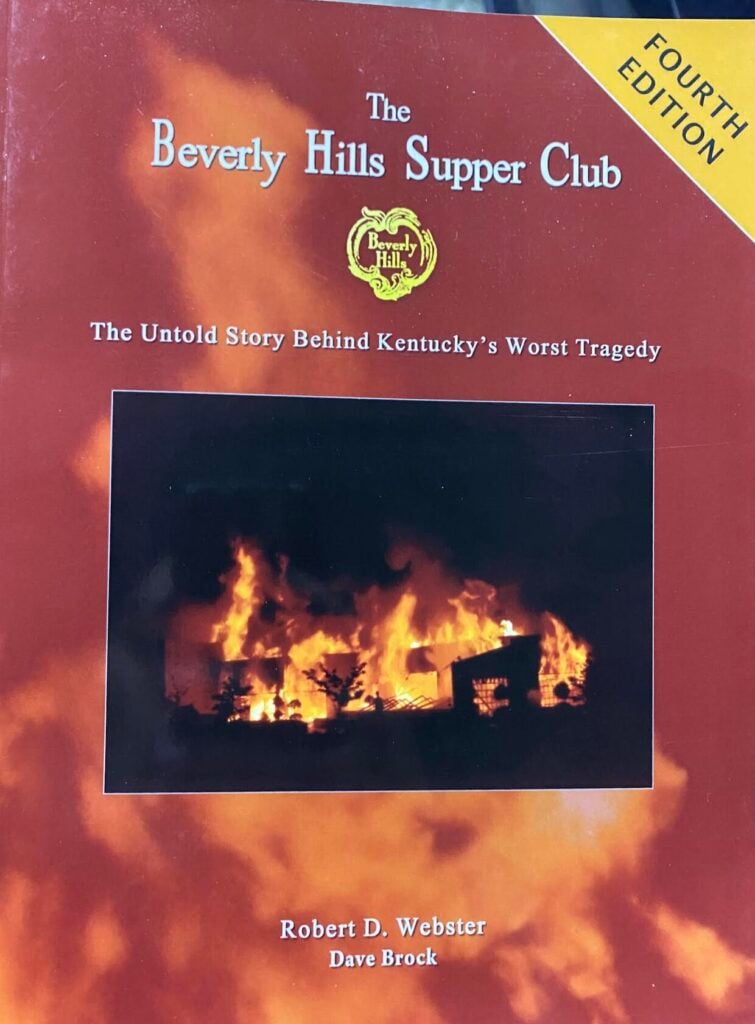
It’s truly the story that haunts – daily. It just never goes away, and everyone in Northern Kentucky knows it. And lives with the pain – daily. But it was Bob Webster who attacked it in his book — The Untold Story Behind Kentucky’s Worst Tragedy, resulting in 165 deaths and hundreds of injuries.
The Beverly Hills Supper Club.
“I was approached by a former busboy of the club to write a book on the subject,” Webster told the Covington Rotary Club recently.
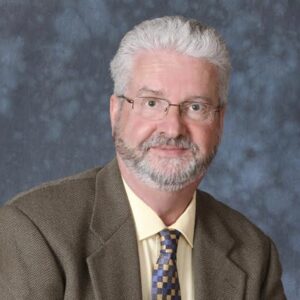
“My wife wasn’t really excited about the project,” he later told the Northern Kentucky Tribune. “She knows how much money I make writing history books.”
And he says he was immediately confused from what he researched versus what he recalled from local newspaper reports. He worked on the book and researched for more than five years; digging through files from the Kentucky State Police, the National Fire Protection Association, the Consumer Products Safety Commission, and others, he recalled.
“Most of the damaging evidence came from the Kentucky State Police files,” he said.
Early Newport was the home of gambling and illegal activities, prior to 1900 thanks to the Newport Barracks Army installation. It was the Volstead Act that brought illegal alcohol into the region, as well as crime/corruption – which certainly skyrocketed.
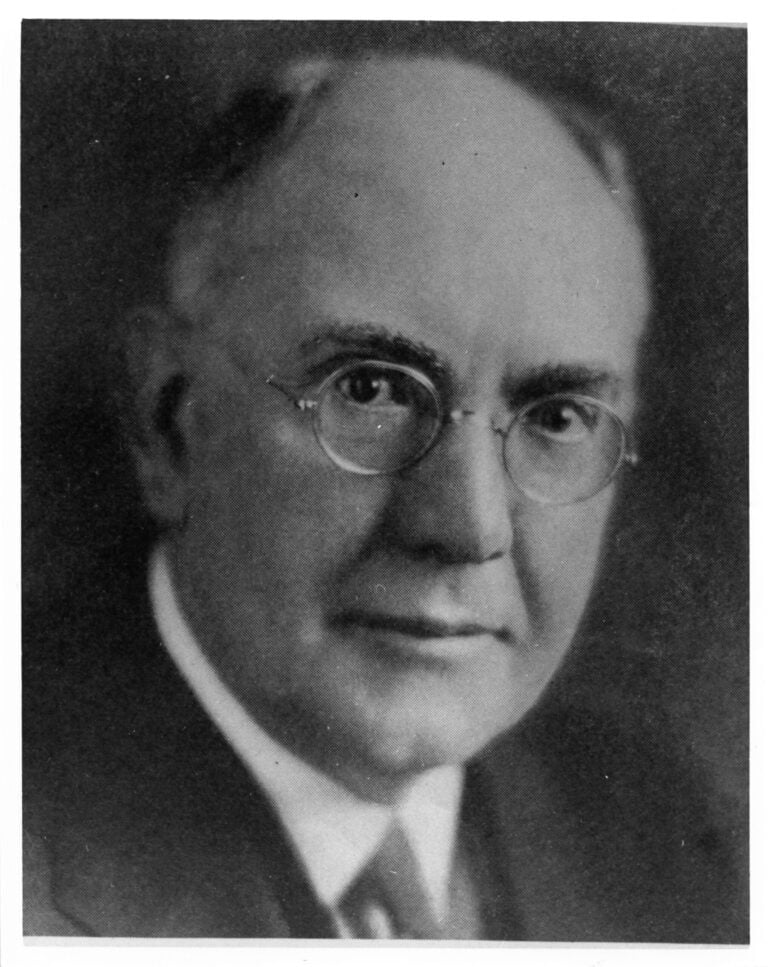
It was George Remus, with his 12 lieutenants, who played a major role in the sale of illegal alcohol — and when alcohol was legalized – again — the gambling parlors were the rage of the day. Illegal gambling businesses operated in Newport – and Remus’ 12 henchmen – Pete Schmidt, Jimmy Brink, Buck Brady, and others owned the three biggest illegal gambling joints.
They were soon joined by the Cleveland Syndicate, headed by Moe Dalitz – they took over all these businesses. Schmidt was forced out of his business – the Glenn Hotel – named for his son. He reopened a vacant speakeasy just south of Newport, called the Kaintucke Castle, and renamed it the Beverly Hills Country Club.
“A fire in 1936 killed the five-year-old niece of the caretaker,” Webster said, “And many mobsters were arrested and convicted. “Schmidt was forced out, and Sam Tucker and Sam Schrader – part of Remus’ men — were placed in charge of the Beverly Hills.”
Schmidt was kept as manager – all profits went to the mob. Ah, the Beverly Hills, in its heyday stars like Frank Sinatra, Dean Martin, Jerry Lewis, Marilyn Monroe, Guy Lombardo, the Andrew Sisters and more made their stops here.
The mob expanded in the 1940s – perhaps even more violent than before. George Ratterman ran for sheriff with the platform he could not be bribed by the mob. He was drugged and photographed in bed with a well-known prostitute which made national news. A simple drug test proved his innocence, and many police officers, judges, and others were caught. Local gamboling establishments closed – and many thought the mob was gone.
Think again.
In 1969, Richard Schilling Sr. bought the old Beverly Hills CC with plans for major renovations. In 1970, says Webster, a fire destroyed the place, and he was “told” not to reopen by the mob. Her reopened anyway and renamed the place, the Beverly Hills Supper Club.
It became known as “The Showplace of the Nation,” had a seating capacity in the main showroom for 1,000 – largest in the Midwest. Rumors continued for years, cites Webster, that the mob wanted the place, even ultimatums overheard by club employees. There had been 45 car bombings, 60 murders, and 40 arson/suspicious fires in nightclubs by this time, according to Webster.
It was in May of 1977, a 16-year-old busboy, David Brock, sees suspicious men working in the ceiling of the Zebra Room when he arrived to work in the morning. Other staffers, Webster writes, reported seeing a group “cleaning” the walls of the main hallway – they were wiping an accelerant on the walls. By 5:30 p.m., people were complaining that their room is too hot, and they hear muffled blasts coming from within the walls or the basement. More than 10 people, according to Webster’s studies, later told investigators that they saw smoke coming from the roof when they arrived; but no one told club staff.
At 8:58, Webster writes, two waitresses enter the empty Zebra room to gather tray stands. They see wisps of smoke lingering at the ceiling. Finally, club owners are told, and a call is made to the Fort Thomas Police Department. Fort Thomas, Wilder, and Southgate fire departments are dispatched immediately, and the staff begins a mass evacuation.
Wotd of an emergency has not yet reached the Cabaret Room, according to Webster’s findings. When an announcement is finally made in the large showroom, two-thirds either ignore the warning or believe it to be part of a comedy act.
The emergency exits at the west side – waiter doors – make it nearly impossible to escape. The eastern side was fine.
Initial reports — later proven false – are that there was a 20-minute delay in calling for
help, locked exit doors, and gross overcrowding.
Governor Julian Carroll and the Kentucky State Police took over the investigation, Webster reported. The fire started somewhere near the Zebra Room, but because of early bulldozing, there was no way to pinpoint it better.
Carroll vowed that Mr. Schilling would be indicated for murder. He reported that arson was ruled out, even before his arson task force arrived on the scene. Clell Upton, in charge of the Kentucky Fire Marshall’s Division, reported that the fire was arson, but Carroll said, “No, we’re not going that route.”
Stan Chesley took on the role of attorney for the victims. Initiated the first class-action lawsuit of its kind in the United States. Broken into three phases, Chesley lost all three, but nearly every defendant began paying out-of-court settlements. He eventually won against General Electric, but with falsified evidence, proves Webster. More than half the money collected went to Chesley and his associates.
Six months later, that young busboy, David Brock, went to the owners asking if anyone had interviewed the maintenance workers. He was told by one of Schilling’s sons that there was no work scheduled and that the mob had torched the place. He kept quiet for 20 years, believing that he was the only one who witnessed the suspicious people on the day of the fire.
At the 25th anniversary, he met other employees who had seen the same men. He went to the Kentucky State Police – who did nothing. But Brock formed his own team of investigators, including Rodney Rabe – two-time Kentucky State Fire Marshall – and Glenn Corbett – world renowned fire science expert. All documents were re-examined, including 147 banker boxes of the Kentucky State Police files.
The Kentucky State Fire Marshals were sent back to Frankfort and were not permitted to examine the basement, even after reporting that it would be their focus.
Webster discovered timers were found in the rubble; some set to a.m. and others to p.m.
The suggestion was that he mob intended the fire to start at 5:30 Sunday morning – not Saturday night.
Evidence, says Webster, indicates that the fire was rigged to start in an air-conditioning
system linked to a breaker box under the Zebra Room. It burned within the walls and ceiling for hours, even reaching the ceiling of the second floor, before anyone inside witnessed smoke.
All evidence, he says, points to arson and an apparent cover-up by state officials.