















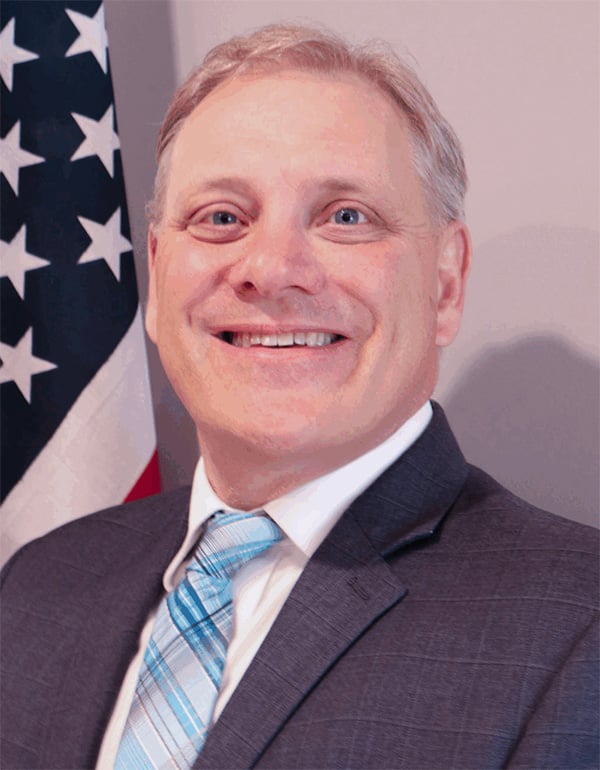
During my 21 years in elected public service — nine as a Newport City Commissioner and twelve as a Campbell County Commissioner — I learned something pretty simple: There are certain issues that matter more than others. And when they come up, people pay attention.
Issues involving land use, zoning, and property rights will always draw a crowd. People care deeply about what happens next to them, around them, and to their property values. That’s not a surprise. That’s human nature.
Which brings me to the Northern Kentucky Port Authority.
Most people probably don’t spend much time thinking about port authorities. And for good reason. When they were created back in the 1960s, they were intended to be tools — mechanisms to help local governments promote economic development, assemble land, and finance projects that might not otherwise happen. They were meant to assist elected bodies. Not replace them.

In Northern Kentucky, the Port Authority has been around for decades. In the late 1970s, the City of Newport transferred approximately 40 acres of landfill property in Wilder after it had reached its “final contours.” The idea was straightforward: take a difficult piece of land and turn it into something useful.
But here’s what actually happened. For years — decades — the Port Authority held the land. And during that entire time, the City of Newport continued to pay the bills. Maintenance. Environmental compliance. Mowing. Capping. Monitoring. The Port Authority owned it. Newport paid for it.
Eventually, just a few years ago, Newport took the land back.
So let me ask a simple question: What exactly is the role of a port authority?
Fast forward to today, and the Northern Kentucky Port Authority has been reconstituted, with appointed members from Boone, Kenton, and Campbell counties. And this version is active. It is facilitating the relocation of Chase Law School and the UK Medical School/NKU to Covington. It is acquiring land. It is issuing bonds. It is negotiating development terms. In short, it is acting like a developer.
Now, I am not opposed to economic development. Quite the opposite. Northern Kentucky should be aggressive in pursuing projects that improve our communities. And port authorities can be a very useful tool in making that happen. But here’s the issue: When does a tool stop being a tool? Because in this case, the Port Authority is not just supporting development — it is driving it. And, contrary to Kentucky law, it is not limiting its developments to riverfronts.
At the same time, it is asserting that it does not have to follow the same rules that every other developer must follow. Zoning requirements. Streetscape standards. Traffic studies. Local review processes. All of the things that elected officials have put in place — and that every private developer must comply with — are now, at least in part, being sidestepped by an appointed board.
And if that weren’t enough, let’s look at what is actually being negotiated. As part of the Chase Law School development, the Port Authority has agreed to provide what amounts to nearly free parking for the current property owner — for 150 years. One hundred and fifty years.
At the same time, it has agreed to restrict the use of the very property it is acquiring — limiting or prohibiting future competing office development that could rival the seller.
Think about that.
An unelected board is not just facilitating a project, outside its legal scope. It is shaping the market. It is picking winners and losers. It is placing long-term restrictions on how property can be used — restrictions that will outlive every elected official currently in office.
That should give all of us pause.
If a private developer proposed these kinds of terms, they would be scrutinized. They would be debated. They would be subject to public review through established local processes.
But here, those decisions are being made by an appointed body operating outside of many of those same requirements.
This is not about whether the Chase Law School/Med School project is good or bad. It may very well be a great addition to Covington.
That’s not the question.
The question is this: Who is making the decisions? And just as importantly: Who are they accountable to?
Port authorities were created to help communities along their riverfronts — not to operate outside of them. Not to override local rules. And certainly not to create a separate lane where normal standards don’t apply.
I believe there is a place for port authorities in Kentucky. I believe they can be effective and perhaps they should be able to develop inland (with a change in the law). But I also believe this: No one, given a clean sheet of paper and asked to design a system of local governance, would create a structure where an unelected board can function as a developer, shape private markets, and bypass the very rules that govern everyone else.
There has to be a better way.
So I’ll ask the same thing I’ve asked before on other issues: If you believe this is the right approach, tell me why. If you believe this is how these authorities were intended to function, make that case.
And if you think the line between “tool” and “decision-maker” has been crossed, then maybe it’s time for the General Assembly — and the public — to take a closer look.
Because public power, no matter how well intentioned, should always answer to the public.
The views expressed here do not reflect the views or opinions of the Northern Kentucky Tribune. They are solely the ideas of Ken Rechtin, who can be reached at kennethrechtin@gmail.com. All rights to “Another Voice” are retained by Ken Rechtin.