











The riverboat captain is a storyteller. Captain Don Sanders shares the stories of his long association with the river — from discovery to a way of love and life. This a part of a long and continuing story.
By Capt. Don Sanders
Special to NKyTribune
Only recently, a genealogy search uncovered a great-grand uncle of mine, four generations removed, who flatboated on numerous occasions from the Kentucky River south to the Mississippi River, as far as Natchez and New Orleans, during the early 1800s.
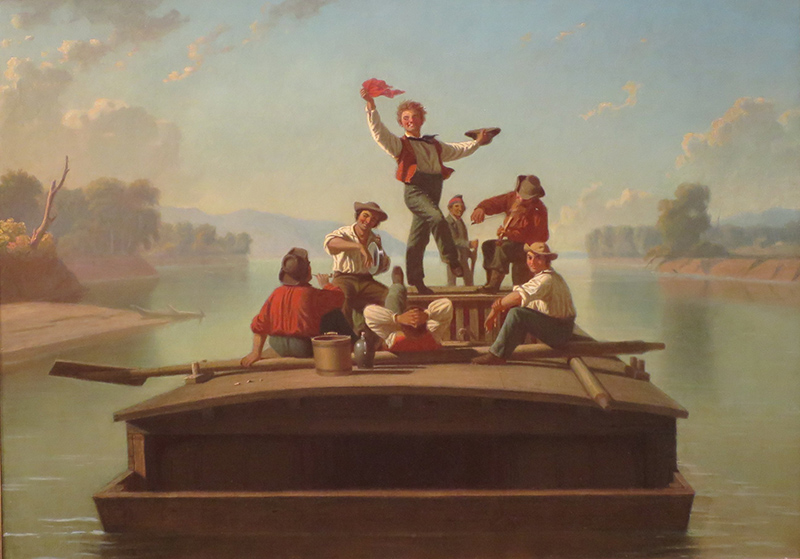
Ezekiel “Zeke” Sanders (1798-1849) was one of twelve living siblings. Four of his brothers or sisters died either in childbirth or early in life. His grandfather and my fourth great-grandfather, Nathaniel Sanders (1741-1826), were early Kentucky pioneers. Both reportedly explored the “dark and bloody grounds of Kaintuck” with Dan’l Boone before Nathaniel tired of the family plantation life in Spotsylvania County, Virginia, escaped, and lived within the Cherokee Nation for nearly 15 years. Zeke’s interests, according to a note found in a ragged family Bible, were corn and tobacco farming, raising prize short-horned cattle, as did his uncle, Col. Lewis Sanders, and converting the annual corn crop into “Likker,” which he loaded onto a flatboat every Spring and peddled at exorbitant prices along the Ohio and Lower Mississippi Rivers.
Ezekiel, unlike most frontiersmen of his time, never imbibed his intoxicating product; he merely swished a taste in his mouth during distillation, ensuring its flavor before expectorating the contents without swallowing. Getting his motley crew to follow his example of abstinence proved more difficult, for the young men were usually liquor-hungry hangers-on without family responsibilities, which allowed them to leave home for three months at a time. Zeke lost a crewman, now and then.
River pirates on the lower Ohio River in the vicinity of Cave-in-Rock claimed a couple. Of course, the bawdy houses at Natchez Under-the-Hill were prime settings for occasional fatal attractions. But the River, itself, was the most lethal panderer of human souls from the mouth of the Kentucky to nearly the sea. Constantly guarding the spirituous cargo from the crew while underway often proved impractical. More than one inebriated crewman left Kentucky, never to return, after secreting a brown earthenware jug of Ezekiel Sanders’ “Kaintuckee Korn Likker,” as it was known.
Uncle Zeke, like most good boat masters on the early Mississippi, celebrated lavishly once his flatboat reached the “Crescent City’ and all financial affairs concluded agreeably. Several gallons of Zeke’s finest spirits, secreted for the occasion, mysteriously appeared, and the flatboatmen, except the owner, drank until they were either filled or unable to continue their revelry. Returning home often proved as challenging as the flatboat trip down the River.
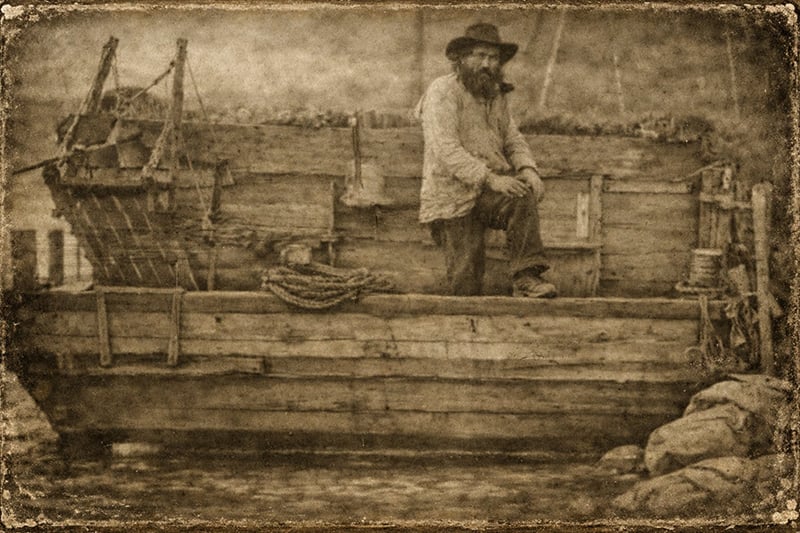
The NEW ORLEANS, the first steamboat on the Western Rivers, as the Mississippi River System is otherwise known, didn’t make its appearance until 1811– the same year young Zeke made his first float onboard a “broadhorn,” another name for a flatboat. He was just 13 and a “greenhorn” boatman on his cousin’s boat. By the time Zeke was 17, he commanded his first homemade ark constructed nearby to his uncle Nathaniel’s water-powered grain and lumber sawmill on Eagle Creek, a tributary of the Kentucky River. Whether young Ezekiek saw the steamer NEW ORLEANS during his first trip is lost to the historical record. What is known, however, from a remaining journal kept by another member of the flatboatmen, was no mention of the devastation caused by the Great New Madrid (Missouri) Earthquake of 1811, which reversed the flow of the mighty Mississippi River for three days and rang church bells as far away as Boston.
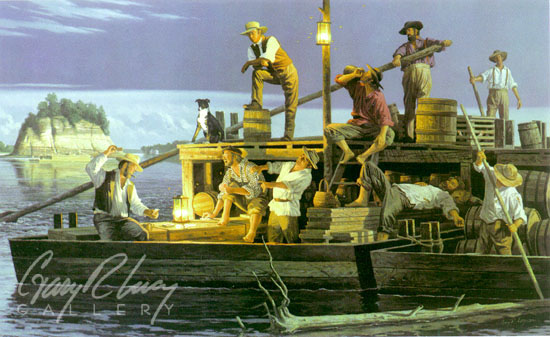
Apparently, Zeke’s first flatboat and fellow crewmen reached the safety of New Orleans before the devastating earthquake hammered the upper regions of the Lower Mississippi River beginning on December 16, 1811. Most likely, the boatmen returned home, in part, along the Natchez Trace. This crude roadway followed an ancient trail used by Native Americans centuries before pale-skinned Europeans arrived on the shores of the western hemisphere.
One hundred eighty-one years later, my family and I packed all our plunder and moved from Covington to Natchez to await a beautiful casino boat, the GOLDEN LADY, a paddlewheeler made especially for “Bluffton,” as I often call the lovely antebellum city located atop wind-blown loess bluffs high above the Mississippi River. Although “Goldie” never came to Natchez, my family and I cherish our memories of beautiful Natchez and exciting Natchez Under-the-Hill, where my great-grand uncle Ezekiel Sanders landed his whiskey-laden flatboats and sold great quantities of prime Kentucky “Korn Likker.” We, the latest members of the Sanders Clan, made several trips on the Natchez Trace from Natchez to Nashville. Our journeys on the Trace, though, were surely much safer and far swifter than those my ancestor endured during those early years of the first half of the 19th century.
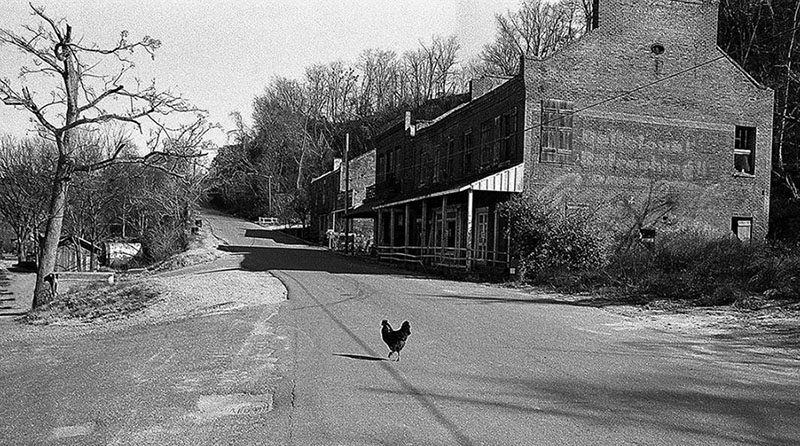
Though more information is needed to understand my pioneering ancestor better, I do know that he continued flatboating with the potent product for several more years until civilization and ever-tightening rules and regulations interfered with the freedom of transporting “Korn Likker” aboard a home-built boat made of slabs and planks cut on a water-powered sawmill on a small branch of the Kentucky River. In 1826, Zeke’s uncle Nathaniel died. His death may have influenced Ezekiel, but the changing times and the influx of more and more settlers from east of the Appalachian Mountains changed Zeke’s lifestyle the most. He settled into farming life with his growing family, raising tobacco, cattle, and hogs. His whiskey-making days and flatboat adventures became a tale to tell his children and grandchildren.
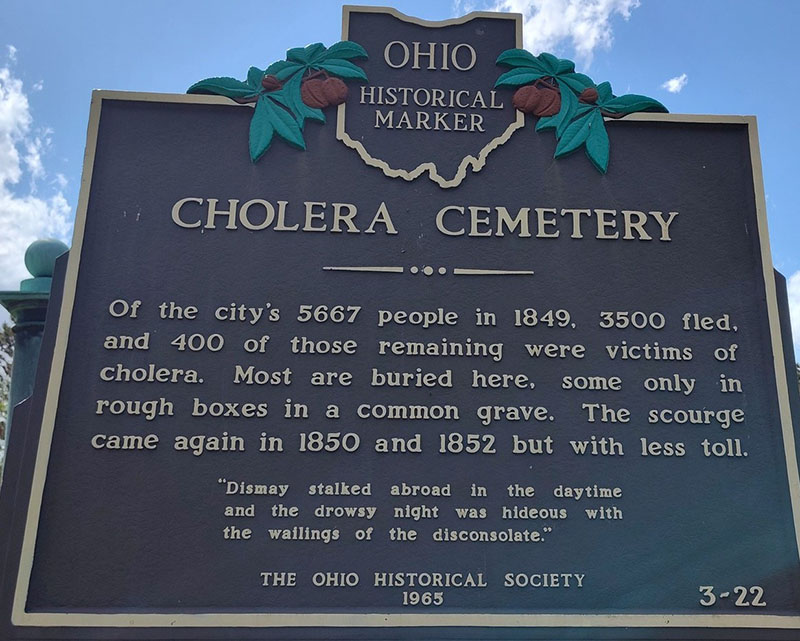
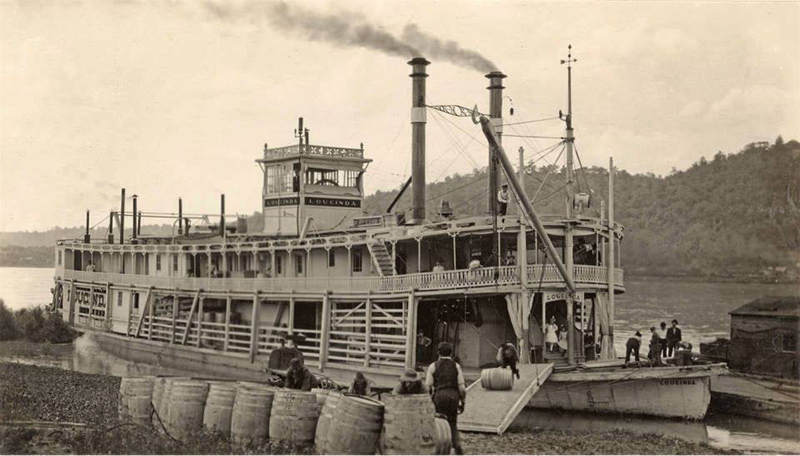
Surely uncle Ezekiel became familiar with the ever-growing fleet of steamboats of that time. Although no records prove otherwise, he possibly shipped excess produce from his modest farm on Eagle Creek to Cincinnati and Madison, Indiana, aboard steam-driven packetboats. What we do know is that Zeke was in Cincinnati in April or May of 1849 when the devastating cholera epidemic unexpectedly slammed the city.
Along the waterfront in the crowded metropolis, the disease ran rampant, especially in areas with poor sanitation like the “Bottoms,” where steamboats constantly came and went at the major water transportation hub of the Western Rivers. Thousands died throughout the country from this outbreak, the second cholera pandemic. In the Greater Cincinnati community, an estimated 4,000 to 5,000 victims died.
Among them was my great-grand uncle, Ezekiel Sanders, just 47 years of age. Apparently, during the haste to bury the ever-increasing casualties of the raging disease, Zeke lies buried in a mass grave somewhere in Cincinnati. The location of the final resting place of this once adventurous river flatboatman remains unknown, but to the creator.
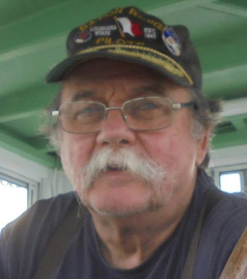 Captain Don Sanders is a river man. He has been a riverboat captain with the Delta Queen Steamboat Company and with Rising Star Casino. He learned to fly an airplane before he learned to drive a “machine” and became a captain in the USAF. He is an adventurer, a historian and a storyteller. Now, he is a columnist for the NKyTribune, sharing his stories of growing up in Covington and his stories of the river. Hang on for the ride — the river never looked so good.
Purchase Captain Don Sanders’ The River book
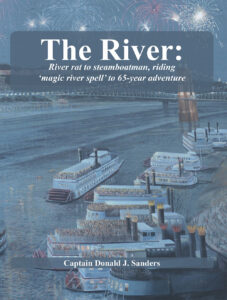
Capt. Don Sanders The River: River Rat to steamboatman, riding ‘magic river spell’ to 65-year adventure is now available for $29.95 plus handling and applicable taxes. This beautiful, hardback, published by the Northern Kentucky Tribune, is 264-pages of riveting storytelling, replete with hundreds of pictures from Capt. Don’s collection — and reflects his meticulous journaling, unmatched storytelling, and his appreciation for detail. This historically significant book is perfect for the collections of every devotee of the river.
You may purchase your book by mail from the Northern Kentucky Tribune — or you may find the book for sale at all Roebling Books locations and at the Behringer Crawford Museum and the St. Elizabeth Healthcare gift shops.
Click here to order your Captain Don Sanders’ ‘The River’ now.