





By John Schlipp
Special to NKyTribune
Before radio, recording studios, or concert halls, music in the Cincinnati and Northern Kentucky region lived where people gathered — in homes, churches, taverns, and along the bends of the Ohio River.
That living, breathing musical world will take center stage on April 23rd at Kenton County Public Library in Covington, with an America 250 presentation entitled “Rolling Along a River of Song—Music Before Media: Home, River, and Community Soundscapes.” This richly illustrated program will trace how early 19th-Century music shaped life in the Northern Kentucky and Cincinnati region long before the modern age of broadcasting launched American music to the world.
Drawing from decades of historical research — including published work in “Northern Kentucky Heritage” and the “Encyclopedia of Northern Kentucky” — this tuneful presentation explores how the Ohio River functioned as a musical highway, carrying voices, rhythms, instruments, and traditions across cultures and generations.
A fully live musical world
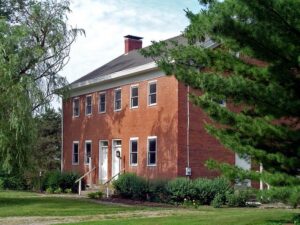
In the late 18th and early 19th Centuries, all music was performed live. There were no recordings to replay, no devices to stream. Music existed only in the moment — sung around hearths, played on fiddles in frontier taverns, echoed from riverboats, or sung in congregations of worship. Music was not available instantly at your fingertips. It was homemade by you, your family, or friends. That reality linked the Cincinnati region to a global tradition of communal, domestic music-making — from parlor pianos and dancing schools to frontier fiddlers like Scots-Irish settler Thomas Kennedy, who famously entertained visitors with traditional fiddle tunes in present-day Covington.
Indigenous roots and cultural convergence
Long before European settlers arrived, Indigenous communities such as the Myaamia (Miami) and Shawnee had established deep musical traditions rooted in ceremony, storytelling, ritual, and rhythm. Drums, rattles, flutes, and voice formed the backbone of a soundscape that stretched across the Ohio Valley for generations.
As European and African influences entered the region, these traditions did not disappear — they met, overlapped, and reshaped one another. The Ohio River became a corridor of exchange where Indigenous rhythms, African call-and-response singing, European folk melodies, and sacred music converged into something entirely new.
There were surprising parallels between Indigenous musical traditions and the joyful, movement-based worship of Shaker communities in Ohio, Kentucky, and Indiana, who used simple melodies, repetition, and group participation to create powerful communal sound.
African-American musical foundations
During this time, there was a deep musical influence of African-American communities — both free and enslaved — whose work songs, spirituals, and sacred music shaped our region’s early sound. Along Cincinnati’s waterfront, Black laborers sang as they loaded and unloaded steamboats, blending African rhythmic traditions with European melodic forms. In churches, powerful spirituals emerged — songs that carried faith, endurance, and coded messages of survival.
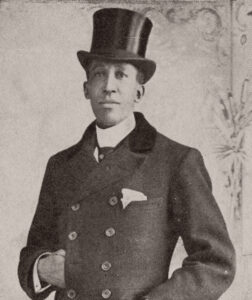
These traditions later gave rise to nationally influential performers, including Sam Lucas, a Cincinnati-based baritone and songwriter who helped lay the foundations of Black popular music and early harmony singing, and who influenced later groups such as the Mills Brothers and the Ink Spots.
The infrastructure behind the music
Just as important as the musicians themselves was the region’s role as an early hub for music printing and instrument making. Cincinnati became a national center for sheet music publishing, helping to move songs from oral tradition into American homes. Publishers, such as Willis Music, helped standardize music education and parlor performance across the country, while manufacturers like Baldwin and Wurlitzer transformed Cincinnati into one of the nation’s leading musical instrumentsmaking centers. By the late 19th century, instruments built and music printed in the Ohio Valley were shaping how Americans learned, played, and shared music—extending the region’s influence far beyond the Cincinnati riverbanks where those songs were first heard.
From riverbanks to the American songbook
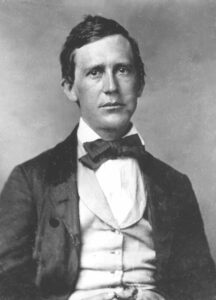
Perhaps the most famous name associated with the 19th-Century sound was Stephen Foster, whose time working in Cincinnati exposed him to a rich mix of river songs, African- American music, and European parlor traditions — influences that helped shape the earliest chapters of American popular music. Taken together, these stories reveal how Northern Kentucky and Cincinnati played an outsized role in the formation of American musical identity — long before radio carried those sounds nationwide.
For more details, see: Our Rich History: Northern Kentucky/Cincinnati’s early music tells deeper story along the Ohio River
An invitation to listen in a different way
Learn more at the America 250 speaker session entitled “Rolling Along a River of Song—Music Before Media: Home, River, and Community Soundscapes” at the Covington Library on Thursday, April 23, starting at 6 p.m. It is aimed at general audiences — history lovers, music fans, educators, and anyone curious about how culture takes root locally before it travels far beyond. This is about learning to hear the past and to recognize that the songs we know today were once sung right here — by ordinary people, in extraordinary times.
The program is free and open to the public as part of Kenton County Public Library’s ongoing American 250 Speakers Series of history and culture programming.
John Schlipp is a Career Navigator Librarian at Kenton County Public Library, specializing in business resources and intellectual property awareness. Contact John at john.schlipp@kentonlibrary.org
Paul A. Tenkotte, PhD is Editor of the “Our Rich History” weekly series and Professor of History at Northern Kentucky University (NKU). To browse past columns, click here. Tenkotte also serves as Director of the ORVILLE Project (Ohio River Valley Innovation Library and Learning Engagement). For more information see https://orvillelearning.org/. He can be contacted at tenkottep@nku.edu.