










By Michael O’Bryant
Special to NKyTribune
“The spectacle of a dignified judge of the United States Court of Appeals seated on the bench, with a quart bottle of whisky at his elbow and a glass before him filled with water, was the suggestive site that greeted the visitors to the United States court room in the Government Building yesterday. On the tables were numerous other quart bottles of whisky, while piled up about the floor were boxes of the same seductive stuff. Perspiring attorneys were handling the red-eyed stuff with reckless daring, pointing to it, swinging it over their heads, and slamming down bottles with alarming thumps.” – “Cincinnati Enquirer,” July 16, 1893.
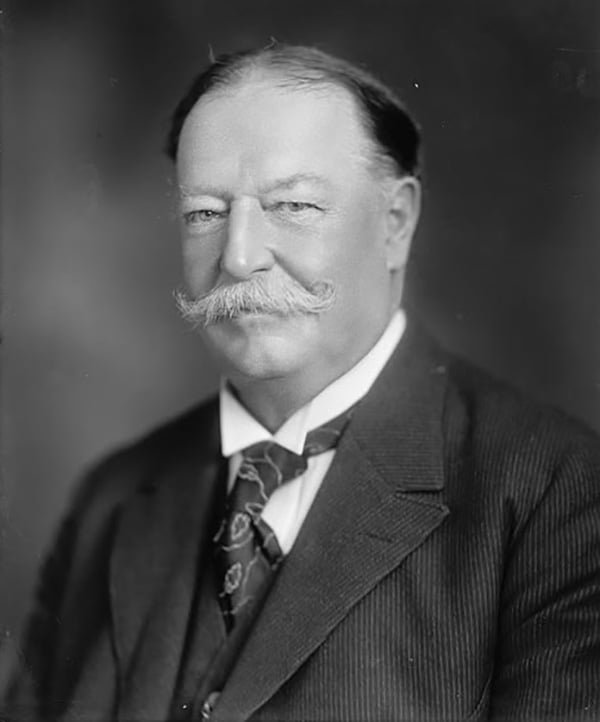
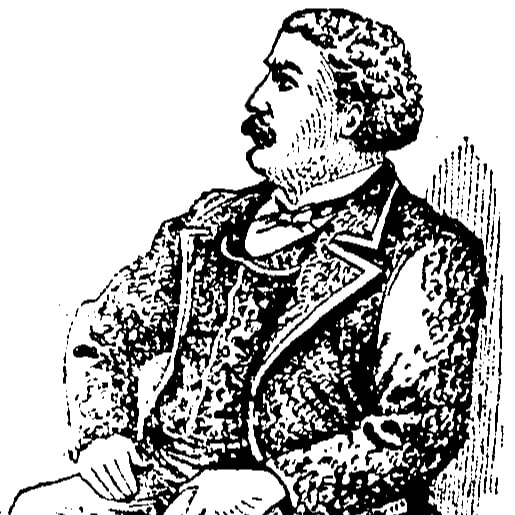
Such was the courtroom of the civil trial between Otto A. Krauss and Krass, Hart, & Felbert of New York (plaintiffs) v. Joseph R. Peebles & Company of Cincinnati (defendants), presided over by William Howard Taft, Judge of the U.S. Circuit Court for the Sixth Circuit (simultaneously Judge of the US Court of Appeals for the Sixth Circuit). Despite the image presented by the “Enquirer,” the bottles of whiskey were merely evidence and were supervised by United States Marshals with instructions that the evidence remained corked.
The case, which the “Enquirer” called “one of the greatest liquor cases presented to the courts in many years,” was over who had the rights to bottle whiskey under the trademark “Old Pepper.” It was an issue that attracted, at least for the plaintiffs, an imposing array of legal talent. Krauss’ legal team included Kentucky U.S. Senator William Lindsay, the ex-governor of Ohio J.B. Foraker, and Lexington’s prosecuting attorney.
As is today the case for many connoisseurs of whiskey, the distillery where the product is made and the story behind it are important. Sometimes, however, the truth gets lost in a good story. So, while producing whiskey at one location or source and saying it’s the product of a different distillery was not new, the question was not if it was ethical. Rather, was it legal?
The Pepper name had a long history in Kentucky distilling. But in 1877 James Pepper declared bankruptcy and lost his father’s distillery in Versailles, Kentucky. Undeterred by the loss, James was able to build another distillery in Lexington and start production in 1880. A major difficulty in starting a distillery, however, is how to earn enough money to stay in business while the product ages long enough to be palatable. To solve this problem, Pepper contracted to sell some of his unaged barrels each year to the large Cincinnati grocer and liquor dealer—Joseph R. Peebles’ Sons Company — for aging and bottling.
Peebles’ grocery was a well-established, high-end store featuring “fancy” groceries imported from nations such as Great Britain and France. It even sold Russian caviar. Early on, business was so good that the store, needing more space, moved to the ground floor of Pike’s Opera House in downtown Cincinnati. The local press called it “one of the handsomest establishments of its kind in the United States.” The additional space allowed the grocer to market whiskey under its own brand, such as “Peebles Sweet Hickory” and “Peebles Old Cabinet.”
Peebles’ Sons continued to grow, opening a location on the northwest corner of East McMillan and Gilbert Avenue. It was a crossroad for trolleys that soon became known as Peebles Corner. Legend has it that Joseph bribed the streetcar motormen with cigars and groceries to call out the name “Peebles Corner” at the stop.
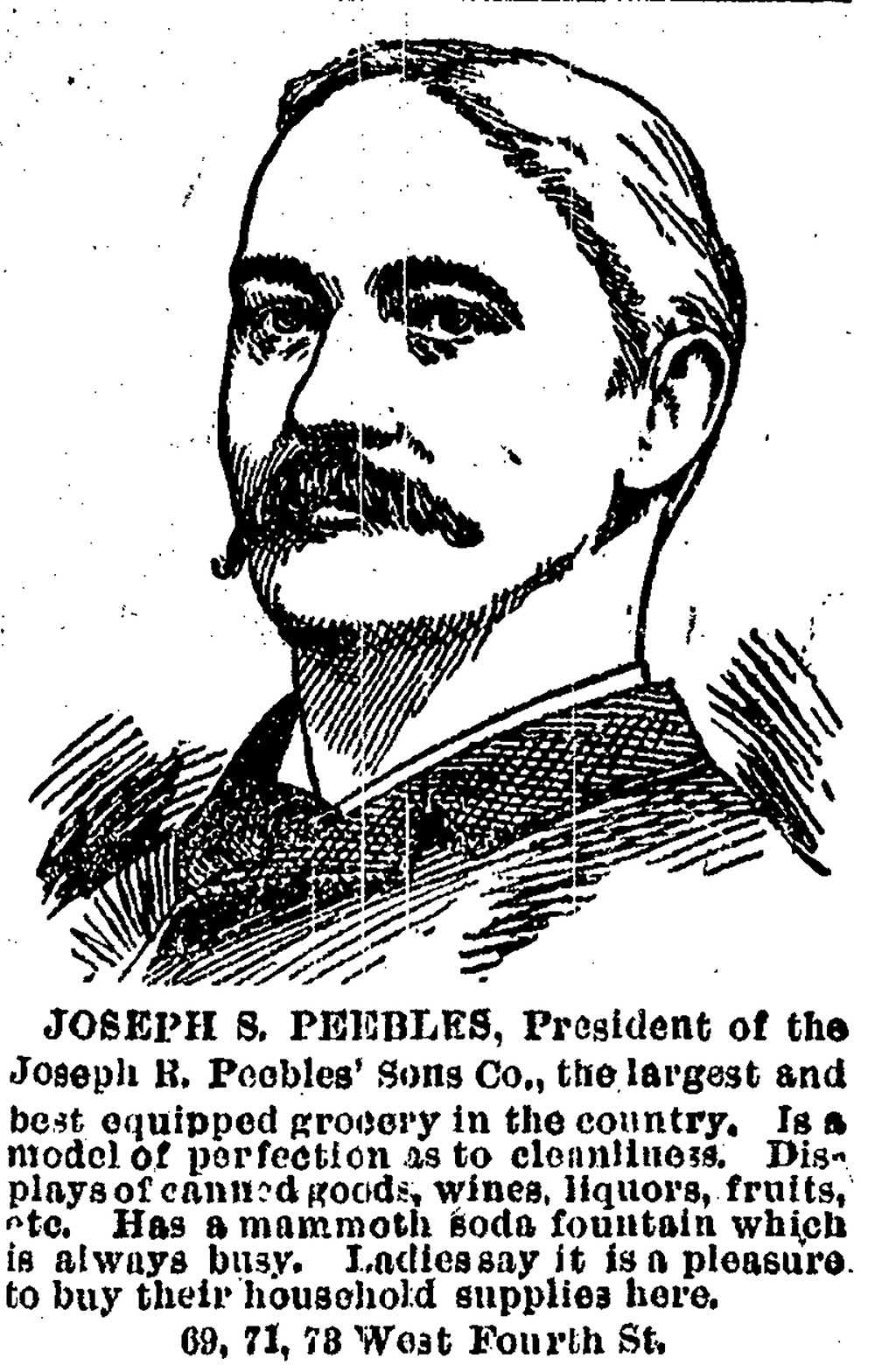
Peebles advertised itself as the “largest distributor of pure food products in the Ohio Valley.” He also expanded his own line of trademarked brands to include beer, ale, and cheese including “Bourguet de Joseph R Peebles Sons.” He sold high-end Cuban cigars [ten cents] but included his own brand [five cents] for those suffering from hard times.
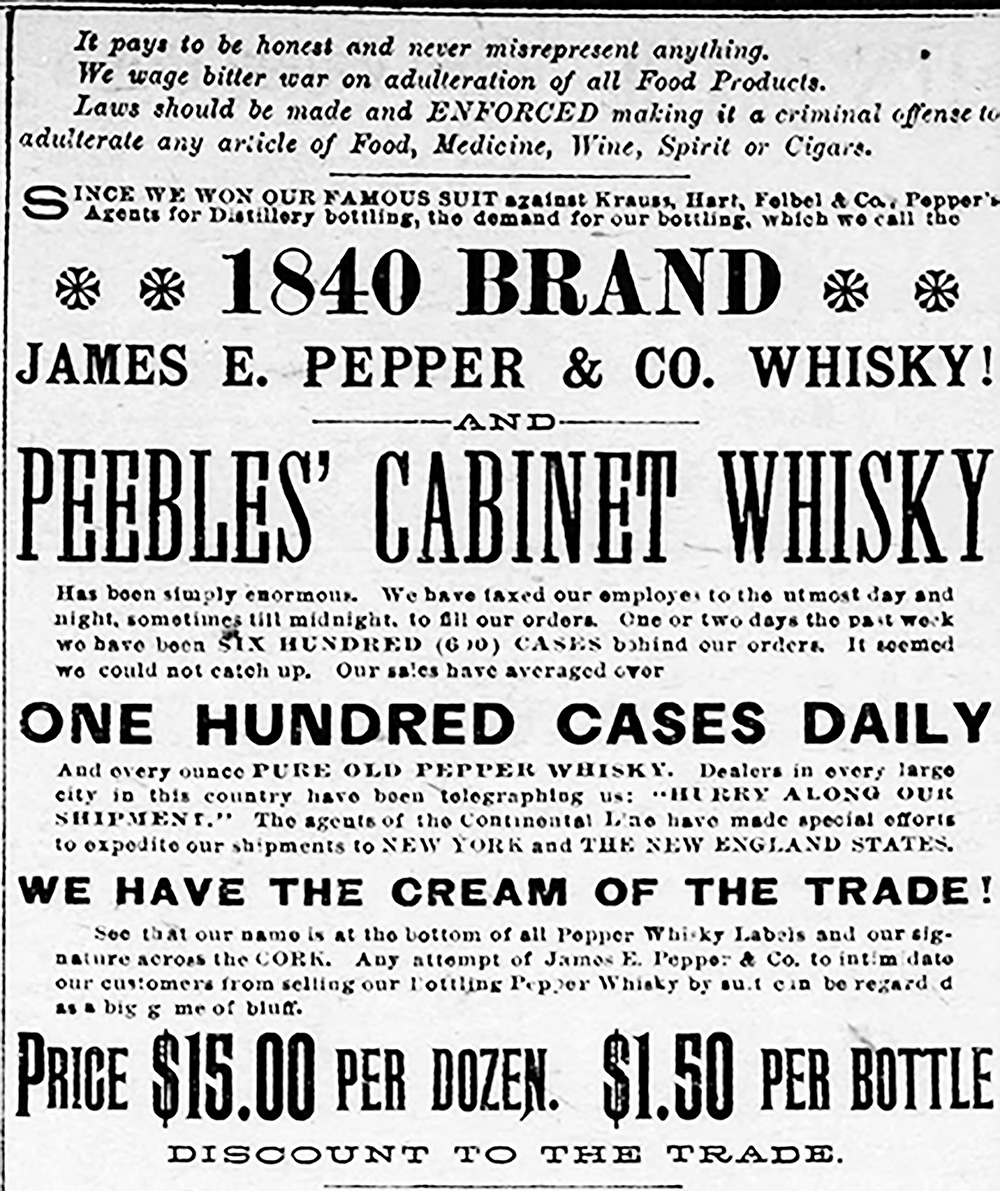
The store began to advertise itself as one of the “largest handlers of pure, ripe, old, mellow whiskies in the United States.” In the 1890s its mail order business was shipping an average of 100 cases of liquor a day to cities from Chicago to New England. Peebles’ success gave it the financial ability to store and age the whiskey it purchased from Pepper, and after six years of aging, the whiskey was ready to sell.
Part of Peebles’ agreement with Pepper was that it could sell its whiskey under the “Old Pepper” name. Pepper would even provide the labels. However, in January 1892 Pepper entered into a new contract that made Otto Krauss of the state of New York its main distributor, along with another in San Francisco. The agreement required Krauss to “fill existing contracts” with Peebles’ Sons Company. Krauss, however, filed for an injunction against Peebles for using the gold Old Pepper label, even though Peebles claimed that it was their right to do so.
At trial, evidence was presented showing that Pepper’s labels guaranteed to the public that the contents were distilled at the Old Pepper distillery — hat it was genuine and unadulterated Old Pepper. The problem was that—at least since December 1891—Pepper had been buying bourbon from other distilleries and blending it with his own whiskey. It was shown in court that, on a monthly basis, an average of 33% of the whiskey that Pepper blended came from sources outside his distillery.
When the court presentations were completed, Taft asked the attorneys to forward the evidence and their briefs to Murray Bay, Quebec, where Taft was traveling on vacation. In Canada, Taft reviewed the more than 700 affidavits, 200 exhibits, twenty-quart bottles and three cases of whiskey.
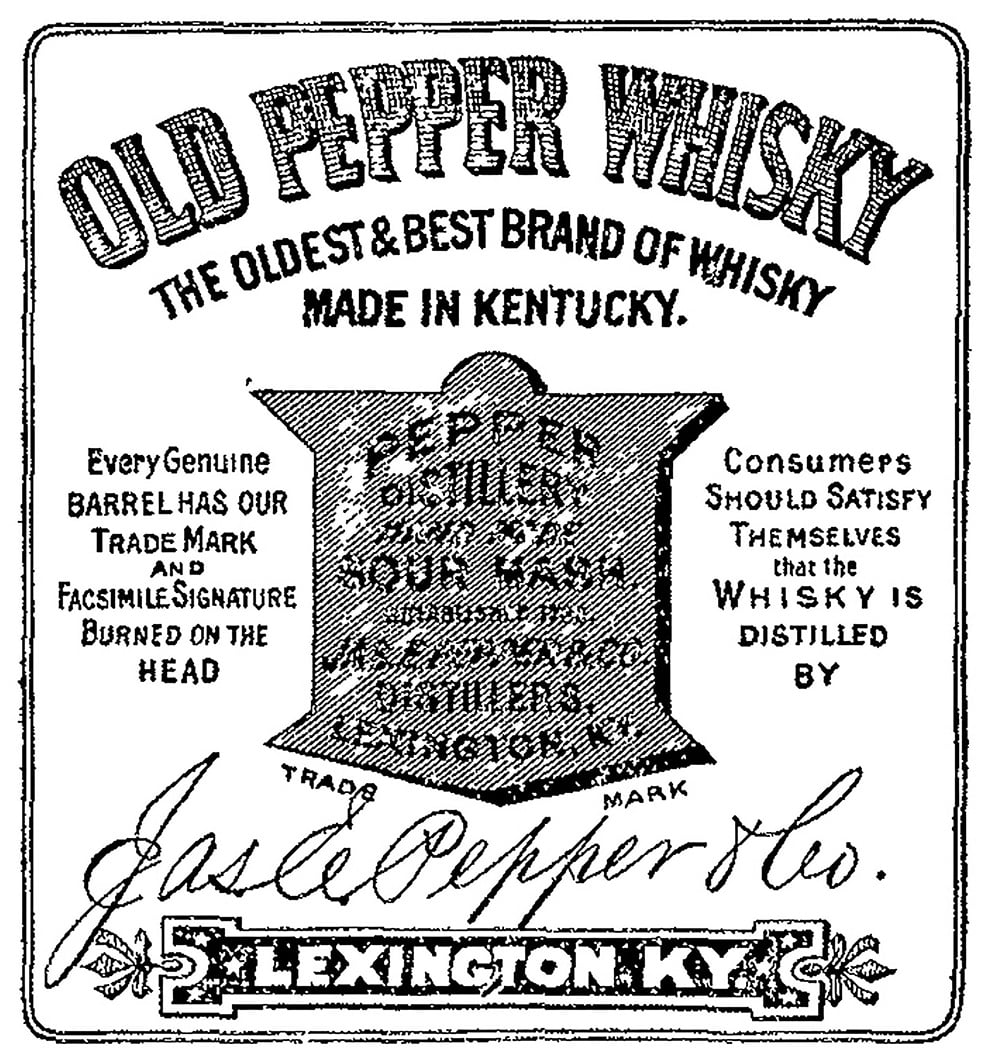
The attorneys for Krauss argued that Peebles’ Sons was bottling Pepper whiskey in “fifth” bottles (one-fifth of a gallon), not in the original quart sizes that they had originally agreed to with Pepper. Taft’s September 15, 1893, decision basically found that the plaintiffs’ argument was not the real issue at all, ruling that “the size, form, and manner of packing are not a part of trade-mark property.” Rather, the actual issue revolved around Pepper’s trademark label that contained the words: “Consumers should satisfy themselves that the whiskey is distilled by Jas. E. Pepper & Co.” In Taft’s ruling, since Pepper’s whiskey—as sold to Peebles’ Sons was a mixture of product from other distilleries—the Pepper label contained “false representations of material facts calculated to deceive the public.”
Taft’s ruling was clear:
“In some months the mixture contained less Pepper than foreign whisky; in other months it contained more. The average proportion of Pepper to other whisky, however, in the output of 18 months, was as 65 to 35. To bottle such a mixture, and sell it under the trade label and caution notices above referred to, is a false representation, and a fraud upon the purchasing public. A court of equity cannot protect property in a trade-mark thus fraudulently used. It is not material whether the foreign whisky mixed with Pepper’s is as good or better whisky than Pepper’s, or whether the mixture is better than pure Pepper whisky. The public are entitled to a true statement as to the origin of the whisky, if any statement is made at all. . . . The motion for a preliminary injunction is denied.”
Krauss was undeterred and tried again, this time suing in the state of New York. Joseph Peebles responded publicly by saying “Those suits filed by Pepper against a few of our customers in New York were entered solely in an effort to intimidate them… Judge Taft has fully settled the question in an elaborate decision.” When asked about the effect of the suits, Peebles replied, “None whatever, except to advertise us.”
A few other cases
A few years following Taft’s decision, George Hold and Ed Amann, owners of the Kentucky Bourbon Distilling Company in Newport, were arrested on a charge of having counterfeit whiskey labels. The pair had several printing plates made and took them to Sullivan Printing works where they had 1,500 James E. Pepper whiskey labels printed. The men confessed that they had the plates made and the labels printed. They argued they were unaware their actions were illegal.
A few years later, another case involving the deceptive practice of fraudulent sourcing of whiskey found its way to the Cincinnati courts. This case involved the Cincinnati-based wholesaler Paxton Brothers Company. In the late 1800s, the Paxton brothers produced a successful brand of whiskey trademarked Edgewood. The brand was widely known by its trademark, the Edgewood man, a rotund, tuxedoed, and fez-wearing character.
In the early 1900s, the brothers contracted with the Pogue Distillery in Maysville, Kentucky, one of the oldest and most successful distilleries in the state. The agreement was for 12,500 barrels of whiskey that Pogue would distill, then age, in its warehouse. The arrangement was also that the barrels were to be labeled as having been distilled by the Paxton Brothers and carry the Edgewood trade name. The deal fell through, and the Pogue Distillery sued the Paxton Brothers for $30,000.
At that time, federal law prohibited a distillery to produce whiskey, then bottle it under a different distillery’s name. In an effort to circumvent the law, Pogue and Paxton decided that Pogue would lease the distillery to Paxton and operate it as “H.E. Pogue as the Paxton Brothers Company.” The judge ruled that the agreement was “the perpetuation of fraud upon the public” and ruled that the contract was void and dismissed Pogue’s claims.
A trademark is a source identifier to help consumers trust the products that they are buying, and not to confuse them with competitors. Taft’s 1893 decision proved a benchmark in identifying important components of alcoholic beverages and the trademark laws governing them. In 1907, Taft would make another consequential legal ruling, providing the basic definition of what constituted whiskey itself (see next week).
Michael O’Bryant was born in Dayton, Kentucky but grew up in Mason, Ohio, when it was still a farming community and the first day of rabbit hunting season was an unofficial local holiday. Earning his undergraduate degree in Education from the University of Cincinnati, he taught at Mason Public Schools, where he was asked to inaugurate their junior high football program. He later moved to the high school level, teaching English and Social Studies. O’Bryant took temporary leave to attend Morehead State University where he served as an assistant track coach and earned his MA. Returning to Mason, he taught and served as an administrative assistant and Social Studies Curriculum Leader. For more than twenty years, he has worked in publishing, including Orange Frazer Press in Wilmington, Ohio, as well as the textbook company Cengage Publishing.
Paul A. Tenkotte, PhD is editor of the “Our Rich History” weekly series and Professor of History at Northern Kentucky University (NKU). To browse more than ten years of past columns, here.
Tenkotte also serves as Director of the ORVILLE Project (Ohio River Valley Innovation Library and Learning Engagement). For more information see orvillelearning.org/. He can be contacted at tenkottep@nku.edu.