









The riverboat captain is a storyteller. Captain Don Sanders shares the stories of his long association with the river — from discovery to a way of love and life. This a part of a long and continuing story.
By Capt. Don Sanders
Special to NKyTribune
Ballyhoo.
I love the sound of the word.
By definition, ballyhoo means “a clamorous and vigorous attempt to win customers or advance any cause; blatant advertising or publicity.”
On the old-time excursion boats, ballyhoo was often a means of survival.
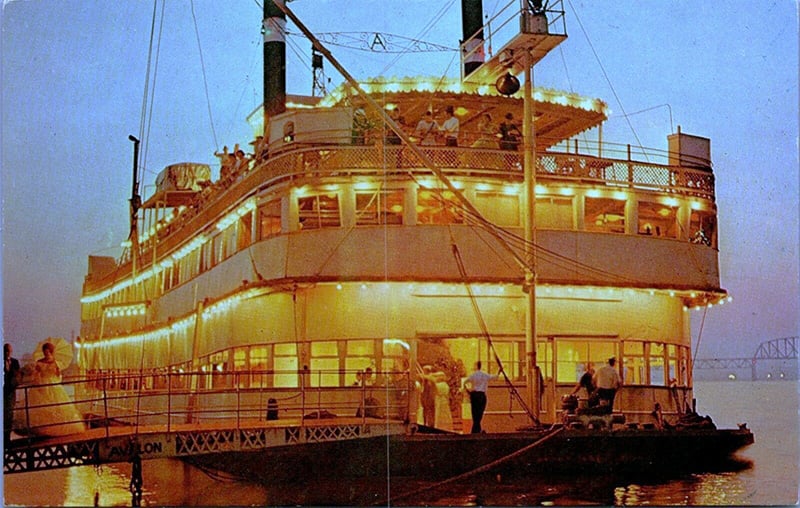
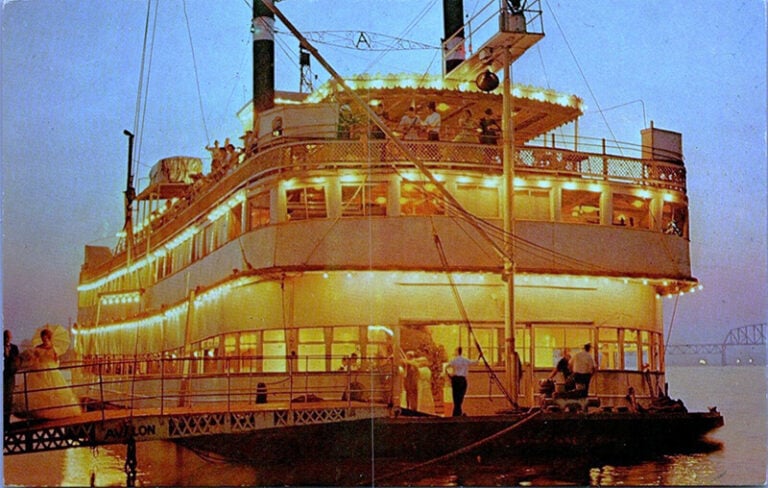
“Big Bill” Willis, a happy-go-lucky sorta fellow and a graduate of New York University, relished his Night Watchman’s slot aboard the Steamer AVALON. Once the sternwheeler was underway with a load of revelers on a nightly Moonlite Cruise, Big Bill held sway on the Texas Deck, back aft, near the small auxiliary bar, where the strains of the Rhythm Masters’ house band drifted up from the dance floor, one deck below.
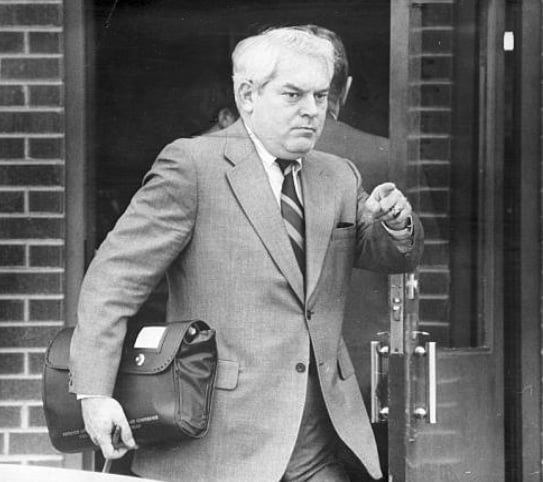
Watchman Willis possessed a rhythmic, melodic voice and spoke in a refined, pleasant manner honed during his undergraduate years at NYU. Although lesser-educated crew members called him an “educated fool,” Big Bill generally ignored them. Captain Ernest E. Wagner, Master of the AVALON, however, appreciated the fine speaking voice of his portly Watchman. Cap always called upon Big Bill’s God-given talents of utterance and vocal style whenever he needed someone to fit into the tiny French coupe with him and ride around some river town to ballyhoo the AVALON’s presence.
What a sight to behold. Two far-larger-than-average-sized middle-aged men crammed into a pint-sized machine better suited for a clown car act than for an advertising vehicle. On the roof, a sizeable, metallic, horned speaker blasted calliope music with frequent interludes as Big Bill’s pleasant, refined, New York University-honed voice beckoned one and all to “Ride the Steamer AVALON, now in town for one night, only.”
While Big Bill, with all his refined ballyhoo idiosyncrasies, enticed the rubes to come to the river and ride the steamboat, Captain Wagner navigated the tiny coupe through town until no more areas remained unblemished. After a stop for a cold beer, if such an establishment existed in the community, they returned to the landing near where the AVALON lay moored to the shore and carefully peeled themself from the vehicle. That evening, the size of the crowd queued in front of the stage-plank determined the effectiveness of their ballyhoo efforts earlier that day.
When the Steamer AVALON ceased operating after the 1960 season, tramp excursion steamboating ceased on the Western Rivers. Thankfully, however, the AVALON became the BELLE OF LOUISVILLE and continues to operate, in mid-June 2026, as an excursion paddlewheeler on the Ohio River at Louisville, Kentucky, 112 years after it first steamed from the James Rees & Sons shipyard on Pittsburgh’s Allegheny River.
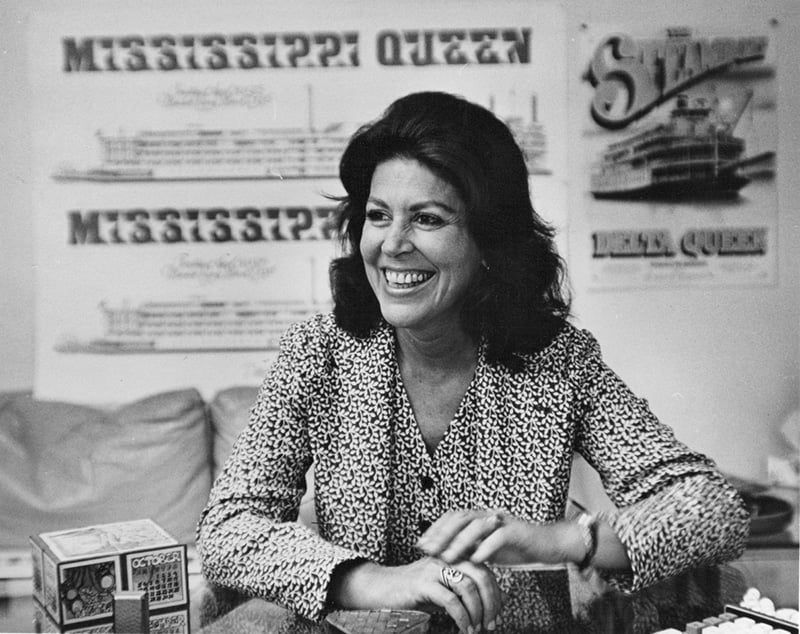
Besides Captain Wagner’s methods of ballyhooing the AVALON, a young woman working in the excursion boat’s home office was responsible for bookings, sales, and advance promotions. Her name was Betty Blake. Betty worked closely with Mr. Ernie Meyer, a former agent for Cincinnati’s Coney Island Amusement Park’s second sidewheel excursion steamboat, the ISLAND QUEEN. This same boat gave Captain Wagner his start on the river. Under the tutelage of these former ISLAND QUEEN steamboatmen, Betty Blake became an expert, in her own right, in the art of the ballyhoo.
Once the AVALON folded, Ms. Blake followed Captain Wagner to the Greene Line Steamers’ office located on their immense wharfboat floating at the foot of Main Street on the Cincinnati Public Landing, owners of the DELTA QUEEN. There, she focused on promotion and sales —similar to what she’d done during her AVALON days. Eventual changes in ownership and operating methods at the Greene Line, however, brought new responsibilities and opportunities. Among those most affected by the changes was Betty Blake.
In the late 1950s, Mr. Richard C. Simonton acquired the majority of DELTA QUEEN’s shares after he came to the rescue of the historic steamboat when Mrs. Letha C. Greene and other investors could no longer afford to continue operating the QUEEN. Under Dick Simonton’s financial leadership, the company turned around. Perhaps one of his most crucial moves was to bring fellow Californian William “Bill” Muster into the mix.
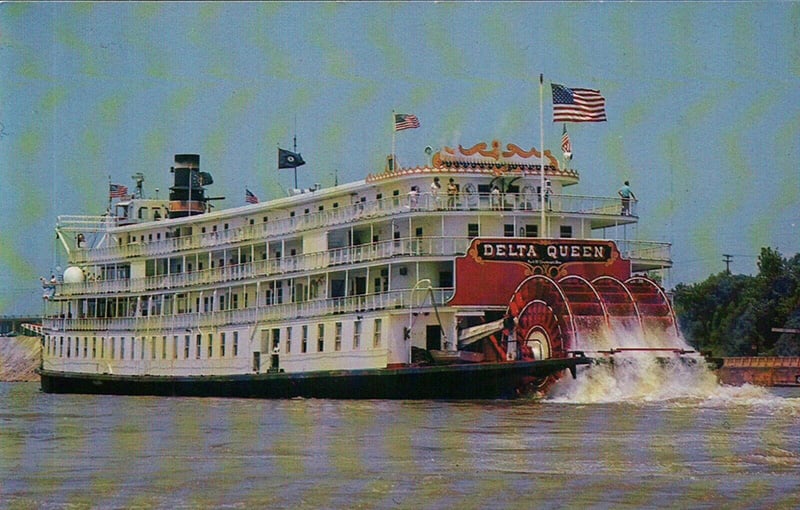
Before long, Mr. Muster recognized Betty Blake’s potential and mentored and groomed her until she quickly became the Vice President and General Manager of the Greene Line. Very soon, Betty became the public spokesperson for the DELTA QUEEN. Forty-four years after her untimely passing at just 50 years of age, Betty Blake remains the most righteous ballyhoo artist who ever promoted a steamboat’s cause.
Then came 1970, a year everyone expected to be the last for the DELTA QUEEN. For that was when her exemption expired from the SOLAS, or “Safety of Life at Sea” Law, which forbade any vessel constructed of combustible materials from operating on voyages originating in U.S. waters. Rather than submitting to the expected fate of the historic steamboat, DELTA QUEEN owners, staff, and crew, with the public support of millions, worldwise, launched the greatest ballyhoo campaign in the history of steamboating.
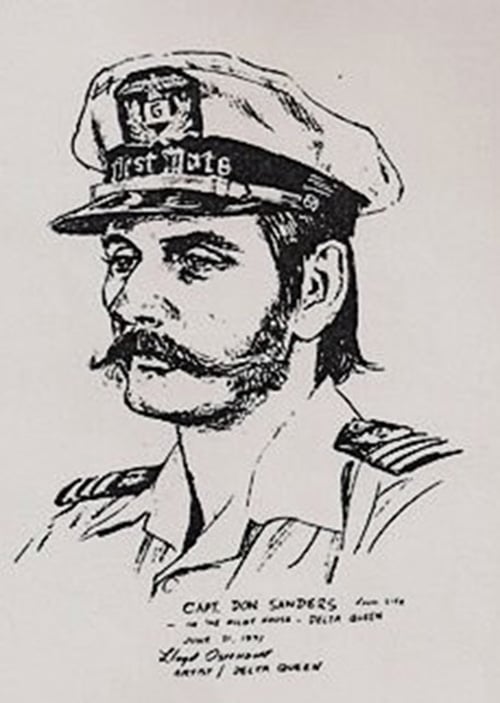
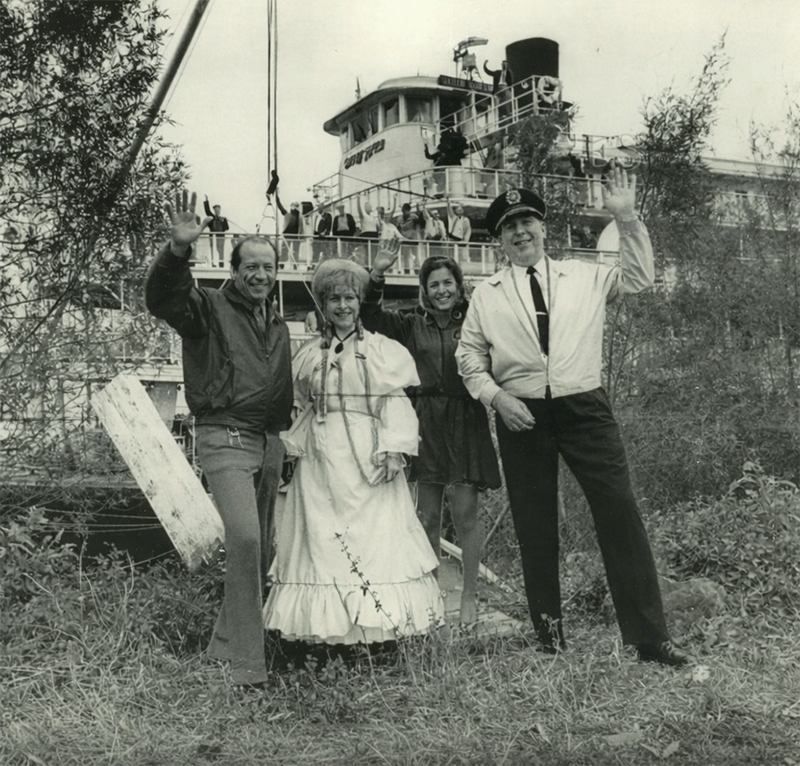
Led by Bill Muster, Betty Blake, and staff from the front office, and Captain Wagner, myself, and others on the boat, with the support of the ONA owners, the historical “SAVE THE DELTA QUEEN YEAR, 1970,” was a well-planned and orchestrated crusade to persuade the U.S. Congress to exempt the QUEEN and keep her running in the overnight passenger trade. By then, dubbed ‘Cap’n Betty’ by her longtime mentor and admirer, Captain Wagner, Betty Blake had become the movement’s chief spokesperson.
Ms. Blake, however, was quick to assign us to participating roles. My assignments included many interviews for newspapers and magazine articles, plus several appearances on radio shows. One of my most interesting tasks was acting as the main character in a film made specifically for a National Geographic documentary, which would be publicly released should the DELTA QUEEN fail to obtain an exemption from the SOLAS and be taken out of service.
Thankfully, a last-minute, non-retractable rider attached to a congressional bill by Senator Marlow Cook of Kentucky saved the DELTA QUEEN. Still, there went the Geographic documentary and my film career.
Looking back over my life since those exciting and eventful days on the AVALON and the DELTA QUEEN, perhaps one of the most useful crafts I acquired from Captain Wagner, Mr. Muster, Cap’n Betty, and others, including Big Bill Willis, has been a certain mastery of the technique of ballyhoo, or self-promotion.
During my days pioneering the recycling of aluminum cans and scrap in Greater Cincinnati, my competitors marveled at the number of newspaper articles focused on my business. The Kentucky Post remarked that “for someone who’d never been arrested or run for public office,” I had one of the largest clip files in the newspaper’s archives. During my ownership of the sternwheeler Rafter CLYDE, the spunky paddlewheeler became, perhaps, the best-known little paddlewheeler on the river. Lately, my Facebook page has enjoyed views far exceeding anyone’s, especially my, greatest expectations.
So, where’d it all come from? Nowhere else but the righteous application of the art of ballyhoo.
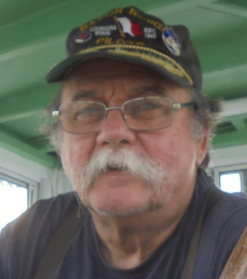
Captain Don Sanders is a river man. He has been a riverboat captain with the Delta Queen Steamboat Company and with Rising Star Casino. He learned to fly an airplane before he learned to drive a “machine” and became a captain in the USAF. He is an adventurer, a historian, and a storyteller. Now, he is a columnist for the NKyTribune and will share his stories of growing up in Covington and his stories of the river. Hang on for the ride — the river never looked so good.
Click here to read all of Capt. Don Sanders’ stories of The River.
Purchase Captain Don Sanders’ The River book
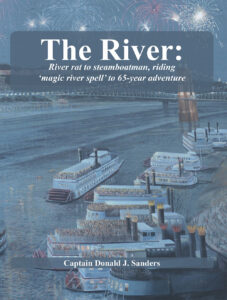
Capt. Don Sanders The River: River Rat to steamboatman, riding ‘magic river spell’ to 65-year adventure is now available for $29.95 plus handling and applicable taxes. This beautiful, hardback, published by the Northern Kentucky Tribune, is 264-pages of riveting storytelling, replete with hundreds of pictures from Capt. Don’s collection — and reflects his meticulous journaling, unmatched storytelling, and his appreciation for detail. This historically significant book is perfect for the collections of every devotee of the river.
You may purchase your book by mail from the Northern Kentucky Tribune — or you may find the book for sale at all Roebling Books locations and at the Behringer Crawford Museum and the St. Elizabeth Healthcare gift shops.
Click here to order your Captain Don Sanders’ ‘The River’ now.