










By Steve Flairty
NKyTribune columnist
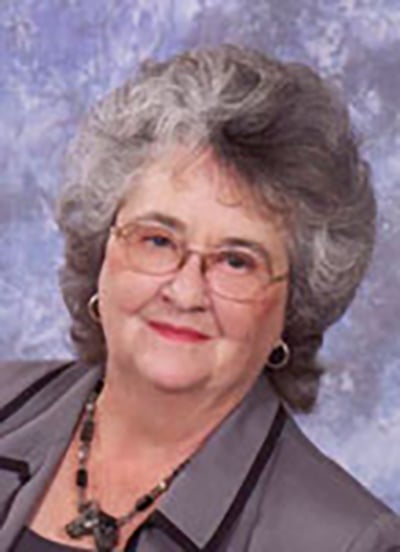
Jane Stephenson chose 1 Corinthians 13:13 as the focus of her funeral, a verse which says that charity — love in action — is even greater than faith and hope. It was a good choice for the most solemn of occasions, as her request for the funeral theme was her life theme, as those uplifted by her compassionate service can attest.
Jane passed away on May 2. What a sterling legacy she leaves.
She reached out directly — and in charity — to well over a thousand Appalachian women through an outreach she launched in Berea in 1987 called the New Opportunity School for Women (NOSW). Encouraged by her husband, John Stephenson, serving as president of Berea College, the program sought to help women from the mountainous region of Kentucky, and later other states, to overcome barriers to education and to learn job skills.
Those goals over the years have been reached, and continue to be, along with adding programs in four other states: West Virginia, Virginia, North Carolina, and Tennessee. Well over a thousand women have benefited, but the ripple effect of bettering the lives of others around those benefited likely is in multiples.
It all started when Jane, while serving as the college’s First Lady, received a phone call from noted Kentucky writer Gurney Norman. He asked Jane if she knew of a program for his friend, who recently had an unexpected divorce, to help her “gain confidence, (learn) how to get a job, and improve her financial condition.” Jane was the right person to call. She had worked with individuals in similar situations previously at UK as an advocate for non-traditional students, and she had a heart for the type of individual who Norman described.
What happened soon afterward seemed providential. Her husband was contacted by an educational foundation asking if he knew of any new and different programs needing funding. Bingo! That gift got the NOSW off and running for Jane and the many supporters she gained, and the program officially started on June 7, 1987, in Berea, with twelve women participating in the inaugural three-week program.
Many would follow in succeeding years. They learned new skills, along with boosting their self-esteem. One appreciative graduate, a “Rebecca” mentioned in Jane’s book, Courageous Paths: Stories of Appalachian Women, said it this way. “So, we found out while at the school that we were capable of doing a lot more than we thought. The counseling helped a lot. It gave me the confidence I needed to start back out in the world again and pick up kind of where I left off after raising a family and learning a lot about life.”
Jane’s empathy for those she helped was deep and authentic. She remembered her youth as not a lack of resources, but one of pushing back on negative societal expectations. While interviewing her in 2007 for her inclusion in the first volume my book series, Kentucky’s Everyday Heroes, she explained that girls “were not allowed to do things boys did. We were not supposed to be smart, and because of that I got angry a lot.”
Being raised in Banner Elk, North Carolina, the home of Lees-McRae College, she noted that it “opened up opportunities that many places in Appalachia didn’t have.” Knowing what those advantages meant to her personally in her younger years certainly colored her thoughts about those living in mountainous regions such as Eastern Kentucky, who lacked such resources.
The college also blessed Jane in another way. That’s where she met her husband, John, who complemented her interest in Appalachian people. “John had a deep interest in the study of Appalachia, and he used to ask me questions about it all the time,” she said. “I remember when I was real young, a girl made fun of my accent, but I didn’t realize I was from Appalachia.”
People would ask Jane how lives could be changed in a three-week time frame. (Since 2018, the residential program does it in two weeks.) “I can’t tell you exactly, but I can tell you that I have observed it happen, time after time, year after year.”
Perhaps it was because she was a person of intense charity, and that the virtue extended to those who worked with her in NOSW. The Reverend Kent Gilbert, pastor of Berea’s Union Church, where Jane attended as Berea College’s First Lady, talked of her personal depth. In carrying out such acts of charity, one needs “relationships, the ties that bind,” he noted, (and) “she had that in waves.” She went deeper than those waves of relationships, he emphasized, by truly “understanding the worth” of individuals she desired to help.
Shana Goggins, who joined the NOSW board last year, perhaps summed up Jane’s life and work best. “Jane’s legacy wasn’t built on charity as a distant gesture, but on a sustained, specific belief that struggling women deserved a real chance at a different life. That kind of legacy doesn’t fade — it keeps working, long after the person who built it is gone.”
To learn more about the ongoing work of the New Opportunity School for Women, visit nosw.org.