






Author’s note: Following is the first of a four-part series called “My Favorite Kentucky Characters,” based on some largely unpublished writings of Kentucky’s state historian since 1980, Dr. James C. Klotter. He has graciously given me permission to use them as sources for this series, and I greatly appreciate the gesture. I hope you, the reader, will both expand your knowledge of Kentucky history and also be entertained. I was. The first ‘character’ discussed is the iconic Daniel Boone.
By Steve Flairty
NKyTribune columnist
Dr. James Klotter has had a long and productive career studying, writing about, and teaching about his native state. Born in Lexington, he was raised mostly in Owsley County. He was a U.S. Army officer in ’70-’71 and later received a Ph.D from UK. He has written ten books, numerous historical articles, and has given some one thousand Kentucky history talks to audiences all around the state. From 1998 to his retirement in 2018, Klotter was a history professor at Georgetown College.

He is highly respected for his knowledge of Kentucky’s past. Not only that, but he loves his state deeply.
Dr. Klotter prefaced his remarks about his four favorite Kentucky characters by words by stating what many of us understand well. “In truth, my favorite character might be the one I’m currently researching, for I’ve gotten so immersed in his or her life and am living through their eyes.”
In his fifty plus years of writing about Kentucky, however, he noted, here are “some of the most interesting characters, to my eyes, at least.” He starts with Boone.
Daniel Boone
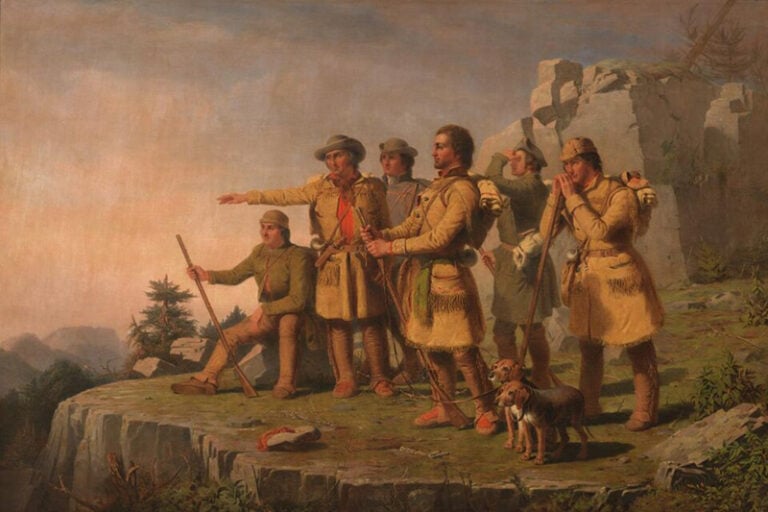
Most will recognize the historical figure Daniel Boone, but some may be misinformed about what he was really like. Klotter shared that one journalist remarked of how television-starved Americans see Boone. “Boone looked like Fess Parker, wore a coonskin cap, and single-handedly made Kentucky safe for Colonel Sanders’ fried chicken empire.”
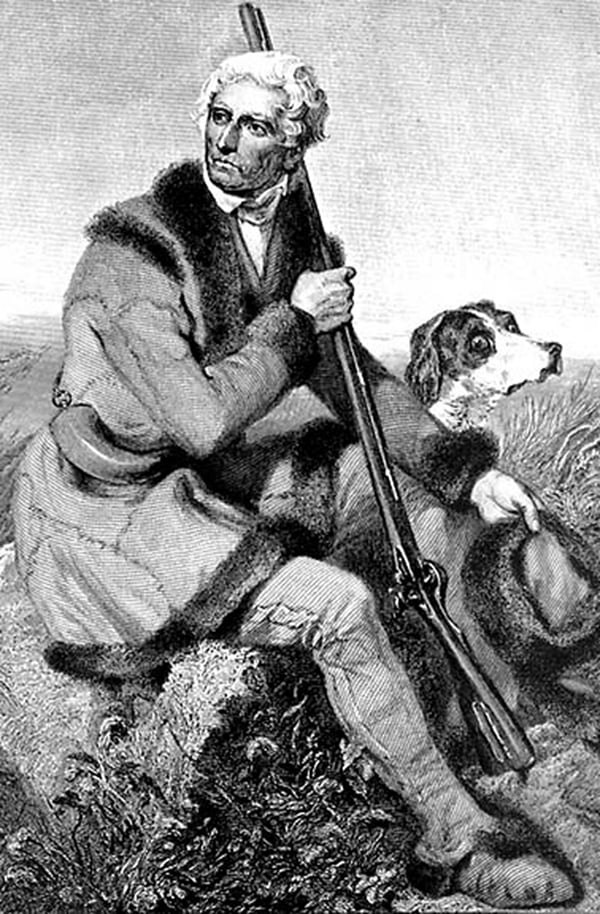
That’s a popular version of Boone, but is not reality, according to Klotter. “That Fess Parker, who played Boone in the awful series wore a coonskin cap and was six feet, four—and Boone was five feet, eight inches tall and never wore a coonskin cap, according to his son, are just two problems with the series, which still appears on some television channels.”
So, for many, a certain amount of relearning needs to take place to seriously profile Ol’ Dan’l, along with the 1700s appearance of most of the incoming settlers to Kentucky. Klotter gives us some perspective. “For those—like Boone—coming here in the quarter century before 1800, it was the image—not the reality—that drove them on,” he said. “And drive them it did, from perhaps 500 people in 1777, to 12,000 in 1783, to over 73,000, (of which) 12,000 of them slaves, by the first census in 1790. Some 15,000 more would-be settlers had been killed in just the seven years before that.”
The early Daniel Boone frontier era was, and often still is, quite romanticized, if you consider Klotter’s insights. “And even the survivors had a mixed reaction,” he said. “A homesick Virginian told an English traveler that the new land was full of rogues and cheats. ‘Back in his home state,’ said the Virginian, ‘when a man was missing from his community,’ it was said that he ‘has gone to hell or to Kentucky.’”
Klotter continued. “Another visitor met an old, grizzled pioneer (saying), ‘You must be happy living in such fertile land surrounded by all this beauty.’” His quick reply was ‘Beauty, hell! I’m surrounded by Indians.’”
Klotter expressed the nature of the two verbal exchanges of the period like this. “That response in lighter terms represented the serious contrast between the richness and the wealth that the land held, and the violence and death it brought with it. One writer explained it this way: ‘Beauty came with terror looking over her shoulder. The wilderness was charming to the senses and the mind, but its thickets of green concealed the painted and ferocious native.’”
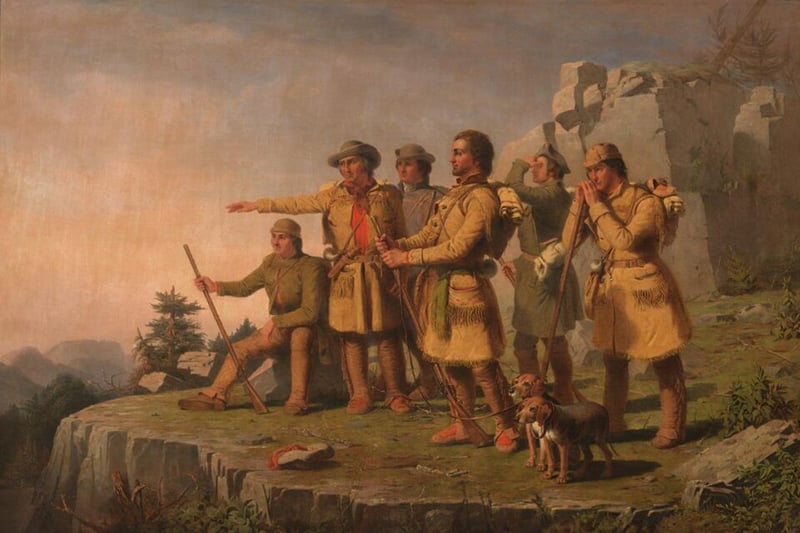
There is another paradox in how Boone is regarded, wrote Klotter. “Boone was portrayed as an Indian fighter, though he understood the native people well and was adopted into a tribe after he was captured once. Late in life, the native people even visited him, as they traded stories about the old days.”
Klotter, who previously served as the executive director of the Kentucky Historical Society (KHS), shared this humorous Boone anecdote. “Sometimes the legends got confused, too,” he wrote. It was about a person inquiring to KHS about the famous pioneer. “We don’t have the inquiry, but we do have the reply, which begins: ‘We’re sorry to inform you that we know of no escape by Boone by swinging from grapevines.’ Daniel Boone as Tarzan.”
Klotter wholeheartedly disagrees with a statement Boone, himself, reputedly made. “Boone once told a traveler late in life: ‘With me the world has taken great liberties, and yet I have been but a common man.’ In one way he was right, but another way he was not.”
The state historian continued by writing, “He was not a common man, an uncommon one. Yet had he not had a good, early ghostwriter, we may have known little of him. But his story was told while he still lived, and he became world famous. Perhaps that’s what makes him interesting to me is his modesty and his humble attitude.”