







By Patricia A. Scheyer
NKyTribune reporter
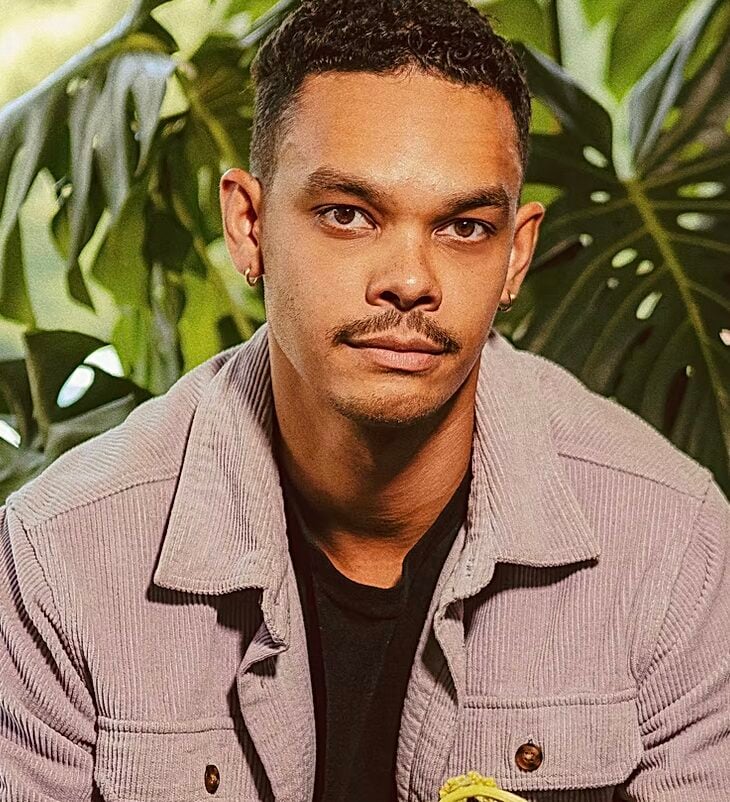
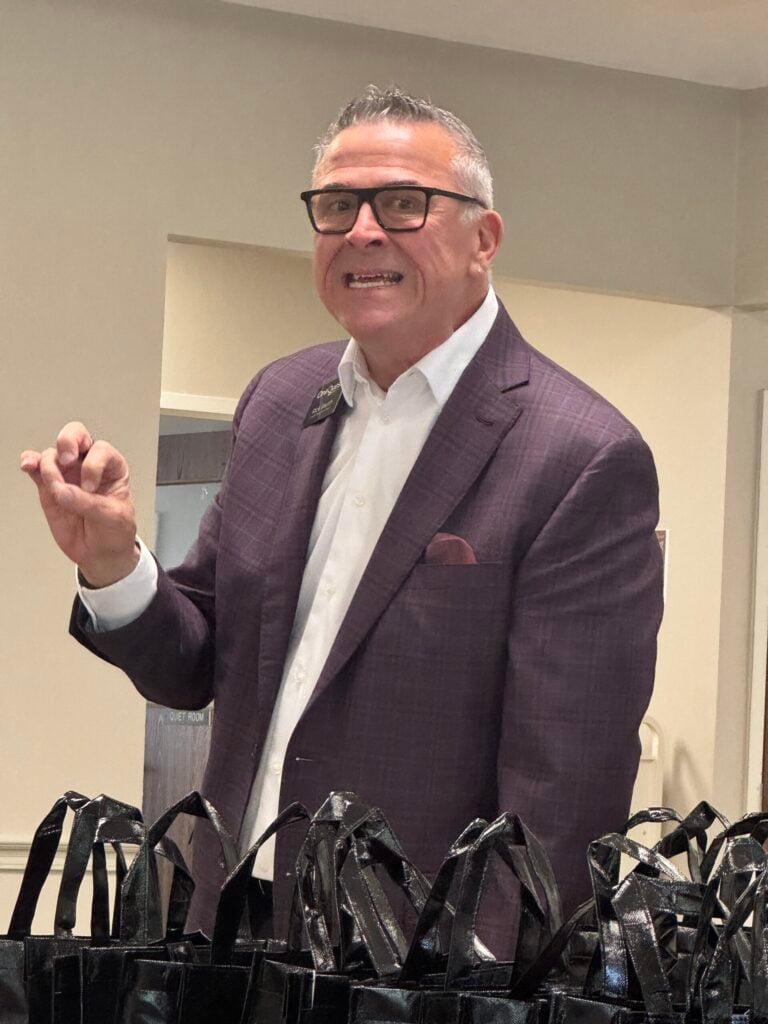
Rick Wurth is the chief executive officer for One Quest Health, formerly the Children’s Home of Northern Kentucky, and he visited the July monthly meeting of the Kenton County Mayors, held in Ludlow, to give an update on the new vision for the organization.
He said the new identity of the organization reflects a more ambitious vision, one where One Quest demonstrates that it is a proven model of empathy-driven care, where it forms strategic partnerships in order to transform health for individuals and communities on a wider scale.
Wurth brought up the recent tainted lettuce episode, and said a little bug can cause a lot of damage.
“There are two little bugs that exist in almost every community,” he said. “One is untreated substance abuse disorders and the other is untreated mental health issues. And if you understand those two little poisons in the Kentucky groundwater, I promise you, you will be ahead of the game when we have discussions about workforce development issues, when we talk about incarcerations, when we talk about why our jails are overcrowded with people who have addiction and mental health issues. If you understand untreated substance abuse issues and untreated mental health issues, you will also be clued into why is Kentucky consistently on the top ten of states dealing with issues like the number of children removed from their family of origin, and placed in state custody, child abuse fatalities and near fatalities. If we don’t get a handle on this we will pay for it in one way or another.”
He said his insight is that the state seems to have no problem housing a young person for $100,000 a day in a juvenile detention facility or jail. He suggested that possibly they could spend $5,000 to treat families when the first red flags appear instead, and that is what his organization is attempting to do.
“I come to you today from an organization formerly known as the Children’s Home of Northern Kentucky, which was founded in 1880 by the business community,” he said. “It was founded by Amos Shinkle who financed the Roebling Suspension Bridge. Sixteen years after he financed that he noticed families who were very poor, and reached out to twelve business associates to say we can do something about this.The Children’s Home came into existence.”
He related that in taking care of children, they found out that children kept coming back into care, so it was discovered that maybe the problem was that they needed to take care of the bigger people as well as the little people. And at One Quest, they treat adults in addition to children.
He said his organization has five locations, including the newest one in Louisville.
He told the mayors that in most of the country there are 350 Americans, on average, to every one mental healthcare professional. However, in Kentucky that number jumps to 4,000 people to every one mental healthcare professional.
In addition, he told the mayors, one out of every three Kentuckians is on Medicaid.
“There’s $1 trillion worth of Medicaid happening at the federal level,” he explained. “Kentucky is one of the largest consumers of federal Medicaid dollars. Kentuckians are going to brace for a rude awakening at St Elizabeth, because healthcare is estimating a $35 million negative cut. What happens when 200,000 Kentuckians do not have benefits, if they lose those benefits?”
Wurth said the country is facing a shortage of 88,000 mental health counselors and 114,000 addiction counselors by 2037, and he knows that this need is too great for incremental change.
“We’re expanding our workforce, leveraging partnerships with leading universities, like Northern Kentucky University, to provide tuition assistance and hands-on training to the next workforce,” he stated. “We’re expanding our methods of care, providing telehealth services, leveraging other mental health organizations, exploring new treatment methodologies, and much more. Right now, this model is innovative, but we want it to be the norm. We know the problem, but we also know the solution. The solution is that we all work together.”
At this time they have 165 employees, 50 of whom are therapists. They are partnering with St Elizabeth, NKU, and UK.
“The issues in the community have become incredibly more sophisticated than our orphanage days when we had to provide the kids a warm meal and a nice bed,” he said. “This is not about serving porridge to orphans anymore. And the kids that are living with us, to be quite blunt, are not powder puffs and snowflakes. The kids who are in our psychiatric residential program have a lot of acuity issues. We are the only psychiatric residential program in the northern bluegrass region.”
He said when a child comes to them, they evaluate them, instead of just adding more drugs. They find out if the child has been receiving 8 hours of sleep, and how much sugar their regular diet has in it before they determine how much medicine is needed. That goes for the males in the residence in Devou Park as well as the females that are in residence at the 58 acres they have in Burlington.
“We have raised $50 million in private funding since 2010,” he stated. “I have a superpower, in that I know how to beg for money. But it is more than that. We have increased employee pay and benefits, because when you pay people peanuts, you attract circus animals, and circus animals aren’t good in this world. I promise you, I am doing everything I can to decrease our dependency on Medicaid, and decrease our dependency on begging. Like the movie Hamilton, we are young, hungry and scrappy. We go and figure out how to get the services to your citizens.”
He talked about his institution which is a 501c3, in Northern Kentucky that has decided to be willing to break things that are no longer working, in order to provide a new way of existing in the world.
“The way we’re doing that right now is I’ll go out there and solicit private donations so that we don’t have to balance our workers’ paychecks and go on Medicaid revenues,” he explained. “We are working with NKU to recruit workers. We have been participating in government initiatives to help recruit healthcare workers. And for the first time ever, we will have University of Kentucky medical students doing medical rotations at One Quest. We’re now a nursing preceptor side for NKU, and I hope there are some of those NKU students who fall so
much in love with the way we do work and culture that they want to come to work for us.”
He summed his speech up by thanking the mayors for their support in the past, and he asked if they would continue their support in their new enterprise under the new banner of One Quest, which he said will take the organization to new goals.