















By Tom Latek
Kentucky Today
At the end of a long and emotional day, Republican lawmakers used some fancy legislative footwork to push through a pension overhaul that keeps benefits for most workers but still will leave the state with enormous debt.
With hundreds of teachers on the outside protesting loudly, chanting “Shame on you!” and vowing to have their say at the ballot box, the Senate voted 22-15 to pass the measure. The House earlier voted 49-46 with 11 Republicans joining 35 Democrats in opposing the bill.
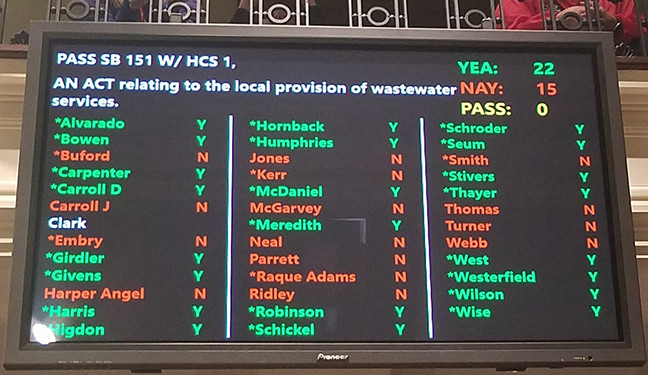
The 291-page proposal came out of the House State Government committee Thursday afternoon to the surprise of many and with no time to read it. The eight-hour debate included some fiery speeches went late into the evening but by 10:30 p.m. the House and Senate had voted for it and sent it on to the governor’s desk.
Gov. Matt Bevin tweeted his support for the bill, saying public workers owe “a deep debt of gratitude” to lawmakers who voted to pass it. His signature will make it official.
Teachers were not happy with the decision. Fayette County Public Schools, the state’s second-largest district, announced it will close Friday after the vote because more than a third of its employees would be out. Clark and Jessamine school districts also said they would be out Friday because of teacher absences.
In Northern Kentucky, the Campbell County School District, Carroll County School District, Gallatin County School District and Dayton Independent Schools all announced closure Friday due to a shortage of teachers.
Carroll County School District Assistant Superintendent Doug Oak posted a statement attributing the closure to pension reform legislation.
The Carroll County School District is closed today, March 30, 2018. An unusually high number of teachers called in sick, and the district does not have enough substitute teachers to operate its schools.
“We do believe that our being closed today is related to the passage of the pension reform legislation,” said Oak. “We understand that our teachers are upset. We understand that they feel betrayed by this legislative process.”
The Carroll County School District’s spring break begins Monday, April 2.
“We expect to have school as scheduled on Monday, April 9,” Oak said. “Currently, the last day for students is June 1, and graduation is on June 3. After today’s closing, the board will need to review the calendar to see if any changes need to be made.”
Rep. John “Bam” Carney, R-Campbellsville, presented Senate Bill 151, a bill that originally dealt with wastewater services. However, he introduced a committee substitute that gutted the bill, and replaced it with provisions similar to Senate Bill 1, the pension reform bill that stalled and was sent back to a Senate committee earlier this month.
“This guarantees a solid retirement for all public employees, including retired, current and future workers, while also giving future workers the chance to capitalize on the type of market returns we’ve seen in the past few years,” he told the panel.
Carney said the bill had minimal benefit changes to any current workers with changes made after listening to stakeholders.
“The only change to current public employees deals with future unused sick time,” Carney said. “This means unused sick days cannot be tacked on to years of service for retirement credit at the end of this fiscal year.”
The bill removes some of the most criticized parts of previous proposals. Current and retired teachers, who are not eligible for Social Security benefits, would still get annual raises of 1.5 percent in their retirement checks. And current workers would not have to work longer to qualify for full benefits.
However, new hires would be moved to a hybrid plan. They would be guaranteed to get back money they and taxpayers contributed to their retirement accounts, plus 85 percent of any investment gains. The state would keep the other 15 percent.
The bill would also remove new teachers from an “inviolable contract” that would protect them from future benefit changes.
Rep. Derrick Graham, D-Frankfort, objected to the committee being asked to act upon the bill without having seen it first.
“This is very unfair to ask the members of this committee to vote on a bill that is going to impact thousands of Kentuckians, when they bring it in at the last hour in the last days of the General Assembly,” he said.
The bill passed the committee on an 11-7 vote and was immediately taken up on the House floor where House Minority Leader Rocky Adkins, D-Sandy Hook, questioned the legality of it, asking, “Does it contain an actuarial analysis as mandated by statute?”
House Majority Leader Johnathan Shell, R-Lancaster, responded by saying, “We have a Supreme Court ruling which states, ‘It is not the responsibility or purview of the court to establish and interpret the rules under which the legislature conducts its business.’”
Several members objected to being asked to vote on the bill without having seen a copy of it.
Many of the same questions were repeated in the Senate that were asked in the House debate.
Sen. Jared Carpenter, R-Berea, called it an attempt to preserve the pensions for future public workers while honoring the obligations to current workers.
“I think this is fair,” he said. “It is reasonable. It is the right thing to do. I think just to say ‘no’ for the fact of saying ‘no’ is just trying to win a political party or political debate. I got friends on both sides.”
Senate Minority Leader Ray Jones, D-Pikeville was among those who opposed.
“If our forefathers who served in the halls of the state Senate and state House of Representatives could see where we are as a commonwealth, they would be appalled,” Jones said. “This is not the way democracy is supposed to work. Democracy depends on the free exchange of ideas and consideration of the rights and opinions of others.”
Carney said lawmakers expect it to save $300 million over the next 30 years. However, Kentucky is at least $41 billion short of the money it needs to pay retirement benefits over that same time.
While the budget conference committee will meet on Friday, the full General Assembly is in recess until April 2.
Legislative leaders decided to use the snow day from January to act on more legislation. They will then recess until the final two veto days, April 13 and 14.
The NKyTribune contributed to this story