





















State health officials with the Kentucky Department for Public Health announced that a Kentucky child has died from influenza (flu). This is the first pediatric flu death this season. The child, who lived in Kenton County, had not received this season’s flu vaccine. The flu vaccine is the best way to protect against influenza.

“Team Kentucky is deeply saddened by the loss of a child to influenza,” said Dr. Steven Stack, secretary of the Cabinet for Health and Family Services. “Our hearts are with the family during this incredibly difficult time. This is a heartbreaking reminder that the flu is not always a mild illness, especially for young children and people with high-risk medical conditions.”
Seasonal influenza is increasing across the Commonwealth, especially among children. The Kentucky Department for Public Health reports that emergency department visits and hospitalizations for the flu among children younger than 5 are higher than they were a year ago. The Kentucky Department for Public Health shares data on respiratory virus activity in Kentucky through its Respiratory Disease Data Dashboard and other resources available here.
“While flu activity is increasing across Kentucky, there are proven steps families can take to protect their loved ones,” said Dr. John Langefeld, commissioner of the Kentucky Department for Public Health. “The flu vaccine is safe, effective and widely available. It is the best way to reduce the risk of severe illness, hospitalization and death.”
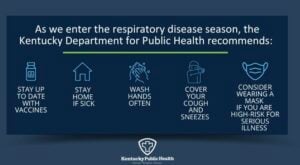
The Kentucky Department for Public Health, the American Academy of Pediatrics and other experts recommend that everyone 6 months of age and older get the annual flu and COVID-19 vaccines. These vaccines are widely available in health-care clinics and pharmacies, usually at no cost. Both vaccines can be given during the same visit and at any point in the flu season, which is typically from October to May.
Though most influenza and COVID-19 infections result in mild illness, serious symptoms require medical attention. These symptoms may include difficulty breathing, seizures, bluish lips or face, fevers higher than 104 degrees, coughing that improves but then comes back or gets worse, and dehydration. People who are most vulnerable to the flu include young children, people who are over 65, and anyone who is immunocompromised, pregnant or has an underlying chronic condition like diabetes, heart disease or lung disease.
“We share this information not to alarm families but to encourage simple actions that help keep our communities, including our children, healthy,” said Dr. Langefeld.
Health officials also encourage good health habits to prevent transmission of flu and other respiratory illnesses. These include washing hands often with soap and warm water, covering coughs and sneezes, and staying at home from work or school when sick.