








It’s not a good look, the new rule the KHSAA Board of Control approved last week. They’re going to require private schools to abide by a different enrollment standard than the public schools in the three classified sports in Kentucky.
Those are football and cross-country in the fall and track & field in the spring. And no question there’s one good reason for this rule — and one not-so-good. In the interests of full disclosure, I’m a private school product — went to high school at Cincinnati St. Xavier when it was in downtown Cincinnati and taught and coached at Covington Catholic. But I fell in love with high school sports here from walking down from my house on Elm Streer to the Ludlow High practice fields and Rigney Stadium and Lemker Field.
There weren’t as many Boone County teams then, but no one made it to more games than I did as a grade-schooler, hitchhiking my way or taking the bus to Dixie Heights, Highlands even, Newport, Newport Central Catholic, CovCath and Holmes, where you could also catch those early games from William Grant, who only got into the KHSAA in the late 1950s when black schools, or black players, were finally admitted.
I’ve always thought what an ironic reversal of the principle that animated onetime Kentucky senator and governor, A. B. “Happy” Chandler, who as baseball commissioner, famously signed the contract of Jackie Robinson despite 15 of the 16 MLB owners at the time voting for him not do it.
While Happy’s language may at times have reflected his birth in 1898, his heart was in the right place. Separation in any fashion was not the way to go as he integrated baseball.
And yeah, we know as The Courier-Journal’s Jason Frakes reported last week, that one rationale for this move was to shut down the talk that maybe private schools should be in their own organization, something that KHSAA Commissioner Julian Tackett said was a non-starter after private schools Kentucky Country Day, Lexington Christian and Christian Academy of Louisville won state football titles last fall..
Tackett said this was about figuring out “What are some ways we can get a little bit of competitive equity, knowing that there are certain things that are off the table, especially in football? I think it’s an effort to try and keep everybody in the pool together.”
Interesting reference for a state that had it allowed black basketball players “in the pool” in the 1950s, UK’s Adolph Rupp might have won three or four or more NCAA titles and delayed UCLA’s run under John Wooden. If only Rupp would have recruited Covington’s Tom Thacker in 1959 and then picked up on Clem Haskins out of Campbellsville and the Smith brothers — Dwight and Greg — out of Princeton and then of course, Westley Unseld out of Louisville Seneca, and Butch Beard out of Breckinridge County.
If only Adolph hadn’t been so stubborn and done the right thing for Kentucky schoolboys and not worried about how the Southeastern Conference schools in Mississippi, Alabama, Louisiana, Georgia, Tennessee and Florida were going to respond. He could have pulled it off. He was by far the nation’s No. 1 college coach going into the 1950’s and owed it to these kids who played in Memorial Coliseum in high school to be able to play there in college. And then by the end of the next decade, he wasn’t — as good — even though some of his teams were pretty talented, without those players.

At a state track meet, I was standing next to Unseld, then a senior, in the stands and asked him why he didn’t go to UK. “I didn’t want to be the first,” he said simply. As for Thacker, all he did was lead his Cincinnati teams to two straight NCAA titles, missing the third by seconds, as he became the only player to win an NCAA title, an NBA title and an ABA title.
So here’s the plan that creates a separation between private and public: For Kentucky’s 16 private football-playing schools — five in Northern Kentucky — there will be a “1.35 mutliplier,” Hackett says, meaning that the total enrollment of private schools will be multiplied by 1.35, possibly pushing some of them up a class that currently has these teams in these classes: Class A – Bethlehem, Bishop Brossart, Covington Holy Cross, Kentucky Country Day, Louisville Holy Cross, Newport Central Catholic, Sayre. Class 2A – Lexington Christian, Owensboro Catholic, St. Henry; Class 3A – Christian Academy, DeSales, Lexington Catholic. Class 4A, Covington Catholic; Class 6A – Trinity, St. Xavier.
Now we don’t think this separation of schools comes close to what happened in the segregation era, of course, but we think that any separation, any disparate treatment of public and private schools, is a bad idea. If these private schools have broken the KHSAA’s recruiting rules, then punish them, Apparently, they haven’t.
And don’t just pick out a number like 1.35 because “other states have used it,” Tackett says to balance schools with wider areas of where they can enroll students from.
Here’s an idea: Why not have the private school athletes in cross-country and track and field run in handicap races like racehorses and put extra weight on them? Or maybe have touchdowns count for just five points and field goals just two. Or maybe give the private schools just three downs to gain 10 yards for a first down instead of four. Or in the high jump or the shot put, you could deduct 1.35 percent of the height or the distance.
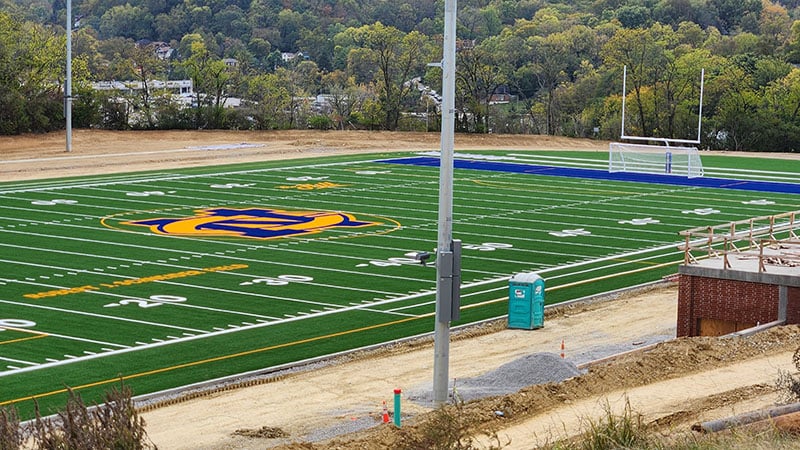
Sounds silly? Stupid? Unfair? Well, the 1.35 multiplier isn’t much better. For those who focus only on the wider student enrollment area that’s an advantage for the private schools, how about the fact that private schools have to use their own fundraising to pay their coaches, build their football stadiums and weight rooms, not taxes. Look at NewCath, for the first time in 80-some years, the Thoroughbreds will have their first-ever stadium for home games this fall. They’ve had to borrow places to play for all those years.
How “equitable” is that? and still NewCath has won five state football championships. Holy Cross won one without a home field. And without whining.
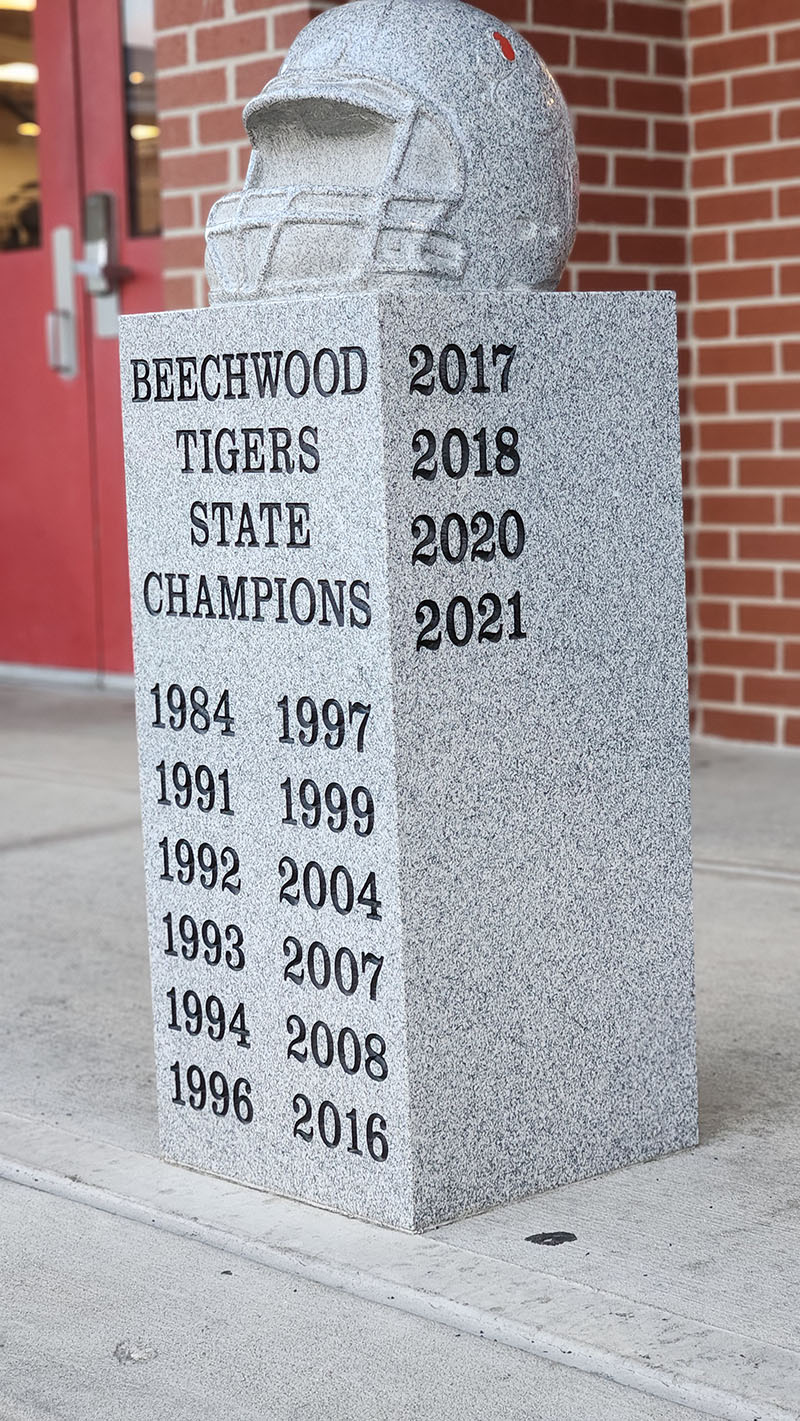
And the pride of Northern Kentucky high school football are Highlands and Beechwood, Nos. 2 and 3 in Kentucky championships. Which reminds me of a baseball regional where Highlands and Beechwood made the semifinals with two of these three — CovCath, NewCath and/or St. Henry, I can’t remember which. We had a little meeting before the semis. “Great to see four private schools here,” I remember saying, “two of you who actually are private schools and two who think you are.” The Highlands and Beechwood coaches laughed.
A great number of out-of-district players have won a great many state championships and games for those two, and more power to them. My next-door neighbor in Ludlow was one of them, one of the great running backs in Highlands’ history. I could not have been happier for him. It was the right place for him to get ready for college.
Highlands doesn’t need a 1.35 multiplier to compete with CovCath. Nor does Beechwood need one to compete with Owensboro Catholic.
And the KHSAA doesn’t need to go down this road in a state where basketball has been king and the 1926 Sweet 16 champ Louisville St. Xavier had to go to the national high school Catholic basketball tournament in Chicago — and win it — since Catholic schools were not invited to the other national tournament in Chicago. It was two years later that state champ Ashland and runner-up Carr Creek, the mountain kids who didn’t have uniforms until the tournament, after their legendary four-overtime state championship game, were both invited.
Kentucky high school sports is at its best when everybody gets to compete. And no handicaps for anybody who plays by the rules.
Contact Dan Weber at dweber3440@aol.com. Follow him on X @dweber3440.