


















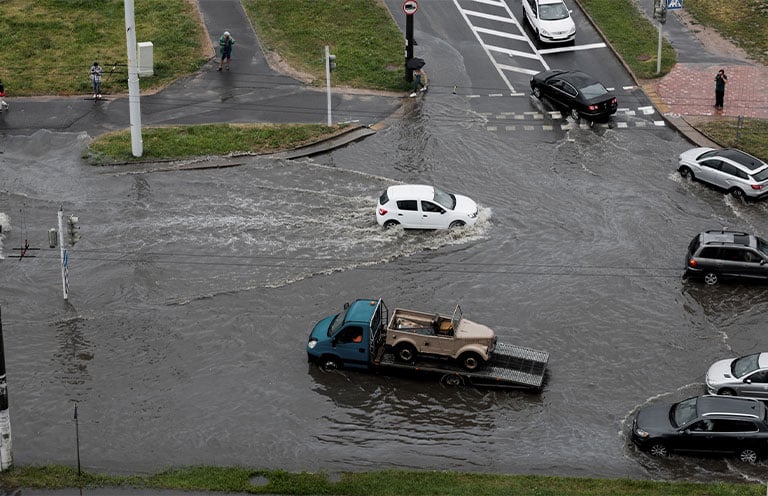
With recent rain and thunderstorm across the region, AAA is issuing important safety reminders for drivers.
“Strong downpours like we’re experiencing can limit visibility, while wet pavement can quickly deliver a slip-and-slide driving experience,” said Lori Weaver Hawkins, public affairs manager, AAA Blue Grass. “If you can avoid driving during periods of heavy rain, that’s your safest option. If you have to be out, realize that roads are flooding even in areas away from creeks and rivers, as heavy rainfall overwhelms storm water drainage systems, causing water to inundate streets and low-lying areas.”

Motorists are encouraged to adjust driving behaviors
• Slow down. With wet pavement conditions, it’s important for motorists to allow ample stopping distance between cars by increasing the following distance of the vehicle in front of them so they are able to stop in time for intersections, making turns and allowing for traffic stops and movement.
• Avoid cruise control. The chance of losing control of the vehicle can increase when using cruise control in wet conditions. Drivers may need to reduce the car’s speed by lifting off the accelerator under wet conditions, which can’t be accomplished when cruise control is engaged. Avoiding cruise control will also allow the driver more options to choose from when responding to a potential loss-of-traction situation. Cruise control can also increase the risk of hydroplaning.
• Decrease risks of hydroplaning. No car is immune from hydroplaning on wet surfaces, including four-wheel drive vehicles. With as little as 1/12 inch of water on the road, tires have to displace a gallon of water per second to keep the rubber meeting the road, impacting maneuverability. Drivers should reduce their speed to correspond to the amount of water on the roadway. At speeds as low as 35 mph, even new tires can lose some contact with a wet roadway.
• Avoid hard braking. Even if brakes work under normal conditions that doesn’t mean they will react the same on slippery roads where tires roll with less traction. Drivers should slow down and avoid hard braking or turning sharply.
• Be aware of changing wind conditions. Wind gusts often accompany stormy weather. This is a growing concern with more high-profile vehicles, like SUVs and light duty trucks, on the roadways. Larger trucks and RVs are even more affected by high winds, so give them plenty of room on the roadways.
• Pay Attention to emergency weather alerts. Alerts are provided by the National Weather Service to mobile phones with no sign up required. Adding the National Weather Service or other weather app to a mobile phone home screen can also make more detailed local information easier to find.
• Use emergency flashers when necessary. If you are forced to stop in traffic due to poor visibility, turn on emergency flashers immediately. In Kentucky, it is permitted to drive with hazard lights on specifically to warn other drivers of a traffic hazard, including severe weather. Take the nearest exit if safe to do so. If you are far from the exit, pull to the shoulder, off the roadway. Avoid coming to a full stop while still in a traffic lane.
• If visibility is severely limited during heavy rain, reduce your speed, turn on flashing hazard lights, and if safe to do so, pull off the road, out of the traffic lane. In Kentucky, it is permitted to drive with hazard lights on specifically to warn other drivers of a traffic hazard, including severe weather. Avoid coming to a full stop while remaining in a traffic lane. Take the nearest exit if one is available.
Prepare before you go
• Replace windshield wiper inserts that leave streaks or don’t clear the glass in a single swipe. In general, it’s a good idea to replace wiper inserts every six months. You do not want to wait until a heavy downpour to realize your wiper blades can’t clear your windshield.
• Make sure all headlights, taillights, brake lights and turn signals are properly functioning so other drivers will see you during downpours.
If your vehicle doesn’t have automatic headlights, be sure to turn on your headlightswhenever you drive.
• Check tread depth and pressure for each tire, including the spare if your vehicle has one. Adequate tread is important to allow your tires to grip wet surfaces, while both low pressure and high pressure can impact a tire’s ability to properly grip the roadway surface. Ensuring your tires are well-maintained not only keeps you safer, but helps you get the most out of every gallon of gas.
Use caution around flooded roadways
• Turn Around, Don’t Drown! As little as six inches of water can cause drivers to lose control of vehicles and potentially stall engines. Do not attempt to drive through flooded roads. Turn around, find another way or return to a safe location.
• Seek higher ground. If the vehicle stalls or is suddenly caught in rising water, leave it immediately while it’s still possible to do so.
• Never drive through standing water. Standing water can be deceiving and motorists should avoid it. No matter how shallow it may appear, water may be concealing downed power lines, be deeper than it appears, or have significant force from flooding.
• Standing water may also be hiding potholes, downed wires and debris. Another good reason not to drive through it!
Be S-U-R-E to have a plan
A simple acronym could help motorists stay calm and exit their vehicles quickly should flood waters or a crash leave a vehicle submerged in water. Drivers are reminded to follow the S-U-R-E plan for escaping a sinking vehicle:
• Stay calm. Educate yourself about the important steps to take so you can make the right decisions quickly and decisively should the situation arise. For example, don’t open the car doors, which can allow water to rush in faster. If a crash has left you disoriented and unsure which way is up, look for bubbles. Their movement will direct you toward the surface and prevent you from heading deeper into water once you’ve exited.
• Unbuckle. Taking off your seatbelt should be your first priority. By keeping a multi-purpose vehicle escape tool easily accessible in your car, you will be able to cut your seatbelt off quickly and then do the same for any passengers.
• Roll down. Next, roll down or break a window. Windows often won’t roll down when the vehicle is submerged. If that’s the case, you will need to use a vehicle escape tool to break a side window, keeping in mind that a window’s corner is its weakest spot.
It can be impossible to break a window in the center “Because the front and rear windshields, and sometimes even side windows, are made from laminated safety glass, these windows are not easily shattered like other glass,” Weaver Hawkins said. “Use a vehicle escape tool to break the glass in a side window’s corner. Attempting to break the window by hitting it with your elbow, kicking it in the center or swinging a hard object at it will be challenging in water and waste precious time.”
• Exit. Once your seat belt is off and a side window broken or rolled down, immediately exit the window and move to safety. As soon as you’ve reached the surface, move to higher ground until help arrives. Grab onto a tree or other heavy object if possible and stay there until rescued. If you’re swept away by flood waters, try to keep your feet pointed downstream and direct your body over, rather than under, obstacles if possible. Do your best to avoid power lines.
Keep vehicle escape tools handy

While a vehicle escape tool is invaluable should you find yourself in a submerged vehicle, you need to have the right tool for the job and ensure it is readily accessible. Vehicle escape tools are relatively inexpensive and available through automotive accessory retailers.
“Keep the tool attached to a key chain or in another easily accessible place should an emergency arise,” Weaver Hawkins reminds. “You do not want to waste precious seconds fumbling around, trying to find your vehicle escape tool.”
Best chance of survival? Heed weather warnings
While it’s important to know how to escape a sinking vehicle, the best chance for surviving such a situation when flooding is involved is to avoid driving altogether until you are certain the danger has passed. Motorists should stay weather-aware and know which areas of their communities present a danger as rivers and creeks continue to swell. Heed the warning to, “turn around, don’t drown” if you find yourself suddenly facing water in the roadway. Stay at home until floodwaters have receded before attempting to drive anywhere.
In a flash flood situation where danger is more difficult to avoid, AAA reminds motorists that taking quick, decisive steps are critical to surviving a vehicle submersion crash.
AAA warns motorists against allowing the sinking vehicle to fill with water before exiting, with the hope that the pressure will be equalized, enabling doors to be opened. Pressure won’t equalize instantaneously and it could require too much time holding your breath, and then executing an escape perfectly to avoid drowning if you wait for a vehicle to sink completely. Instead, exit as quickly as possible once your vehicle is in water and no longer under your control. (S – Stay Calm; U – unbuckle; R – roll down or break a window; E – Exit)
“While the prospect of finding yourself in a sinking vehicle is frightening, keeping the S-U-R-E acronym in mind and knowing exactly what to do can often make the difference between life and death,” said Weaver Hawkins. “Stay S-U-R-E and stay alive.”
AAA Blue Grass