







By Michael O’Bryant
Special to NKyTribune
The history of the Negro Leagues in baseball is often remembered through players such as Jackie Robinson, Josh Gibson, or the ageless Satchel Paige. This framing often obscures the complicated — and at times contradictory — Jim Crow–era story of Black baseball’s economic survival and cultural life. Perhaps no team embodied these contradictions more than the Clowns. Known at various times as the Ethiopian Clowns, the Cincinnati Clowns, and the Indianapolis Clowns, their story uneasily inhabits a spot alongside a narrative of Black baseball.

The Clowns were an all-Black, barnstorming team that combined comedy and athletics. Think of them as baseball’s version of the Harlem Globetrotters. While they were successful both on the field and economically, they were shunned by “establishment” Black baseball. With African-American players barred from the major leagues, the promoters of the Negro Major Leagues positioned their sport as a vehicle for racial advancement. By trying to build an institution that paralleled White professional leagues, they believed it could prove that Blacks were capable of sophisticated, disciplined professionalism.
The Negro Major Leagues wanted players to showcase their skills and eventually earn acceptance into the White major leagues. League officials and Black sportswriters argued that you could not demand entry to the major leagues while painting your face. So, the Clowns — with their painted faces, oversized uniforms, and routines like “shadow ball” — were viewed as an abomination that reinforced perceptions that Black baseball was fundamentally unserious, merely a carnival act.
Despite the gimmickry, the Cincinnati Clowns were a team of legitimate baseball talent. In 1939 they played in the “Denver Post” Tournament which was considered the “World Series of Semi-pro Baseball.” It was a rare event in that the invited included teams and players from the Negro Leagues competing against White teams. Bob Kendrick, president of the National Negro Leagues Baseball Museum, said of the integrated play, “Those events, like barnstorming games against Major League teams or competing in the Denver Post tournament in many ways helped to validate the talent of these players, in the minds of white baseball fans.” While winning 125 regular season games in the 1941 season, the Clowns also won the “Denver Post” Tournament.
In 1940, worried about reputational harm, the Negro Major Leagues agreed to bar their clubs from playing against the Clowns. It didn’t hold long. Faced with a brutal dilemma—ideological purity versus economic survival—some clubs covertly broke the pledge because they needed the gate receipts, and the Clowns were the proverbial embarrassing uncle who paid the rent.
As an outsider, the Clowns made money for the next two years. With their success, the Negro leagues grudgingly were forced to accept the Clowns. So, in 1943 the Clowns joined the Negro American League. Because their four games at Cincinnati’s Crosley Field over the previous two seasons drew more than 36,000 fans, the team ultimately chose to relocate to Cincinnati, displacing the Cincinnati Buckeyes, who then moved to Cleveland.
The Negro league did, however, require a house-cleaning. The team was expected to drop “Ethiopian,” stop the face painting, and play “straight” baseball. The Clowns complied — in part — trimming some theatrics but not completely abandoning comedy. This created a symbiotic relationship where the Clowns subsidized the very league that despised their methods.
The Cincinnati Clown’s most popular player was Edward “Peanuts Nyasses” Davis (1917–1973). Known for his zany antics, the press anointed him “the Crown Prince of Negro Baseball.” Being the “Prince” often meant performing to stereotypes, some of which mirrored the cinematic persona of Lincoln Perry (Stepin Fetchit) who became a millionaire for playing “the laziest man in the world.”
“Liberty” magazine wrote that, when summoned to pitch, Davis would be “inevitably discovered snoozing somewhere in the stands.” But the reality was that he was an all-around athlete making the Chicago Defender’s Little All-American Football team in 1937. During one baseball game, a 70-yard race was scheduled between Ray Nolting the former University of Cincinnati halfback and then Chicago Bears player, against a Boston College football and track star. When the two stepped to the line, so did Davis who had already pitched five innings. Davis won.
Davis was well known for his pitching battles with Satchel Paige and by August 1942, his record was 210 wins and 6 losses. His knuckleball was so good one teammate said he couldn’t play catch with him without wearing a mask. Mainstream periodicals, such as “Sporting News” and the “Chicago Daily News” devoted columns to Davis. Gene Kessler of the “Chicago Times” placed Davis at the top of the list of Black stars. He was even touted as the leading candidate to integrate the major leagues, but the attention was more for his clowning than his pitching prowess.
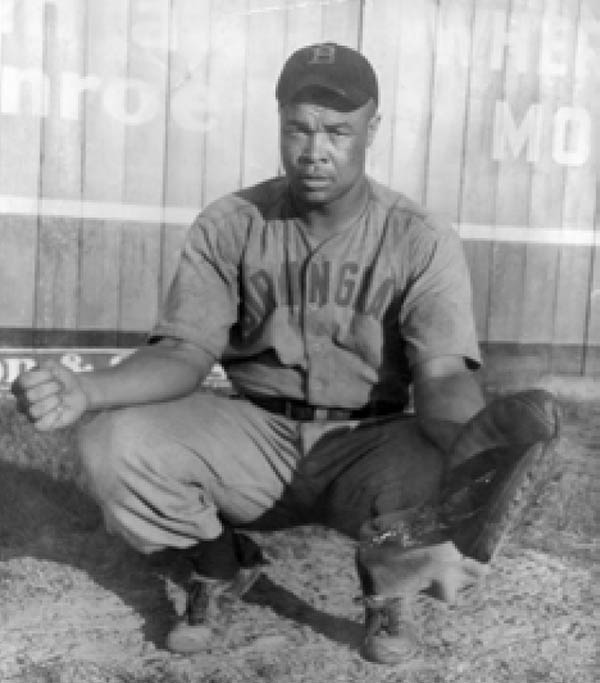
Another Clown’s player who used the stereotype of laziness for comic effect was Davis’s catcher, Lloyd “Pepper” Bassett (1910–1980). His tricks included catching a ball in his pocket by switching to a mitt with a hole in it, but what he was famous for was catching a few innings of some games while sitting in a rocking chair. Not to be outdone, future Hall of Fame catcher Josh Gibson, when playing against the Clowns, sometimes would borrow the chair for an inning or two.

Other popular Clowns of the day were Richard “King” Tut (1904–1966), one of the “old line comedians,” who performed slapstick routines and had an enormous baseball glove. Clown player “Goose” Tatum (1921–1967) later found his skills were more suited to the basketball court than the baseball diamond after he was lured away by promoter Abe Saperstein and became the Harlem Globetrotters’ most famous player.
The Clowns split their home games between Cincinnati and Indianapolis for the 1944 and 1945 seasons, then relocated to Indianapolis in 1946. It is a supreme irony that the Clowns, the team most criticized for harming the image of Black baseball, were the longest-lived franchise of the era.
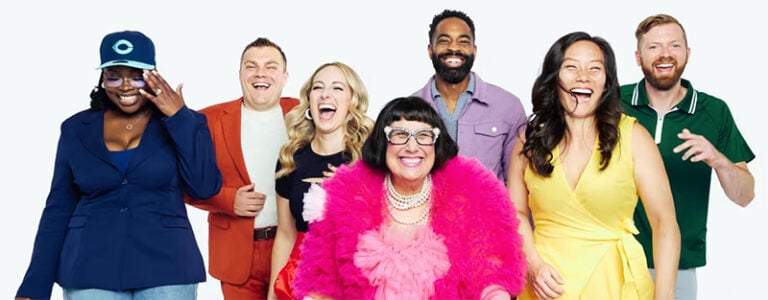
Clowning and spectacle were revived in 2018 when the Savanna Bananas began experimenting with “Banana Ball.” Then in 2023 they transitioned completely, barnstorming and traveling with their playing partner, the Party Animals. For the 2026 season additional teams have been added to establish a Banana Ball Championship League.
One of these teams is the Indianapolis Clowns, formed in partnership with the National Negro Leagues Baseball Museum. Its creation is a tribute that acknowledges and preserves the Clown’s history of competitive success and pioneering show business. But it is also an opportunity for careful contemplation on how to celebrate the Clown’s legacy without reducing it to caricature or erasing the injustices those players and teams faced.
The Indianapolis Clowns play the Savannah Bananas on June 19-21 in Cincinnati at the Great American Ball Park. As demand for Banana Ball continues to outpace available tickets, many games are now televised and streamed nationwide — giving fans a chance to experience the spectacle from home.
View the Savannah Bananas 2026 TV schedule for broadcast information.
Michael O’Bryant was born in Dayton, but grew up in Mason, Ohio, when it was still a farming community and the first day of rabbit hunting season was an unofficial local holiday. Earning his undergraduate degree in Education from the University of Cincinnati, he taught at Mason Public Schools, where he was asked to inaugurate their junior high football program. He later moved to the high school level, teaching English and Social Studies. O’Bryant took temporary leave to attend Morehead State University where he served as an assistant track coach and earned his MA. Returning to Mason, he taught and served as an administrative assistant and Social Studies Curriculum Leader. For more than twenty years, he has worked in publishing, including Orange Frazer Press in Wilmington, Ohio, as well as the textbook company Cengage Publishing.
Paul A. Tenkotte, PhD is editor of the “Our Rich History” weekly series and Professor of History at Northern Kentucky University (NKU). To browse more than ten years of past columns, click here. Tenkotte also serves as Director of the ORVILLE Project (Ohio River Valley Innovation Library and Learning Engagement). For more information see orvillelearning.org. He can be contacted at tenkottep@nku.edu .