












By David E. Schroeder, MA, MLIS and Paul A. Tenkotte, PhD
Special to NKyTribune
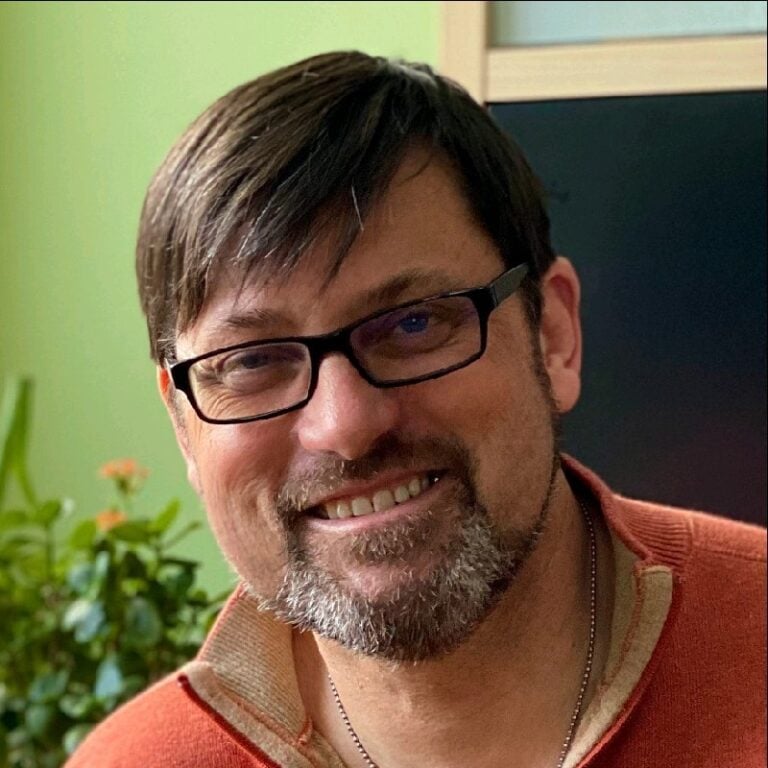
Husband, father, professor, leader, administrator, and author — these are just a few of the titles Dr. Ray Hebert earned during his long and illustrious career, and what a career it was.
Dr. Hebert arrived at Thomas More in 1975 with his wife Maureen and a daughter on the way. The new Crestview Hills campus was less than a decade old and excitement was in the air. The History Department that Dr. Hebert joined was a talented one, comprised of seasoned professors like Sr. Mary Philip Trauth S.N.D., Father Paul Tenhundfeld, and Ms. Nancy Bruns. Dr. Hebert brought a youthful energy to the team and soon became a sought-after teacher and advisor. Fifty years later, he was still at Thomas More, bringing that same energy and scholarship to campus.

Dr. Hebert was a legend at the university. Well-respected by faculty, staff, students and alumni, his contributions were innumerable. It’s hard to imagine Thomas More University without Dr. Hebert, yet his story began long before he arrived in Northern Kentucky.
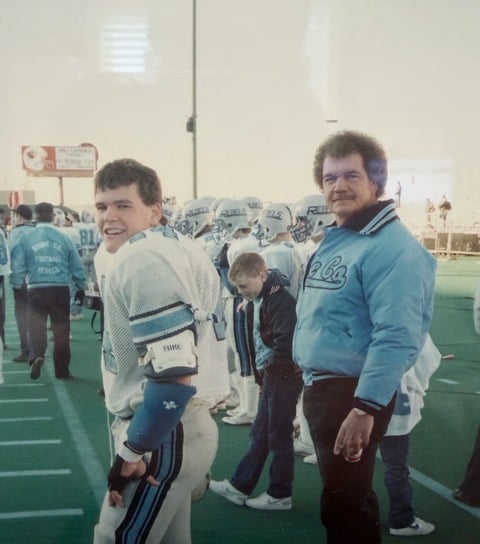
Ray Hebert was born on February 7, 1942, and raised in New Hampshire. There he attended Catholic elementary and high schools and was surrounded by a strong and vibrant French-Canadian immigrant community. Ray loved sports. He was a stellar athlete, playing both baseball and basketball at Holy Rosary High School in Rochester (NH), where he and his teammates advanced their small school to three state championship games — two in basketball and the other in baseball. In fact, Ray was named to the Rochester NH Sports Hall of Fame in 2001.
Ray’s natural sense of curiosity led him to St. Anselm College in Manchester, NH, where he played two years of basketball and earned a degree in History in 1964. At St. Anselm, Hebert received a deep grounding in the Liberal Arts and a great love for European History.
Ray then played one summer of semi-professional baseball for the minors of the Boston Red Sox. The Red Sox were Ray’s favorite team growing up. He fondly remembered his father taking him on the train to Fenway Park in Boston. Ray’s experience of semi-pro ball, however, would prove the first of several “summer epiphanies.” He decided that a baseball career was not a pathway he wanted to pursue.
Instead, Ray enrolled in graduate studies in history, earning a master’s degree from Duquesne University in Pittsburgh, Pennsylvania in 1966. He taught at Dunbarton College of the Holy Cross in Washington, DC for six years. He even earned tenure there in Spring 1972, just before the college announced fiscal problems, eventually leading to its closing in 1973. Faced with another “summer of epiphany,” Ray chose to complete his doctorate in history at the University of Maryland in College Park, while simultaneously teaching part-time at five different colleges.

Then, in April 1975, Thomas More College interviewed Ray for an Assistant Professor of History position. Impressed by his credentials, they agreed to hire him—but only if he had his PhD in hand by August 1975. Another “summer of epiphany” followed, while Ray successfully completed and then defended his dissertation in July.
At Thomas More, Hebert excelled in many roles:
• History, International Studies, and Political Science Department Chair (4 terms);
• Vice President for Academic Affairs and Dean of the College (1987–2001);
• Director of the James Graham Brown Honors Program;
• Director and founder of the Gemini Dual Credit Program;
• Founding Executive Director of the William T. Robinson III Institute for Religious Liberty.
His work with the Gemini program provided the opportunity for hundreds of high school students to get a head start on their post-secondary educations.

(Photo by John Schlipp)
Dr. Hebert was most admired on campus as a professor. His infectious style of teaching inspired generations of students to view the world in a new light. He had a way of teaching concepts and ideas by using a mix of lecture, interactive activities, personal connections, and creative strategies that transformed facts into compelling narratives and memorable experiences. In other words, he was an excellent storyteller. He brought history alive to his students and made them think critically about how the past impacts the present and future.
Dr. Hebert’s teaching style resulted in his being selected as a two-time Teacher of the Year Award winner by the students at the university. In 2018 the Thomas More Academic Affairs Division created a new award in his honor, the Dr. Ray Hebert Faculty Service Award. In 2023 the university inaugurated the Raymond G. Hebert Award for Contributions to Thomas More University and Catholic Education.
Dr. Hebert was also on the forefront of experiential teaching. Over the years, he led many groups abroad, immersing them in the places where history occurred. He was a contributing member of the Cooperative Center for the Study Abroad (CCSA) and led numerous trips, primarily to England, Ireland, and Australia. For many of these students, this was their first trip overseas. They walked away with a new perspective of the world, cultures, faith, and the environment.
Teaching also took the form of the written word for Hebert. His publications included:
• “Florence Nightingale: Saint, Reformer, or Rebel?” (1981).
• “Thomas More University at 100: Purpose, People, and Pathways to Student Success” (2023).
• “Student-Athletes and Athletic Programs at Thomas More University, Post-World War II to 2023” (2024).
Dr. Hebert also spent decades on the national board of “Teaching History: A Journal of Methods” publication. More recently, he authored dozens of articles for the “Northern Kentucky Tribune’s” “Our Rich History” series.
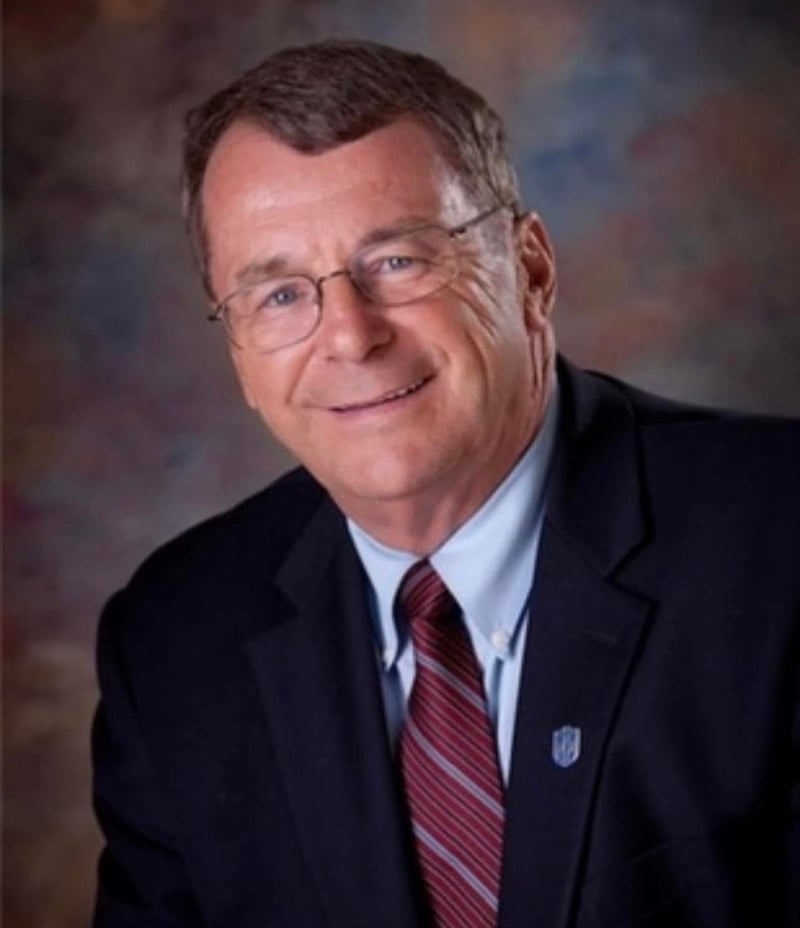
As Vice President for Academic Affairs and Dean of the College, Hebert sustained and strengthened the institution’s momentum. His innovative work on the core curriculum, expansion of departments, and additional degree programs led to significant new educational opportunities for Thomas More students. In this role, his high standards of excellence and scholarship reached all corners of the institution.
In 2016 Dr. Hebert became the inaugural Executive Director of the William T. Robinson III Institute for Religious Liberty. In this role, he challenged the university and the region to examine what it is to be a citizen of faith in the 21st century.
Five decades of administration and teaching did not go unnoticed in the region. Dr. Hebert won numerous awards and accolades for his commitment to education and the advancement of the region. These included the Northern Kentucky Education Association Lifetime Achievement Award, the Behringer Crawford Museum Two-Headed Calf Award for teaching, the Thomas More Alumni Association’s Lifetime Achievement Award, the Northern Kentucky Chamber of Commerce Leader of Distinction Award, the Kenton County Pioneer Award, the A. D. Albright Teaching Award, a “NKyTribune” NewsMaker of the Year Award, and a 2025 Rotary Club of Covington Founders Award.
Dr. Ray Hebert bequeathed a lasting impression on Thomas More University. His dedication, commitment and integrity were a standard on campus. However, if you asked Ray what he was most proud of, his response was quick and genuine: his wife Maureen, his two daughters and his grandchildren.
On June 23, a day after the Catholic feast day of St. Thomas More, our colleague and friend Ray Hebert died peacefully at age 84, following multiple long illnesses. Visitation is being held on Monday, June 29, at Mary, Seat of Wisdom Chapel at Thomas More University 10 a.m. until eulogies at 11:50 a.m. A Mass of Christian Burial will follow at noon. Burial will be in Mother of God Cemetery, Covington. Memorial donations may be made to the Dr. Ray Hebert Endowed History Scholarship at Thomas More University.
David E. Schroeder is Director of the Kenton County Public Library, the author of Life Along the Ohio: A Sesquicentennial History of Ludlow, Kentucky (2014), and coeditor of Gateway City: Covington, Kentucky, 1815–2015 (2015).
Paul A. Tenkotte, PhD is editor of the “Our Rich History” weekly series and Professor of History at Northern Kentucky University (NKU). To browse more than ten years of past columns, click here. Tenkotte also serves as Director of the ORVILLE Project (Ohio River Valley Innovation Library and Learning Engagement). For more information see orvillelearning.org. He can be contacted attenkottep@nku.edu .