













I work with retailers, grocery stores, restaurants, and similar operations that see their share of slip-and-fall accidents. Most are legitimate, and much of my career in risk and safety has focused on helping clients prevent them.
I have also learned that not all slip-and-fall claims are legitimate. Some are questionable or fraudulent, targeting businesses perceived to have “deep pockets” and some see a commercial liability policy as a welcome mat with dollar signs.
According to the National Insurance Crime Bureau, these types of claims continue to increase. Of the 6,471 questionable claims analyzed by NICB, 56 percent were claimed on the businesses’ Commercial General Liability policy, with another 15 percent on a Commercial Liability Business Owners policy, and eight percent filed under Commercial Multi-Peril policies. Combined, business policies account for 79 percent of all slip and fall questionable claims studied. Overall, there was a two percent increase in questionable slip and fall claims from 2017 through 2019 study.
My first lesson in questionable slip-and-fall claims came while working at Heck’s department store as a high school senior. I was called to the automotive aisle to help with an alleged employee injury and arrived to find a gentleman lying in a fresh pool of motor oil, delivering what I’m sure he believed was an award-worthy performance. After the paramedics took him away, a customer came forward and reported that she had watched him pour the oil on the floor, carefully lie down in it, and then begin calling for help.
His master plan had one small flaw: he performed the entire oil-slick drama in front of a live studio audience. It was my first introduction to staged claims — and the moment I realized that with enough imagination, a quart of motor oil could go from automotive supply to supporting actor in a lawsuit.
Since then, retailers and merchants have made tremendous advances in security camera technology, saving countless dollars not only by reducing theft, but also by helping dispute fraudulent liability claims.
Later as I cut my teeth in retail loss prevention during the late 1980s and early 1990s, I can remember spending countless hours rewinding VCR tapes in search of evidence tied to potentially fraudulent claims; a process that required patience, strong coffee, and a healthy respect for the fast-forward button.
Fast forward to 2026, retailers today is increasingly using a combination of high-definition video surveillance, artificial intelligence (AI), video analytics, and digital incident management systems to defend against fraudulent or exaggerated slip-and-fall liability claims. As this new technology evolves, they are starting to help establish exactly what occurred before, during, and after an incident. In other words, the camera may not blink, but it does remember.
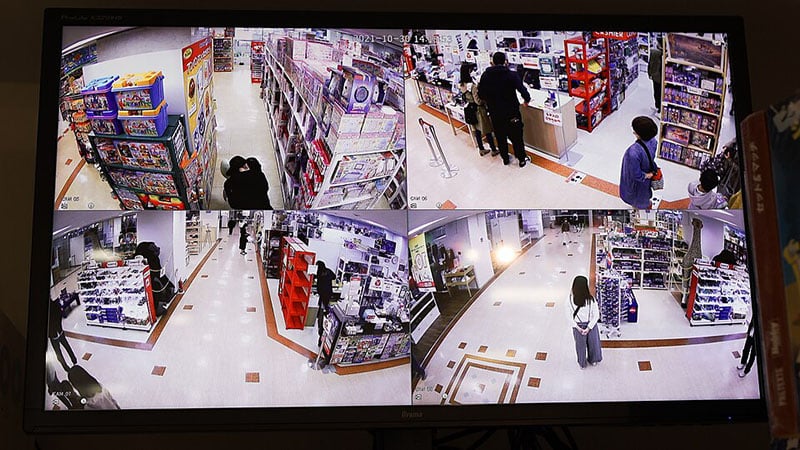
These newer retail surveillance systems can capture a complete picture of an incident by continuously recording customer movement, floor conditions, employee activity, spill response, and housekeeping inspections. When paired with AI technology, that footage can help determine whether a fall actually occurred, whether the claimant slipped or intentionally sat down, whether the person was distracted, whether a hazard existed before the fall, and how long the hazard had been present.
This evidence can quickly validate legitimate claims or expose false ones. The importance of proving whether a store had notice of a hazard is a central issue in premises liability litigation.
Some retailers are starting to deploy video analytics to automatically flag unusual activity, including individuals repeatedly walking the same area, loitering near known hazard locations, coordinated activity among multiple people, intentional staging behaviors, and falls that occur without any visible hazard, while AI systems can search hundreds of hours of footage in minutes to identify patterns that would be nearly impossible for a human investigator to detect manually.
In slip-and-fall lawsuits, a key issue is whether the store knew—or reasonably should have known—about the hazard, which is why retailers use AI-enhanced surveillance and digital logs to document safety inspections, floor walks, spill response times, and housekeeping activities; for example, footage showing that an employee inspected an aisle just three minutes before a customer fell can help demonstrate that the retailer exercised reasonable care.
In the past, important surveillance footage was often lost simply because it was overwritten before anyone realized a claim was coming. Nothing strengthens a defense, quite like explaining that the key evidence was accidentally erased by technology doing exactly what it was told.
Today, many retailers use incident management systems that automatically retain video once an incident is reported, preserve footage from multiple camera angles, capture activity before and after the event, and connect the video with witness statements and incident reports.
That creates a more complete and credible evidence package for claims handling, litigation defense, and early evaluation of whether a claim is legitimate or questionable.
Some retailers employ AI to analyze customer traffic patterns and identify slip and fall hazards and locations where slips and falls are more likely to occur. Common trouble spots include rainy-day entrance vestibules, produce departments, refrigeration cases, beverage aisles, and restrooms.
 Keven Moore works in risk management services. He has a bachelor’s degree from the University of Kentucky, a master’s from Eastern Kentucky University and 25-plus years of experience in the safety and insurance profession. He is also an expert witness. He lives in Lexington with his family and works out of both Lexington and Northern Kentucky. Keven can be reached at kmoore@higusa.com
With that information, retailers can take a more targeted approach by placing extra floor mats, adding warning signs, assigning housekeeping support, and increasing inspection frequency where the risk is greatest. By reducing real hazards, retailers also reduce the number of opportunities for exaggerated or fraudulent claims to gain traction.
How technology strengthens claim defense
For retailers, the real value of AI and surveillance technology is not just in recording incidents, but in helping determine quickly whether a claim is legitimate, reducing the likelihood of paying questionable claims, and building a stronger defense when litigation follows.
From a loss control standpoint, the strongest programs combine high-definition camera coverage, AI video analytics, documented floor inspections, digital incident reporting, video retention procedures, and employee training.
Working together, these controls help retailers show they exercised reasonable care, while also providing objective evidence when a claim appears exaggerated, staged, or otherwise questionable. That matters because slip-and-fall incidents remain one of the most frequent and costly premises liability exposures for grocery stores and retail operations.
Restrooms are still a problem
Fraudsters are becoming wise about these technologies, as a colleague in the claims department of our Louisville office recently told me that she has noticed more slip-and-fall claims occurring in restrooms. These areas are among the highest-risk spaces in commercial buildings because they lack camera coverage. Privacy expectations prohibit video monitoring inside restrooms, leaving little footage to confirm or dispute what happened. This mix of hazards and limited evidence makes restrooms vulnerable to legitimate injuries and questionable claims. The good news is that prevention and defensibility go hand in hand.
Restrooms combine wet floors, heavy traffic, tile surfaces, and no camera coverage, making legitimate falls more likely and questionable claims harder to disprove. To combat this, risk businesses should improve floor traction, using slip-resistant mats, maintaining fixtures, improving lighting, and scheduling wet cleaning during low-traffic periods with proper signs and barriers.
Because there’s no video, your paper trail is your evidence. The goal is to build a system that produces a defensible record automatically, as a byproduct of normal operations — not something assembled after a claim is filed, which always looks reactive and self-serving. A spotless paper trail created after the lawsuit arrives has all the credibility of a diet that starts the morning after Thanksgiving.
Important steps for business owners:
• Signed inspection logs – Signed, time-stamped restroom inspection logs document floor conditions, support routine maintenance, and provide strong rebuttal evidence when claims allege hazards existed for extended periods.
• Wet-Floor sign documentation – Photograph time-stamped wet-floor signs after mopping or spill cleanup to prove warning signage was standard practice, not after-the-fact defense.
• Entry/exit logs – Where Feasible Where feasible, position hallway cameras to capture restroom entrances, documenting who entered, when, for how long, and whether their condition changed upon exit.
• Incident reporting discipline – Train staff to respond consistently, recording the time, floor conditions, photos, witnesses, and claimant statement before details change or the process appears improvised.
• Complaint and maintenance log – Log restroom complaint and maintenance and history to show problems were addressed promptly and the facility was not chronically hazardous.
The best defense against restroom slip-and-fall claims is a consistent record showing active maintenance and inspections. Since cameras are not an option, logs, signage photos, hallway footage, and disciplined incident response create a defensible substitute record.
Slip-and-fall claims remain a major retail exposure. Surveillance, AI, and incident systems help verify events and challenge questionable claims, but restrooms still play hard to get because cameras are not an option. Strong prevention, inspections, documentation, maintenance, and evidence preservation help retailers protect customers, defend their practices, and keep exaggerated or fraudulent claims from gaining traction. Because in claims defense, “we usually keep an eye on things” is not a strategy — it is a closing argument for the other side.
Be safe my friends.