











Author’s note: The third of a four-part series based on some largely unpublished writings of Kentucky’s state historian since 1980, Dr. James C. Klotter. He has graciously given me permission to use them as sources, and I greatly appreciate the gesture. I hope readers will both expand their knowledge of Kentucky history and also be entertained. The ‘character’ discussed here is William Campbell Preston Breckinridge. He was a character but a historically newsworthy one.
By Steve Flairty
NKyTribune columnist
Dr. James Klotter started his writing piece on William Breckinridge with an admission. “My third favorite character might seem a strange choice, in that he fought against the U.S.A. as a Confederate and was best known for a searing sex scandal that ended his Congressional career. But he is admirable in his courageous stand in regard to black rights and his family ties.”
He was known as “Willie” and rode with John Hunt Morgan, the swashbuckling leader of Confederate forces who terrorized citizens across Kentucky. Breckinridge came home from the American Civil War aspiring to win political office, for which he showed some obvious talent — and certainly possessed the bloodlines.
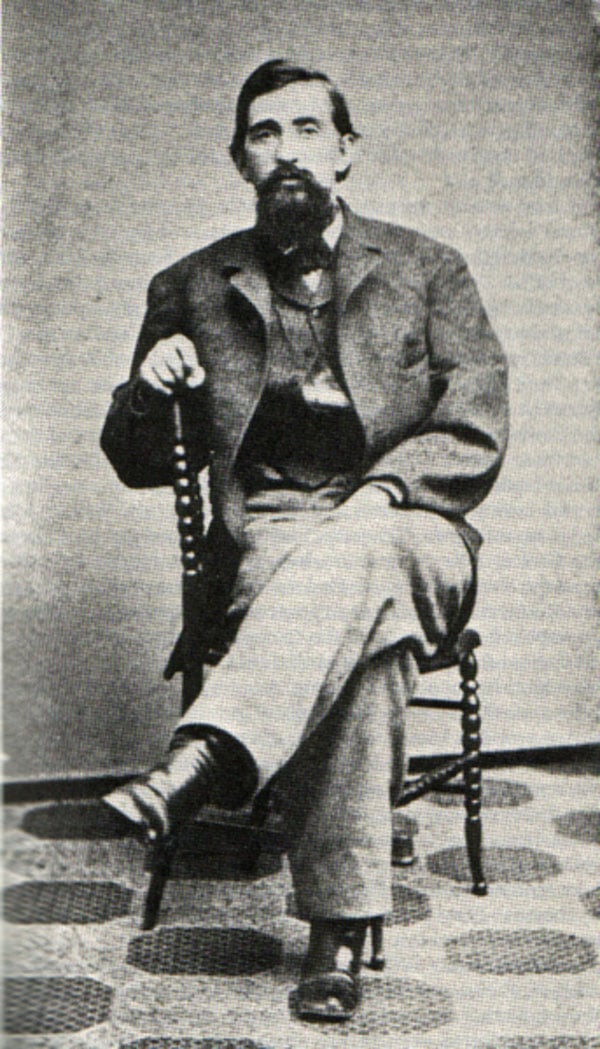
“His grandfather had been a U.S. senator and U.S. attorney general,” wrote Klotter. “His first cousin, John C. Breckinridge, had been Vice-President and had run for President against Lincoln. Now Willie sought to follow family tradition and advance down the political path. So, he started by running for the office of commonwealth attorney. In that post-war world the question of race dominated discussions. Blacks could not vote yet, nor could they testify in court. White politicians could see their careers end quickly if they supported African American rights.”
In 1868, Breckinridge was campaigning in Madison County, and after speaking, he asked for questions from his audience. A man asked Breckinridge a simple question. “Did Willie support more black rights?”
The politician was straightforward in answering, according to Klotter. “He could have dodged the issue, or, he could have submerged his own beliefs and taken the popular stand of the time,” Klotter wrote. “Instead, the man they called ‘the silver-tongued orator’ forthrightly said what he believed:
“Fellow citizens, the charge my opponents urge against me is true. I am aware this avowal will likely defeat me in this canvass, for you are not ready to view this question calmly and dispassionately. Your prejudices blind your judgments. In the after hours, when the passions of the hour shall have cooled, when reason shall assert her sway, when the noble feelings of your nature shall rule your hearts and judgement—in that hour you will approve, though now you condemn me.”
Breckinridge lost that election, but his stand was later vindicated by new laws serving to protect Blacks. Sixteen years after his loss, he entered politics again and won election to Congress, serving for a decade and generally well, but…
“Some of his later actions tarnished his shining image, for a searing sex scandal ended his career,” wrote Klotter. “Breckinridge was a person of seemingly unlimited promise, an individual who seldom drank or smoked or played cards or even bet on the Kentucky Thoroughbreds. But unknown to them (people who knew of him), Willie Breckinridge did have one weakness.
“Her name was Madeline Pollard. She petitioned the court for a judgement of $50,000, saying that Breckinridge had promised to marry her but did not,” said Klotter. “According to her, in 1884, on April 1st, an appropriate date perhaps, when she was a ‘maiden of the age of 17’ and the defendant ‘a married man of 47,’ they had met. Later he completed his seduction of her and had placed her at Sayre School, in Lexington.

“Two years later, she went to Washington to be closer to the new congressman. She apparently succeeded; she became pregnant for a second time. After his wife’s death, he promised marriage and Pollard saw him more after — ‘once a day, sometimes twice a day, and during the evening,’” she stated.
But then the betrayal came that set Pollard on a public path of revenge toward Breckinridge after he secretly married one of his cousins. The drama became front-page news all across America, according to Klotter, and even three books were published, one of which had redactions of offensive words.
Breckinridge took the stand in his own defense. “He claimed Pollard had not been unspoiled when he met her and had lured him as much as he lured her — this supporting the epigram that ‘it takes two to make one seduction,’” Klotter wrote. Breckinridge’s attorneys gathered quotes from people saying they’d seen her in “compromising positions” with other men.
Those bits of testimony were not allowed by the judge, saying, oddly, that they were “too filthy and obscure.” Breckinridge later admitted, “she was a woman of passion, I was a man of passion. We yielded ourselves to each other. That was all.”
Though he denied the marriage promise claims Pollard made, Breckinridge was found guilty of breach of promise and she was awarded $15,000. “Then she mostly disappears from history,” wrote Klotter.
But even after the court loss and humiliation, the politician decided to run for reelection. The pushback was intense against him, especially from women’s right organizations. Surprisingly, he lost by only one per cent. And, even with his discretions, his family stayed with him, according to Klotter. “His son Desha became the editor of the Lexington Herald, and his daughter, Sophonisba, became an outstanding academic leader (and) she had a law degree and a Ph.D., and was a women’s rights advocate,” wrote Klotter. “Both brother and sister professed their love for a father who remained close to them until his death in 1904.”
As Willie Breckinridge’s story indicates, sex scandals in politics have been around a while. This particular one likely destroyed a very promising career that may have been beneficial to our country.