










Author’s note: Following is the final of a four-part series, “My Favorite Kentucky Characters,” based on some largely unpublished writings of Kentucky’s state historian since 1980, Dr. James C. Klotter. He has graciously given permission to use them as sources for this series. I hope you will both expand your knowledge of Kentucky history and also be entertained. Klotter talks about a Kentucky woman with family ties to two other characters already profiled in this series, Henry Clay and William Breckinridge. Her name is Madeline McDowell Breckinridge, often called “Madge.” She is an illustrious person in her own right.
By Steve Flairty
NKyTribune columnist
Madeline McDowell Breckinridge was the great-granddaughter of Henry Clay and grew up on Clay’s Ashland Estate. She would marry and become the daughter-in-law of William Breckinridge. Her connection to two of the Dr. Klotter’s “Favorite Kentucky Characters” grabs one right off. But her personal life story is much more interesting than the connection to the two.
Called by the name, “Madge,” she achieved much good for the people of Kentucky, showing passion for noble causes and demonstrating amazing leadership ability. She was also an overcomer.
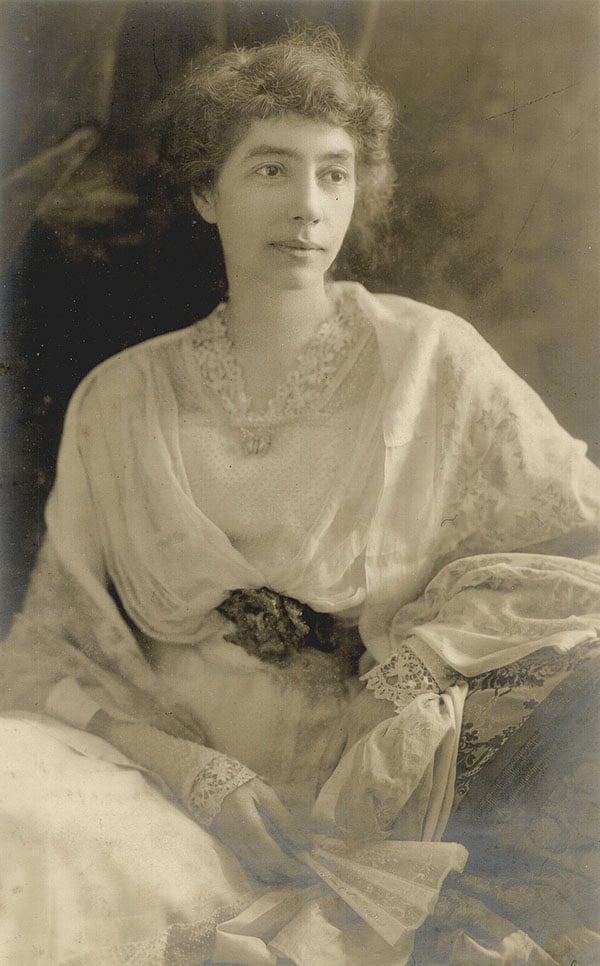
“A carefree, delightful young society girl, she played tennis; she danced; she entertained; she was the ‘belle of the ball’,” noted Klotter in his writing. “But then in 1890, when she was 18, her safe, sheltered world was shattered. She was diagnosed with tuberculosis of the bone. At age 24, she had part of a leg amputated and thereafter wore a wooden leg.”
Hopes and dreams shattered, right? No way that was true, said Klotter.
“She could have retreated from the world—as others of her era did—and have become bitter at her fate. She could have remained secluded behind the heavy curtains of her Victorian home, safe from the cruel barbs and arrows of society. She could have done little with her life.
“But instead, she became the leader of the woman suffrage movement in the state and a vice-president of the national organization, despite the sadness in a life that grew increasingly difficult,” he continued. “She also had a heart attack, (and) when in her 30s, (having) an unfaithful husband. She did not present that face to the public. In fact, one of the things I most admire about Madge is her sheer willpower and her energy.”
Klotter mentioned that if one reads Madge’s biography, one will “get tired just reading about all she does (did), whether building a school for the poor of Lexington, working to eradicate tuberculosis, laboring for women’s rights, or so much more.”
She could also display disarming humor, he noted.
“Once she asked for a governor’s help on the suffrage issue in 1915, for example, she humorously pointed out, ‘Kentucky women are not idiots, even though they are closely related to Kentucky men.’

“Yet at the same time, she did not shirk from the attack, either. In debating whether women should be able to vote on school matters, Breckinridge noted the state’s very poor educational standing and remarked, “It seems that the thing to be argued is not whether women are fit for school suffrage, but whether men are fit for it.”
Despite serious health issues, Klotter wrote that Madge “saw success finally arrive, when Kentucky was one of only four southern states that voted to adopt what became the women’s suffrage amendment in 1920.”
Klotter also noted that her “tragedy was that she only voted in one election, dying that same year at the age of 48. But her triumph was that she DID vote—and millions of others would after her because she cared, because she tried, and because she made a difference.”
In sharing information and insights on these four “favorite Kentucky characters,” the state historian summed up each of their legacies with the following words:
From Boone, we can learn humility; from Clay, the power of personality and perseverance; from Breckinridge, the power of family and of an unpopular stand; (and) from Madge Breckinridge, the power of persistence and of the will.
But they also offer warnings about hubris and too sure beliefs in one’s views. Boone and Clay both held slaves; Willie Breckinridge was a sexual predator; Madge literally worked herself to death. Like all of us, they had both strengths and weaknesses. They were human.
He emphasized the study of the past is “about the future, most of all,” and that “we must love our grandchildren more than ourselves.” Klotter concluded by referencing Henry Clay’s illustrious remark, “I would rather be right than be president,” and wrote that “various people throughout history did not always do the easy thing, but rather did the RIGHT thing. Individuals can make a difference, but we have to work hard, and we have to work together to make good things happen for our community, our Commonwealth, our world.”