











Seventy-five days before a general election is a fascinating time for a political party to start dismantling pieces of its own infrastructure.
Democratic leadership talks constantly about rebuilding county parties and growing the grassroots, but growth doesn’t mean finding new people to maintain the same old system. It means new leaders, new networks and new ways of organizing. Inevitably, it also means challenging people at both the state and local levels who have controlled party infrastructure for decades. That may be uncomfortable, but comfort is a strange priority for a party that has been losing ground election after election. At some point, longevity stops being evidence of experience and starts raising questions about why the same people and structures keep producing the same results.

So what does state leadership actually want county parties to be? Genuine grassroots organizations will develop their own leaders, strategies and political identities. They will experiment, disagree and occasionally challenge the structure above them. If what the state actually wants are regional offices that provide volunteers, raise money and execute directives without questioning them, that’s something entirely different.
This isn’t about one county. The same fractures are showing up across county parties, social clubs, Young Democrats organizations, individual campaigns and other grassroots groups. At some point, they stop being isolated disputes and become evidence of a larger organizational failure. When the same cracks keep appearing throughout the house, eventually somebody needs to inspect the foundation.
And that raises the bigger question: What exactly is the Kentucky Democratic Party trying to become?
Is it building a party influenced by the generation that will inherit it, or creating something that looks increasingly like conservatism-lite? Democrats should make room for everyone, including independents and Republicans who no longer recognize today’s GOP. But expanding a coalition does not require abandoning the party’s identity in hopes that voters will find a slightly softer version of Republicanism irresistible.
Younger voters and organizers bring different expectations about economic opportunity, housing, education, healthcare, civil rights, technology and government accountability. They are also less impressed by hierarchy and much more willing to ask why systems that aren’t working deserve to be preserved.
That is where grassroots organizing becomes a fight over the future of the party. Local organizations and candidates trying new ways to reach people and build community should be viewed as laboratories for what comes next, not threats to what came before. Yet the message increasingly seems to be that innovation is welcome only until it challenges the people and structures already in place.
That’s a hell of a message for a party that says it wants the next generation.
Republicans, for better or worse, have allowed new political forces to fundamentally remake their party. Democrats don’t need to imitate what Republicans became, but they should understand the lesson: an institution that refuses to evolve eventually loses the people who are supposed to inherit it.
And Kentucky Democrats aren’t protecting a winning model. Republicans dominate the legislature, Democrats struggle to field candidates in parts of the Commonwealth, and Democratic infrastructure desperately needs to grow. Protecting the status quo from change isn’t a strategy when the status quo keeps losing.
Then there is the issue of due process. Rules and accountability are necessary, but consequential decisions made without adequately hearing from the people inside the system being punished invite decisions based on incomplete information and one-sided narratives. Leadership isn’t simply knowing what authority the bylaws give you. It is knowing enough about the organization and the people affected to use that authority intelligently.
You don’t dismantle part of an organization first and introduce yourself to the survivors later.
Doing it roughly 75 days before a general election makes the strategic judgment even harder to understand. At this point in an election cycle, every major decision should be measured against one question: Does this leave Democratic candidates stronger or weaker in November?
Because grassroots politics isn’t ultimately about party infrastructure. It’s about people. It’s neighbors organizing neighbors, candidates listening to communities, volunteers solving problems and ordinary people deciding that the government can make their lives better. The party is supposed to be the vehicle for that work, not the reason the work exists.
Democrats can spend the final days before November fighting over internal authority if they want. Republicans will happily let them. They might even send refreshments.
But the purpose of a state political party isn’t to prove it can control its county organizations. It is to build an organization capable of winning elections and improving the lives of the people it asks to believe in it.
And after decades of declining Democratic power in Kentucky, perhaps accountability shouldn’t flow only downhill.
If state leadership expects county parties, candidates and grassroots organizations to answer for their performance, it’s fair to ask a much more uncomfortable question: Who is holding state leadership accountable for theirs?
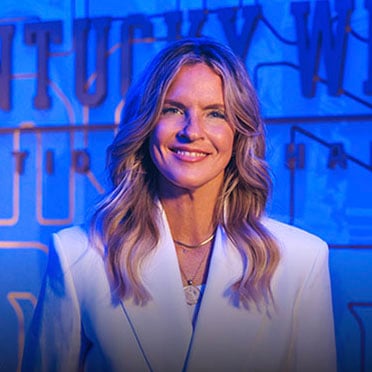
Carolyn Hankins Wolfe of Hebron is former vice chair of the Boone County Democratic Party.