












By Paul A. Tenkotte, PhD
Editor, Our Rich History
Each year on August 15th, Roman Catholics around the world celebrate the Feast of the Assumption of the Blessed Virgin Mary. The observance holds special significance for Italian-American Catholics, who brought their rich traditions and joyful celebrations with them when they immigrated to the United States in the late nineteenth and early twentieth centuries. They took great pride in their Catholic faith, their Italian heritage, and their Roman roots.
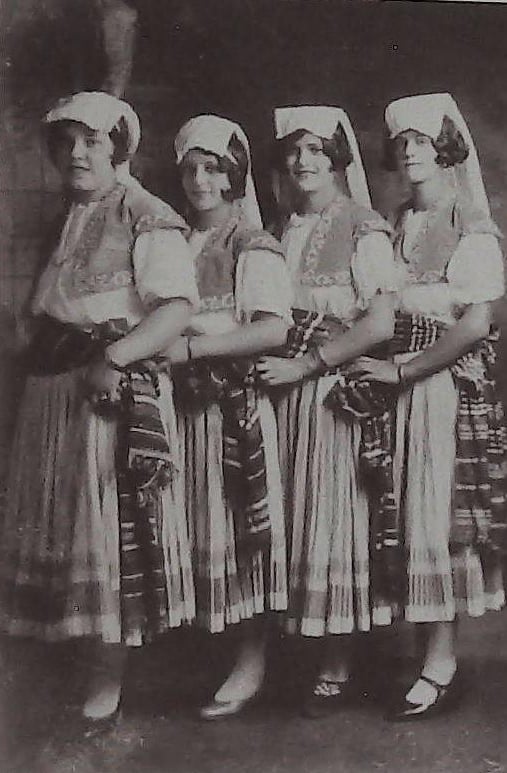
Named for Augustus, the first emperor, August became a month closely associated with celebrations and public festivals during the Roman Empire. In 18 BCE, Augustus instituted the “Feriae Augusti,” or “Feast Days of Augustus,” on August 1st as a time of rest and thanksgiving following the agricultural harvest.
Centuries later, the Catholic Church incorporated these seasonal festivities into the observance of the Assumption of the Blessed Virgin Mary on August 15th.
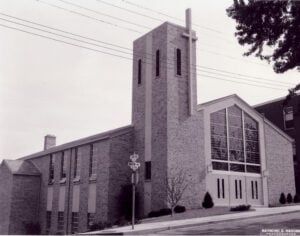
In Northern Kentucky, many Italian Americans were members of St. Vincent de Paul Church, founded in 1916 in Newport’s Clifton neighborhood, an area long known as “Spaghetti Knob.” The parish was initially served by a combined church and school building until a new church was dedicated in 1960. Following decades of ministry to the community, the parish was closed in the late 1990s.
In 1926 Italian-American parishioners of St. Vincent de Paul Church purchased a charmingly Rococo-style statue of the Assumption of the Blessed Virgin Mary, depicted with cherubs beneath her as though lifting her heavenward. That same year, the parish established an annual tradition of carrying the statue in procession through the neighborhood streets. Serving as one of the four bearers was considered a distinct honor, and the privilege was awarded each year through an auction, with participants bidding for the opportunity.
Sunday, August 15, 1926 was set for the celebration. The procession of the statue was scheduled to begin at 9:45 a.m. at 16th and Monmouth Streets, then west to “Park-av, to Home-av, to Biehl-st, west on Biehl-st to Main-av, to the church grounds,” followed by a blessing of the statue by its pastor, Rev. Herman J. Wetzels (“Giancola to be Auctioneer: To Follow Old Italian Custom in Clifton Celebration,” “Kentucky Post,” August 10, 1926, p. 1).
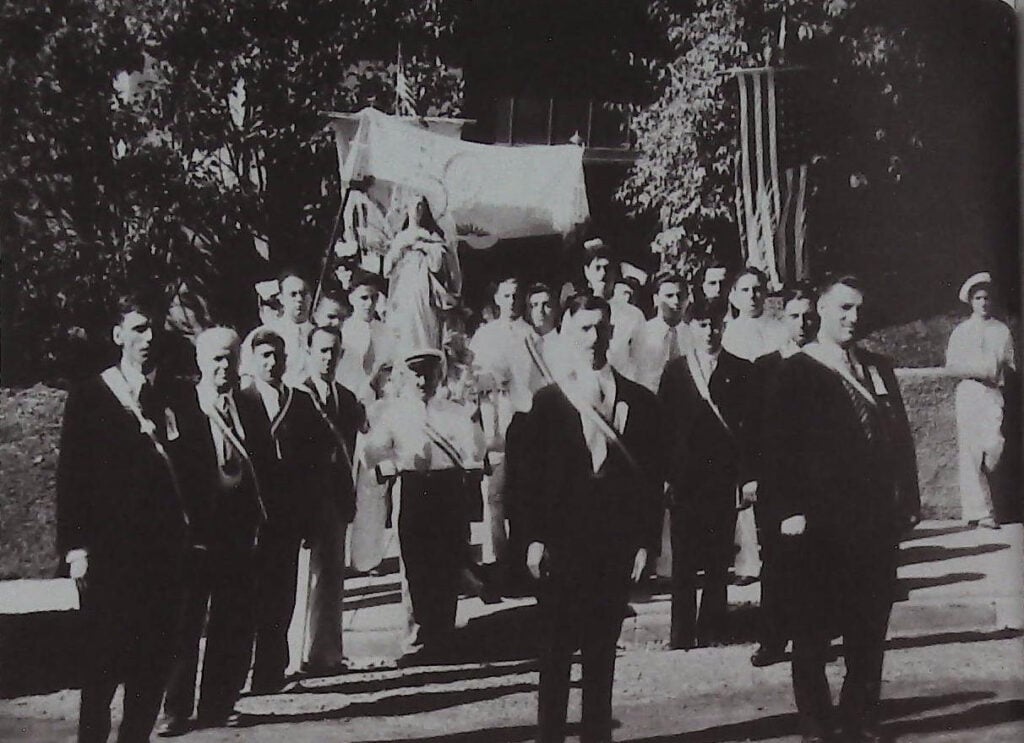
The Sunday morning festivities apparently proceeded as planned, but afternoon rain postponed a full schedule of other activities, including entertainment and evening fireworks. The following Sunday, August 22nd, the parish rescheduled the afternoon and evening festivities, featuring a concert by the Della Porre Italian band of Cincinnati, followed by an Italian buffet dinner, and “Italian fireworks made by an Italian firm” at 10:30 p.m. The fireworks display was to include “an illuminated statue of the Assumption” (“Fireworks, Too. Italians Wil Celebrate Feast Once More,” “Kentucky Post,” August 21, 1926, p. 1).
A century after Newport’s Italian community inaugurated its August 1926 celebration, summers in Cincinnati and Northern Kentucky have become so crowded with festivals and fireworks that such events can seem almost commonplace.
When we commemorate the traditions brought by the immigrant communities who shaped our region, whether Italian, German, Irish, or others, we often celebrate without fully appreciating the history, symbolism, and pageantry behind them. Too often, the older customs have given way to commercialized spectacles, reducing rich cultural traditions to little more than food booths, beer tents, and carnival attractions.
Along the way, something meaningful has been lost. Traditions that once expressed religious devotion, ethnic identity, and community pride have increasingly been transformed into entertainment commodities.
The dignity and sense of purpose that once animated these celebrations have too often yielded to a culture more focused on distraction than remembrance.
Paul A. Tenkotte, PhD is Editor of the “Our Rich History” weekly series and Professor of History at Northern Kentucky University. To browse more than ten years of past columns, click here. Tenkotte also serves as Director of the ORVILLE Project (Ohio River Valley Innovation Library and Learning Engagement). For more information see https://orvillelearning.org/. He can be contacted at tenkottep@nku.edu.