













The riverboat captain is a storyteller. Captain Don Sanders shares the stories of his long association with the river — from discovery to a way of love and life. This a part of a long and continuing story.
By Capt. Don Sanders
Special to NKyTribune
My dad was right whenever I talked about history. He said I was “living in the past.” Actually, everything we watch, read, or listen to is most likely about the past. The way things are going these days, living, or whatever, was definitely better in times gone by. So let’s take a short trip back in time to see what was happening around this date on “the river.”
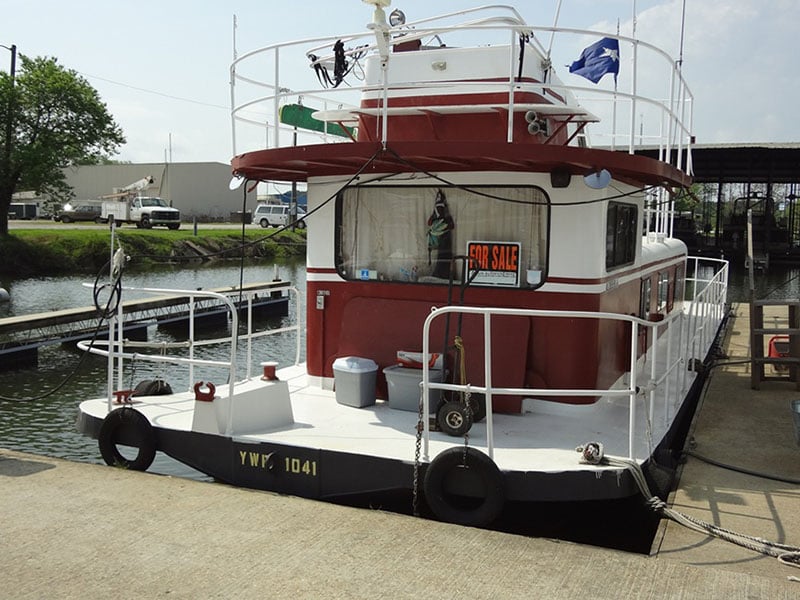
This week, fourteen years ago, my oldest son Jesse and I were aboard the Rafter CLYDE around 4:30 pm to scrub the exposed paddlewheel of what the logbook called “filth.” We also emptied the water in the cooler and added chemical treatment to the “head,” as the toilet aboard a boat is known. The log noted that the two of us would be leaving for our other boat, the SUN*FISH, on the Tennessee River at Decatur, Alabama, the next morning. Jonathan, Jesse’s brother, volunteered to check on the CLYDE in our absence. It was well established to check on the boat every day in some fashion, or else record the reason why someone didn’t.
CLYDE’s Log. “Wednesday, 15 through 21 August 2012: Jesse and I were in Decatur, Alabama aboard the SUN*FISH where we prepared and painted the Main Deck a light BUSTER Skiff Gray. Hearing that our beloved Buster the Cat, the namesake of the skiff, was physically failing, Jesse and I left the SUN*FISH and hurried home.”
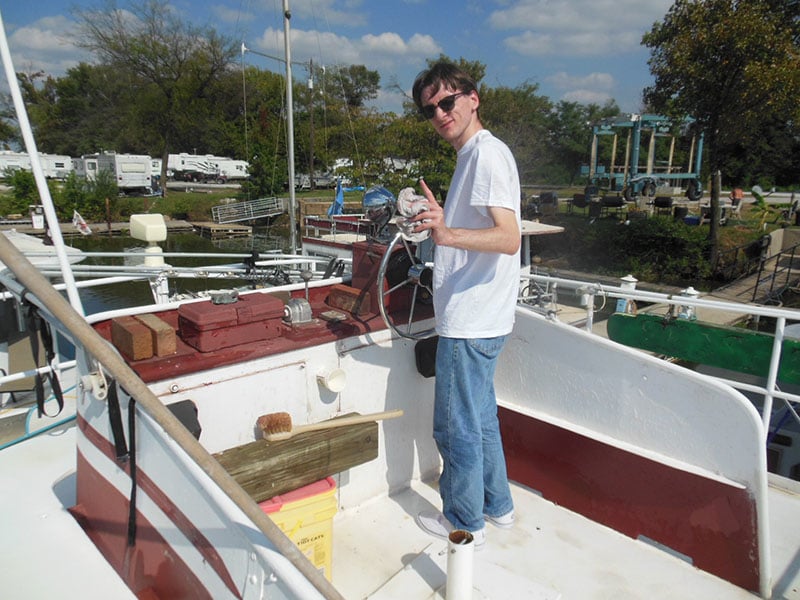
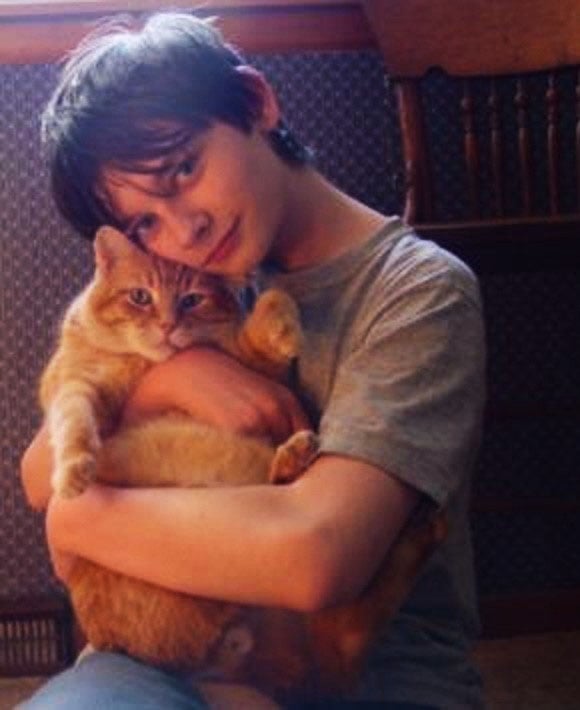
CLYDE’s Log. “Wednesday, 22 August 2012. Dry, Sunny, Warm. Our beloved Yellow Cat, Buster, died today — a tremendous loss to all of us who loved him over the past 17 years since he came to our door in Metropolis, IL, and asked to become Jonathan’s friend and a member of our family. He was buried yesterday around 1500 hrs. in our backyard on the hill he loved next to Hunter the dog. Such a terribly sad day, which was also the first anniversary of my mother, Anna Margaret’s death.”
CLYDE’s Log. “Thursday 23 August 2012. Sunny, Hot, Very Dry. Aboard the CLYDE at 1345 to check the bilges and general condition of the boat. AGO (All in Apparent Good Order). In mourning for Buster–no work to be done today.”
This time we’ll see what was happening on board the Rafter CLYDE this week, just seven very quick years ago, according to the paddlewheeler’s carefully maintained logbook.
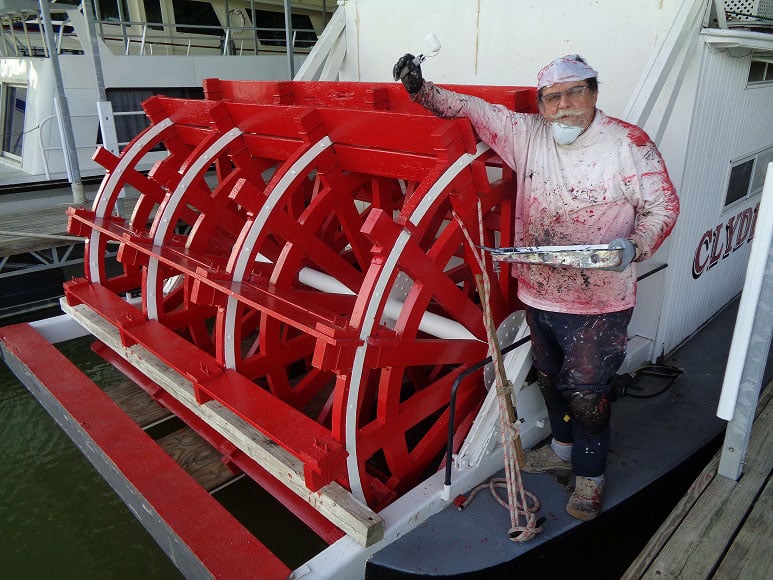
CLYDE’s Log. “Friday, 16 August 2016. Sunny, Hotter! Here alone at 1350. # 4 bilge dry. AGO. Wire-wheeled two remaining paddlewheel Circles and painted Shaft and Flanges with Bar-Rust 235, two-part epoxy Brilliant White. Done at 1910–HOORAY! Is this the last time I will ever paint a paddlewheel? Another ‘last time’ event. Alexander and Dale (owners of an antique yacht) came over to see the finished paddlewheel job. Alexander took pictures of me in my painting outfit. Departed for home at 2041 hrs.”
Generally, that’s what boat life is all about. Boring to many, but a way of life to others.
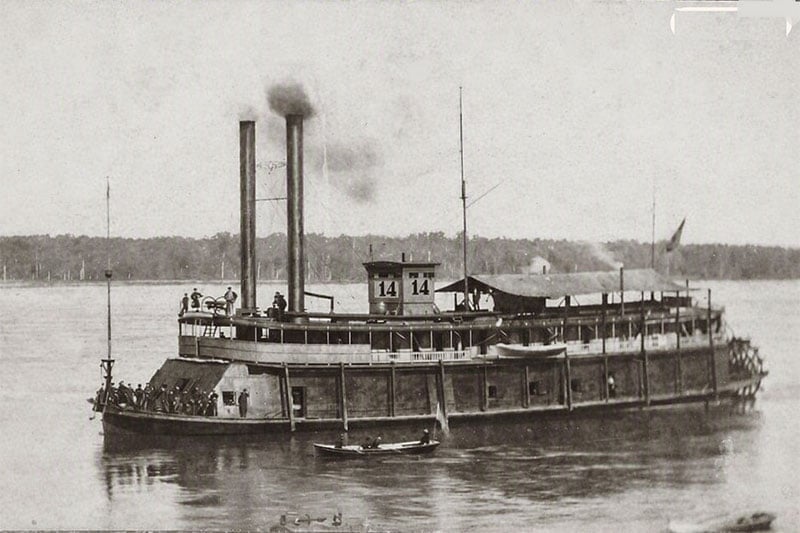
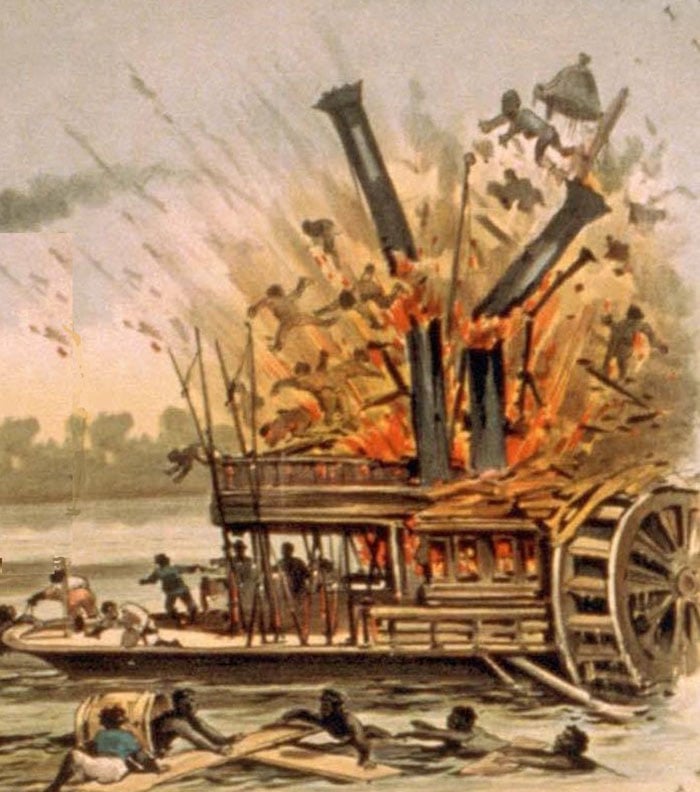
Suppose we turn the clock back much further. Suddenly we are startled by the cries, moans, and screams for help on an August day in 1868. The CUMBERLAND, a sternwheel packetboat which served as TINCLAD #14 during the War Between the States and was renamed when sold into private hands, exploded and burned at Shawneetown, Illinois on 14 August. Eighteen people lost their lives in the conflagration.
According to Captain Way’s Packet Directory, “The wreck lay below the lower corn shed near Raleigh Landing, Kentucky. The hull was raised and taken to Cairo, where it was found to be scarcely uninjured, but the upper works were entirely blown away clear back to the pantry.”
Some say CUMBERLAND’s history predates her Civil War service. Originally built as the sternwheel packet KENWOOD in Cincinnati in 1863, 232 tons. Sold to the U. S. Navy before it was documented, she was 154 x 33 x 5, with steam engines with 16 “cylinders and a 5-foot piston stroke. During the War, however, as TINCLAD #14, she had quite an outstanding record: She served with the Mississippi River Squadron, often on combat patrols on the Arkansas River. TINCLAD #14 was also involved in an expedition to Yazoo City, Mississippi, in July 1863, and from 1863 to 1865 served in the Port Hudson, LA, area, participating in the capture of CSS MISSOURI in June 1865.
From the little remaining records concerning the demise of a once-heroic steam sternwheel warship, government accident investigators found that the CUMBERLAND’s boilers were in poor condition. The crew knew it and apparently decided to turn her over to her owners in Cairo and quit running her. She didn’t make it that far.
Only a small piece of two flues was ever found. Evidence that the boilers had let go completely. One young man from Illinois, a passenger, was found “horribly mangled.” A Steward had a hand smashed, and he was badly scalded, according to accounts of the time. Five bodies from the CUMBERLAND were recovered when the sidewheel passenger packet QUICKSTEP passed the following day, 15 August. Survivors were also taken in and cared for by the citizens of Shawneetown.
The CUMBERLAND was reportedly insured for $6,000, and cargo for the same amount. However, $5,000 went to the insurance underwriters of Evansville, Indiana. The boat was worth more when she went to war than in peacetime.
The CUMBERLAND explosion was one of dozens in the 1860s-1870s. Boilers were running 120-plus pounds of high steam pressure, inspectors were lax, and crews knew to abandon ship when a boiler became dangerous. The crew on the CUMBERLAND knew she was done–but the boiler didn’t wait for Cairo. She was an old battle axe, patched up, running on a bad boiler which exploded, taking the lives of 18 passengers and crew.
O…Kay… but after all that excitement, it’s time to hustle forward into the present and the comforts of my digs surrounded by my mementos of the past to collect enough nerve for another trip back to bygone times.
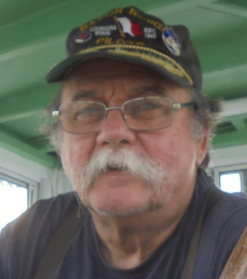
Captain Don Sanders is a river man. He has been a riverboat captain with the Delta Queen Steamboat Company and with Rising Star Casino. He learned to fly an airplane before he learned to drive a “machine” and became a captain in the USAF. He is an adventurer, a historian, and a storyteller. Now, he is a columnist for the NKyTribune and will share his stories of growing up in Covington and his stories of the river. Hang on for the ride — the river never looked so good.
Click here to read all of Capt. Don Sanders’ stories of The River.
Purchase Captain Don Sanders’ The River book
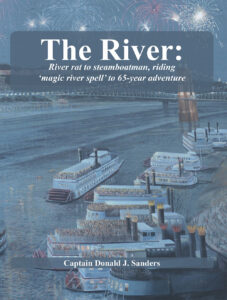
Capt. Don Sanders The River: River Rat to steamboatman, riding ‘magic river spell’ to 65-year adventure is now available for $29.95 plus handling and applicable taxes. This beautiful, hardback, published by the Northern Kentucky Tribune, is 264-pages of riveting storytelling, replete with hundreds of pictures from Capt. Don’s collection — and reflects his meticulous journaling, unmatched storytelling, and his appreciation for detail. This historically significant book is perfect for the collections of every devotee of the river.
You may purchase your book by mail from the Northern Kentucky Tribune — or you may find the book for sale at all Roebling Books locations and at the Behringer Crawford Museum and the St. Elizabeth Healthcare gift shops.
Click here to order your Captain Don Sanders’ ‘The River’ now.