


















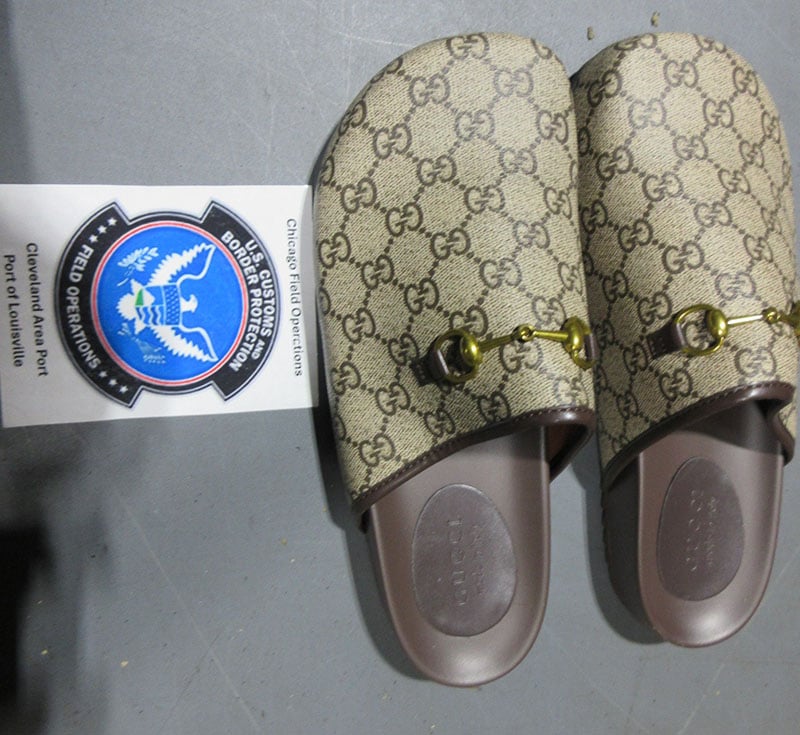
U.S. Customs and Border Protection officers at the Port of Louisville seized a shipment last week containing 152 counterfeit watches and 32 pairs of knock-off shoes. Had these items been genuine, the shipment would have had a combined manufacturer’s suggested retail price of over $9.3 million.
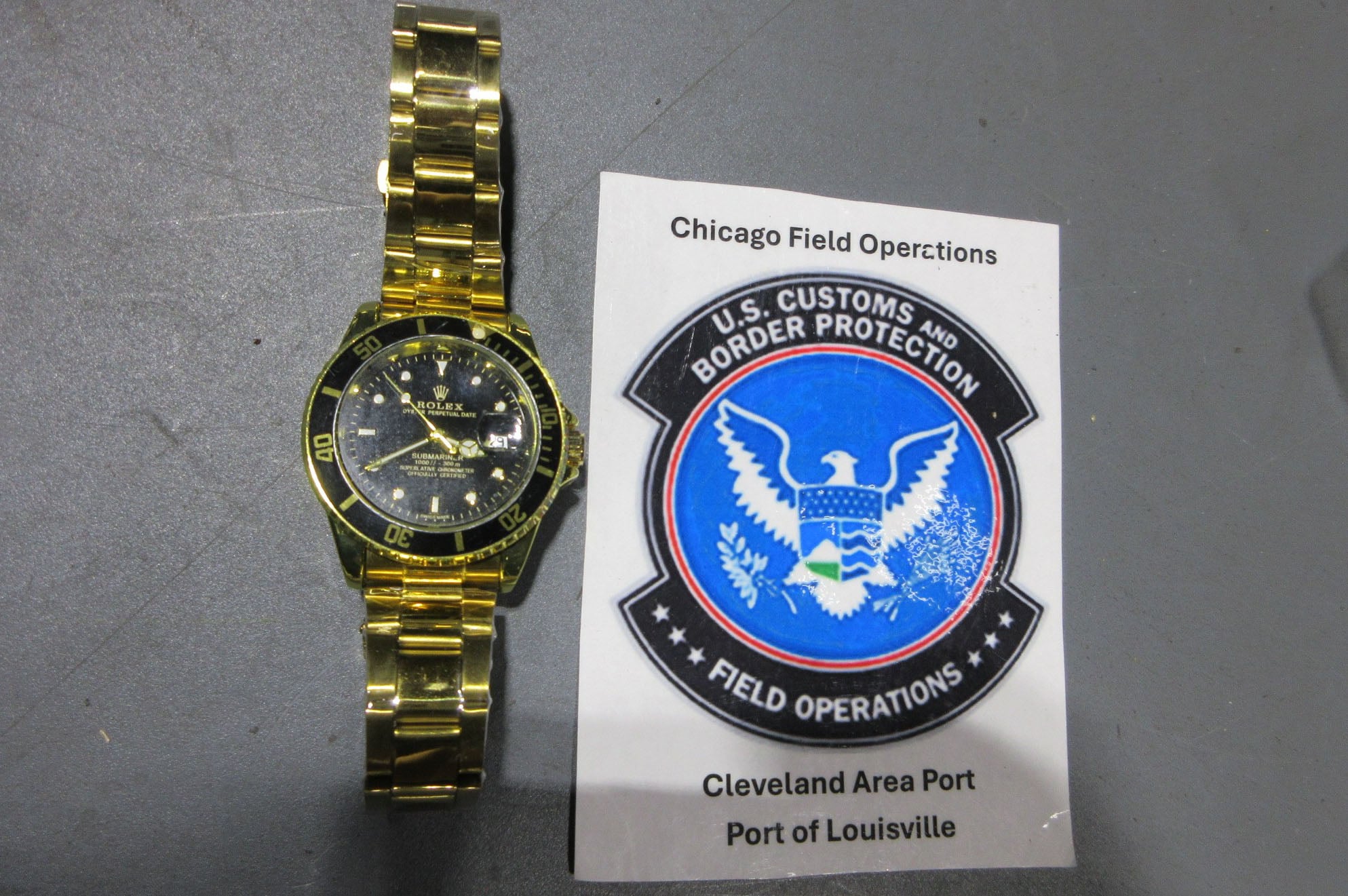
The shipment from the Republic of Korea was headed for Georgia when officers pulled the parcel for inspection. The examination revealed 152 watches bearing suspected Rolex and Louis Vuitton trademarks and the 32 pairs of shoes bore the suspected Gucci trademark. The items were deemed to be inauthentic by CBP’s Centers of Excellence and Expertise, the agency’s trade experts, and were seized for bearing counterfeit versions of registered and recorded trademarks.
“The distribution of counterfeit goods defrauds U.S. consumers and has a significant adverse impact on businesses by robbing our country of jobs and tax revenues,” said Louisville Port Director, Philip Onken. “CBP is the first line of defense, and our officers intercepted this threat before these fake items were introduced into the commerce and reached consumers, which provides economic security for our nation.”
Illegitimate sales are some of the most profitable transnational crimes. Counterfeiters sell inauthentic versions of popular products in response to trends, often through online sources, which adversely impacts legitimate U.S. businesses. These items include fake medications, perfumes, and cosmetics, children’s toys and costumes, fashion, jewelry, and luxury products, and unsafe electronics and automative parts, can pose serious health and safety risks as they are often made with substandard or harmful materials.
CBP data indicates that handbags, wallets, apparel, footwear, watches, jewelry, and consumer electronics are at higher risk of being counterfeited. Counterfeit versions of popular brands are regularly sold in online marketplaces and flea markets. Not only are counterfeit goods produced in unregulated and potentially exploitative environments in foreign countries, but the profits from their sales provide a funding stream for organized crime.
Counterfeit goods can often be spotted by their inferior quality. Peeling labels, low-quality ink or printing errors on the packaging, and loosely packed items in the box can be signs that the product you purchased may not be legitimate. Counterfeit apparel and handbags may feature poor or uneven stitching and improperly sized or designed logos. The performance of counterfeit electronics is often marked by short battery life and regular overheating.
Consumers can take simple steps to protect themselves and their families from counterfeit goods:
• Purchase goods directly from the trademark holder or from authorized retailers.
• When shopping online, read seller reviews and check for a working U.S. phone number and an address that can be used to contact the seller.
• Review CBP’s E-Commerce Counterfeit Awareness Guide for Consumers.
• Remember that if the price of a product seems too good to be true, it probably is.
To report suspected counterfeits, visit CBP’s online e-Allegations portal or call 1-800-BE-ALERT.
U.S. Customs and Border Protection