











By Steve Flairty
NKyTribune columnist
I like sharing in this column some of the books I review for Kentucky Monthly and expand on the description of them. Here are a few recent literary offerings that I rate highly, both written by excellent Kentucky authors.
The first is by the acclaimed Kim Michele Richardson, who is most noted for her best-selling The Book Woman of Troublesome Creek, a fictionalized account surrounding the packhorse librarians of Eastern Kentucky in the late 1930s and early 1940s. In her newest, Richardson shifts her audience from adults to children but stays in the genre of Kentucky history. I’ve always thought that history is most interesting when told in stories of real people, and that’s true especially for kids
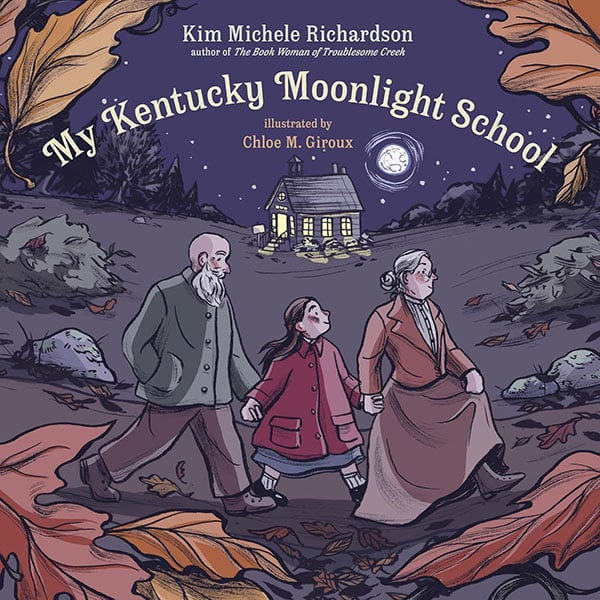
In My Kentucky Moonlight School, third grader Jewel, wise beyond her years, wants to be a teacher someday, but on this evening, she’s trudging through the forested path to school at night, offering support to her Mamaw and Papaw’s quest to gain literacy. It’s the early 1900s in Rowan County, and the Moonlight Schools are open for adults hoping to change their lives through the magic of reading. It certainly won’t be easy, however, and through both skillful writing and amazing artwork by Chloe M. Giroux, the book captures the challenges of obtaining a new and fulfilling way of living in mature adulthood.
Bright, instructive images and sparse, but pithy text bring life to the times of Cora Wilson Stewart’s ground-breaking outreach project. The narrative’s mood is both tense and cautiously optimistic; there are plenty of adults who aspire to read, but will they stay the course as they wrestle with self-doubts and other challenges?
Readers, I predict, will be rooting for these special people–who trudge onward–with enthusiasm.
Young Jewel’s point of view exudes passion, excitement, and focus on dreams for herself, family, and those in her community who struggle. That’s a message needed today in all sorts of ways.
Richardson concludes Moonlight by sharing concise background information on the life and work of the afore-mentioned Stewart (1875-1958), showcasing the important historical contributions of this Kentucky figure. As a former elementary school teacher, I believe this aspect provides valuable background to the teacher who uses the book as a read-a-long.
This treasure, at the very least, should be in every elementary school library in the state. Good literature, good art, and good showcasing of Kentucky heritage.
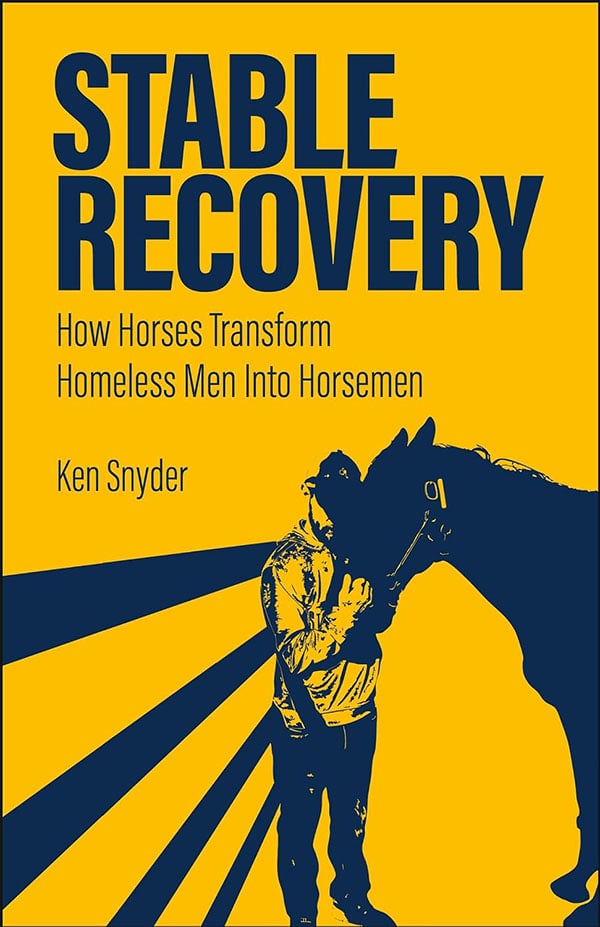
Switching to a completely different literary topic, Ken Snyder’s Stable Recovery: How Horses Transform Homeless Men into Horsemen, is a recipe of hope for those dealing with alcohol and/or substance addiction.
For the many addicted and homeless men who have redirected their lives toward a more positive path, they most likely didn’t imagine that it would happen while engaging closely with horses in Nicholasville, Kentucky. But it did, and it happened at the renowned Taylor Made Farm under the Stable Recovery program created by Frank Taylor and Christian Countzler. Both previously dealt with their own addictions and were inspired to use their experiences to help others.
Ken’s book tells the inspiring story of how business owner Taylor “made a gamble bigger than any ever placed at a racetrack, entrusting the care of the world’s most expensive horses to men who had largely been given up on.” For sure, Taylor had to do a strong selling appeal to those vested interests around Taylor Made Farm. It was worth it.
Besides telling the fascinating short history of Stable Recovery (SR), Snyder relates compelling individual profiles of people helped by the program that emphasizes leaning on a higher power and accepting the benefits of intuitive relationships that develop naturally between men and beasts at the farm. Two premises guide SR’s method of outreach, that addicts need to be out of the environment where they were hooked, plus they require meaningful work. Participants live at the farm, and testimonies reveal the meaningfulness of the horse connection, spelling remarkable success.
The fight for addiction recovery is an ongoing battle, and when there is good news, it needs to be told. Ken Snyder’s book gives such accounting.
For both Richardson and Snyder, our Commonwealth owes due praise for their contributions.
Steve Flairty is a teacher, public speaker and an author of seven books: a biography of Kentucky Afield host Tim Farmer and six in the Kentucky’s Everyday Heroes series, including a kids’ version. Steve’s “Kentucky’s Everyday Heroes #5,” was released in 2019. Steve is a senior correspondent for Kentucky Monthly, a weekly NKyTribune columnist, and a former member of the Kentucky Humanities Council Speakers Bureau. Contact him at sflairty2001@yahoo.com or visit his Facebook page, “Kentucky in Common: Word Sketches in Tribute.”