









Every year, the United States consumes approximately 450 million pounds of honey, but in 2025, domestic honey producers produced only 116 million pounds of honey, a drop of 14% since 2024 and the lowest production figure since records started being kept in 1939.
To make up the difference, honey packers transship honey in 55-gallon barrels from other countries, some of which adulterate the product with molasses, corn syrup or more recently, rice syrup by the time the product is placed on a shelf.
Over the past 20 years, consumers have become increasingly educated about the importance of pollinators and the critical role honey bees play in pollinating specialty crops such as almonds, watermelons, apples, cucumbers, and pumpkins.
However, the problems associated with honey transshipments are less visible and less regulated. At this point in time, the Food and Drug Administration still does not have a national definition of honey. As a result, many honey barrels slip through Customs and Border Patrol with little oversight.
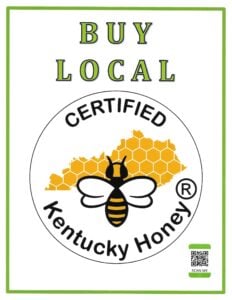
Although local beekeepers are at a major economic disadvantage when it comes to competing against adulterated honey, consumers can help “level the playing field” by purchasing local honey with the Certified KY Honey label on the bottle.
Since 2017, starting with a Kentucky Office of Agriculture Policy grant, the Kentucky State Beekeepers Association started a stand-alone self-certifying process so that Kentucky beekeepers could market their products using labels that help consumers choose local products. A list of Kentucky producers is available here .
In addition, the National Honey Board has a vast collection of honey recipes here.
As a commodity, honey is the perfect food: beautiful to look at, delicious, and rich in antioxidants. Because national standards and oversight do not exist, consumers can take matters into their own hands by choosing local honey — making it possible for beekeepers to keep caring for their honey bees.
Dr. Tamara Horn Potter is a Beekeeper extension specialist in Kentucky State University’s Cooperative Extension Program.