









By Paul A. Tenkotte, PhD
Special to NKyTribune
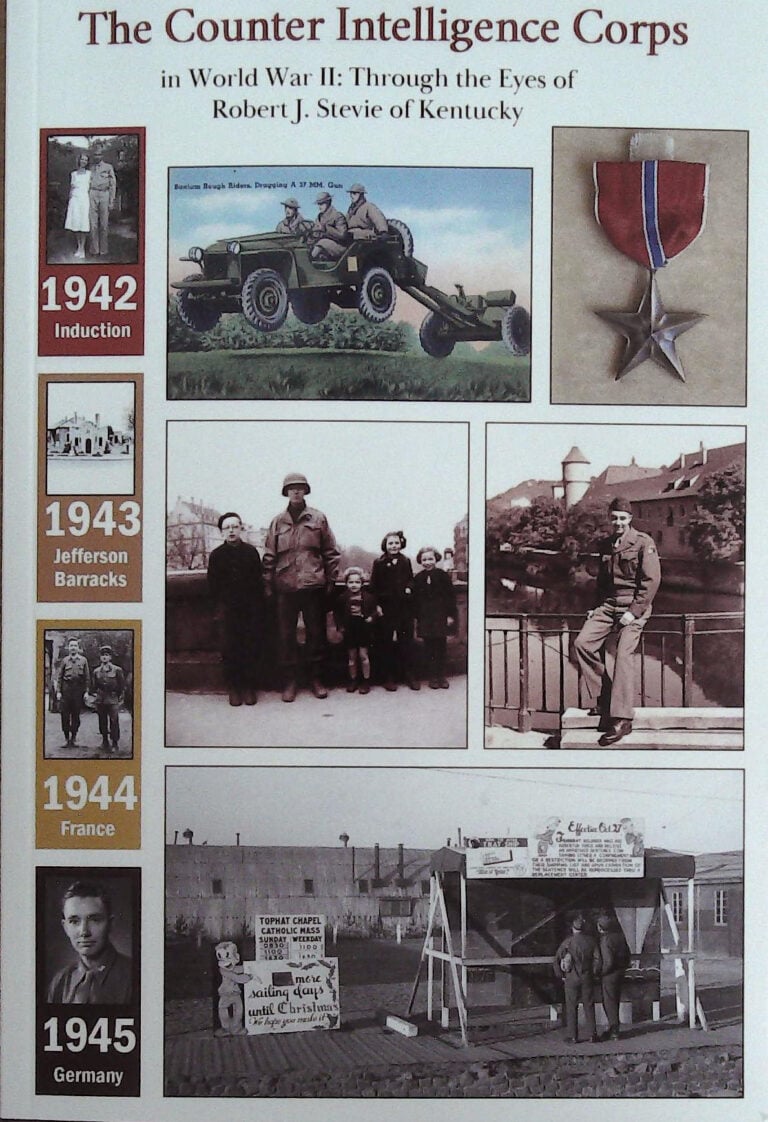
Autumn is just around the corner, bringing cooler temperatures and perfect weather for reading outdoors. This season offers a wealth of newly released regional titles and notable reprints, ideal for enjoying in a favorite shady spot. Robert (“Bob”) W. Stevie is a well known Cincinnati area community and business leader, as well as a publisher. Born in Northern Kentucky and now living in Cincinnati, he has published several books in his Mayor’s Guide series. In recent years, Stevie has carefully preserved, edited, and organized the letters, journal entries, and typed manuscript documenting his father’s World War II service in the U.S. Army Counter Intelligence Corps.
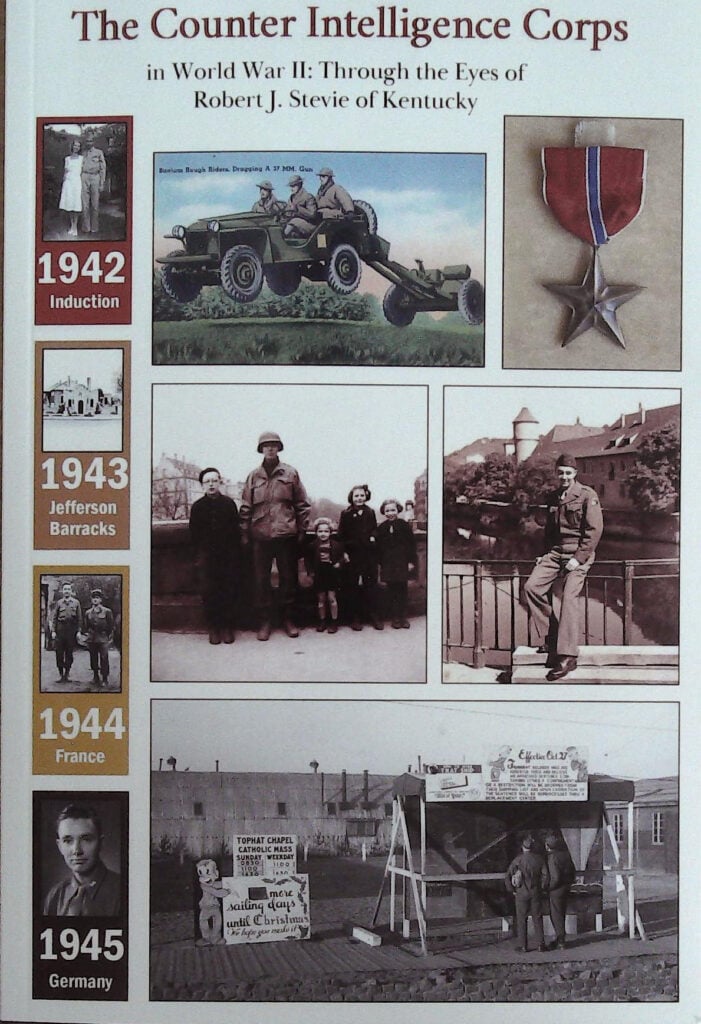
A skilled photographer and editor, Stevie also digitized his father’s photographic negatives and the postcards he mailed home, bringing new life to these personal wartime stories. The resulting volume —”Counter Intelligence Corps in World War II: Through the Eyes of Robert J. Stevie of Kentucky” — is a fascinating and well-illustrated account, available through Amazon at: Counter Intelligence Corps in World War II: Through the Eyes of Robert J. Stevie of Kentucky.
Bob Stevie has also devoted much of his life to preserving immigrant history and heritage and to advancing international cultural and economic exchange. He is a past president of the Cincinnati U.S.A. Sister Cities Association and has worked closely with the Greater Cincinnati Chinese Chamber of Commerce.
In 1989, Bob, his future wife Dr. Kathy WedigStevie, and I joined a delegation of official representatives from Cincinnati Sister Cities on a visit to Germany. On September 18, 1989, we witnessed the formal signing of Cincinnati’s Sister City agreement with Munich — a milestone in the city’s international partnerships.
Given his deep commitment to international understanding and global development, it is no surprise that Bob Stevie has published an accessible and insightful guide titled “Immigration Makes America Great Always: Politics & Principles.” This concise 36-page booklet presents a compelling case for immigration as a cornerstone of American growth, innovation, and prosperity. Written in an easy-to-read style and supported by numerous helpful tables, Stevie explains why immigration remains essential to sustaining the nation’s economic vitality and future success. This booklet is available digitally on Kindle for only $2.99: Immigration MakesAmerica Great Always: Politics & Principles.
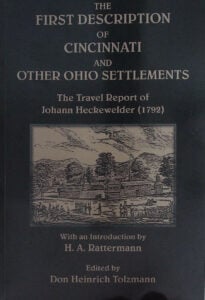
of Johann Heckewelder (1792)”
Likewise, historian and author Don Heinrich Tolzmann is a distinguished German-American historian whose lifelong work has preserved and celebrated the heritage of immigration. In 2026, Heritage Books republished his translation of “The First Description of Cincinnati and Other Ohio Settlements: The Travel Report of Johann Heckewelder (1792),” which was originally released by the University Press of America in 1988. The volume provides valuable insight into the early history of Cincinnati and other settlements in Ohio through Heckewelder’s firsthand observations.
The travel account has a fascinating history. Moravian missionary Johann Heckewelder journeyed along the Ohio River during 1792 and 1793, recording his observations in a journal that was later published in Germany in 1797. More than a century later, the journal was rediscovered by German-American historian and editor H. A. Rattermann (1832-1923), who translated it into English but never saw the translation published.
Don Heinrich Tolzmann later uncovered Rattermann’s translation of the manuscript in the Rattermann Collection of German-American Manuscripts housed at the University of Illinois in Urbana-Champaign. The resulting volume offers a rare firsthand account of life in the early frontier settlements of Marietta, Gallipolis, and Cincinnati, providing valuable insight into Ohio’s pioneer era. The Heritage Books reprint is available through Amazon: The First Description of Cincinnati and Other Ohio Settlements: The Travel Report of Johann Heckewelder.
Also in 2026, Heritage Books republished Tolzmann’s “The First Mayor of Cincinnati: George A. Katzenberger’s Biography of Major David Ziegler,” originally published by the University Press of America in 1990. Born in Heidelberg, in the German Palatinate, in 1748, Ziegler “served under Friedrich der Grosse [Frederick the Great] and Catherine the Great of Russia before coming to America” (p. xiii). He distinguished himself during the American War for Independence. In 1784, Ziegler was appointed a captain in the United States Army and was stationed at Fort Washington in Cincinnati. After resigning his command in 1792, he settled permanently in Cincinnati, where he became the first “president of the council, a position which carried with it the duties of chief magistrate, and is now known as mayor” (p. xiv). The Heritage Books reprint is available through Amazon: The First Mayor of Cincinnati: George A. Katzenberger’s Biography of Major David Ziegler.
As a degreed librarian, Tolzmann has long recognized the importance of preserving historical manuscripts and making them accessible to new generations of readers. In keeping with that commitment, in 2025 Heritage Books reissued Tolzmann’s 2001 Oak Knoll Press edition of “The Memory of Mankind: The Story of Libraries since the Dawn of History.” That volume is itself a revised and expanded version of Reuben Peiss's 1950 translation of German librarian and historian Alfred Hessel’s 1925 “Geschichte der Bibliotheken: Ein Überblick von ihren Anfängen bis zur Gegenwart" (“History of Libraries: An Overview from Their Beginnings to the Present”).
The Heritage Books reprint is available through Amazon: The Memory of Mankind: The Story of Libraries Since the Dawn of History.
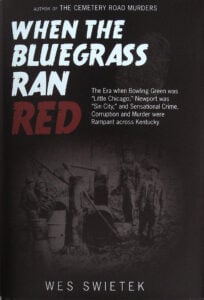
Preserving regional history is a passion shared by Wes Swietek, managing editor of the “Bowling Green (KY) Daily News.” In his second book, “When the Bluegrass Ran Red,” Swietek uncovers another chapter in Kentucky’s shadowy Prohibition-era history and its lasting influence. While many readers are familiar with Newport, Kentucky’s notorious “Sin City” reputation, far fewer know about Bowling Green’s own colorful past, when it earned the nickname “Little Chicago” for its ties to organized crime and vice.
Swietek documents the notorious history of Bowling Green, Kentucky’s Burke’s Alley, “just one block from the bustling Louisville and Nashville Railroad depot and the city’s downtown,” which succumbed to urban renewal in the 1960s (p. 6). However, the legacy of crime and lawlessness continued in Bowling Green throughout the mid-twentieth century and beyond. Bowling Green’s regression began with a 1957 election that made the city dry, culminating in the sale of its last legal alcoholic drink on June 21, 1958. According to Swietek, the crackdown on alcohol produced an unexpected outcome: “The unintended consequence of the local prohibition effort was to usher in an era of unprecedented crime and violence in Bowling Green” (p. 63).
Meanwhile, a 1957 “Esquire” magazine article highlighted Newport, Kentucky, claiming that a million people visited the city each year for its gambling and other illegal activities, producing $30 million in profit, of which an estimated $1 million in bribes greased the wheels of the city.
Swietek’s book is a compelling read for true crime enthusiasts. Engagingly written and enriched with historic black-and-white photographs, it is available on Amazon: When the Bluegrass Ran Red.
Whether your interests lie in immigration, local heritage, library history, military history, or true crime, this season’s selection of regional titles and noteworthy reprints offers something for every reader. These books not only entertain and inform but also preserve the stories, experiences, and traditions that have shaped our communities and nation. As the days grow cooler and the leaves begin their autumn transformation, there is no better time to settle into a comfortable chair outdoors and explore these engaging works by authors and historians dedicated to keeping the past alive for future generations.
Paul A. Tenkotte, PhD is Editor of the “Our Rich History” weekly series and Professor of History at Northern Kentucky University. To browse more than ten years of past columns, click here. Tenkotte also serves as Director of the ORVILLE Project (Ohio River Valley Innovation Library and Learning Engagement). For more information see https://orvillelearning.org/. He can be contacted at tenkottepp@nku.edu.