









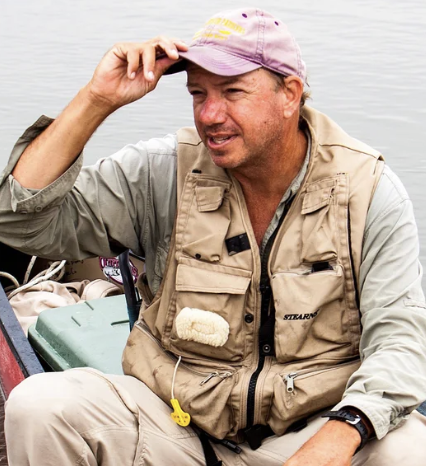


The riverboat captain is a storyteller. Captain Don Sanders shares the stories of his long association with the river — from discovery to a way of love and life. This a part of a long and continuing story.
By Capt. Don Sanders
Special to NKyTribune

Does time really speed up as one gets older? As the months click off the calendar, I’ll have to agree. Just a few days ago, the third of four quarterly S&D Reflector steamboat publications came in the mail. Zip-Zip-Zip. That’s three-quarters of the year. It used to seem they’d never get here. How does editor Dave Tschiggfrie keep up with it all?
Actually, the Reflector began as another brilliant publication of Captain Frederick Way, Jr., who helped initiate the “Sons & Daughters of Pioneer Rivermen” organization in 1939 and became the Reflector’s first editor sixty-three years ago.
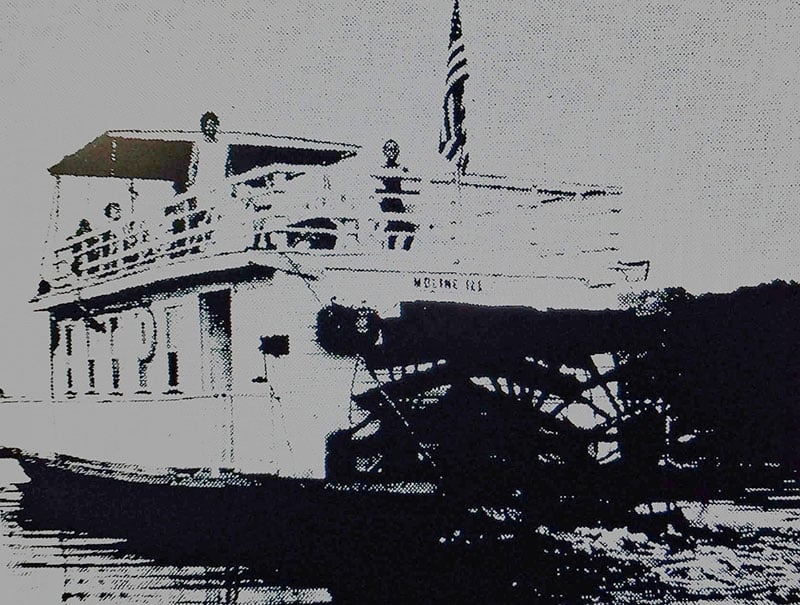
My first subscription began with Vol. 2, No. 1, featuring a fetching blond-haired girl around my age whose family owned a lovely stern wheel houseboat in the Quad Cities area on the Upper Mississippi River. Before long, she and I exchanged letters. After graduating from college in the mid-sixties, my first season on the swank steamboat DELTA QUEEN began. By late summer, the QUEEN headed for St. Louis and beyond —– clear to St. Paul. Minnesota. Of course, I sent a message to my pen-pal-young-lady that I’d be at Lock & Dam #15, at Rock Island, at such a date and time, and that I’d finally like to meet her in person.
Usually, the DELTA QUEEN landed at the cobblestone slope at the Rock Island city front for a shore stop and tour for the QUEEN’s passengers, including the famous Rock Island Arsenal. But to my surprise, the once-gracious landing area was being demolished, so the QUEEN obtained government permission to land inside the shoreside lock during its stopover. As this was a restricted area, the public was prohibited from getting close to the DELTA QUEEN without special authorization. Still, I excitedly anticipated the arrival of my special visitor.
After what felt like a lifetime, a lockman delivered a message: I had visitors at the gate. The walk from the lock wall to the secured gate in the chain-link fence, topped with barbed wire, was long, but I quickly covered the distance, expecting the long-haired blond beauty I first saw on the front cover of the Reflector. But when I arrived, no such young lady waited at the gate. Instead, a mature man and woman stood there with a young boy. They introduced themselves as the parents and little brother of my anticipated guest.
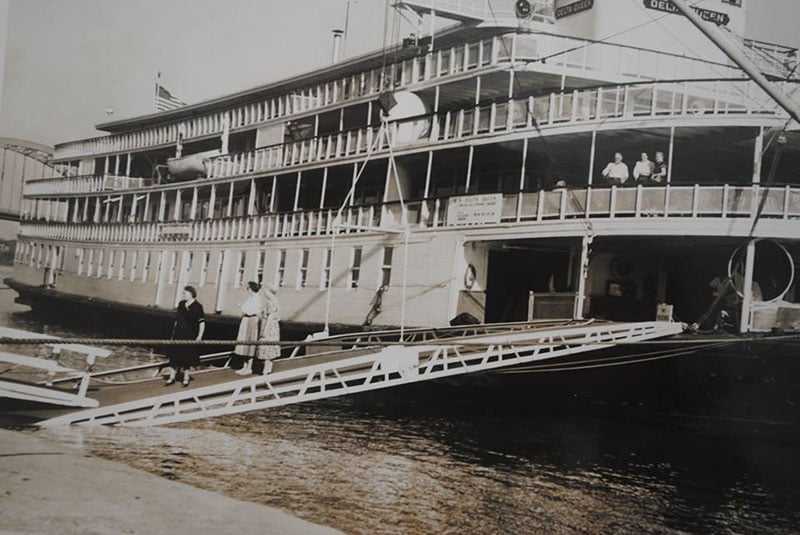
Then, unexpectedly, the father revealed that their lovely daughter had gotten married just days before. Still, the day wasn’t entirely wasted. I invited my visitors for a tour of the DELTA QUEEN, and lock officials permitted them to watch the QUEEN depart upstream from the lock wall. To this day, some 60 years later, I still remember the young woman’s name and how she looked as she graced the pages of the steamboat history magazine.
In the latest edition of the Reflector, editor Tschiggfrie included a two-page spread on the October 21 induction of steamboat fireman Ed Smith into the National Rivers Hall of Fame, headquartered at the National Mississippi River Museum and Aquarium in Dubuque, Iowa. However, to accommodate Ed Smith’s family, the ceremony took place at the Thomas Jefferson Library at the University of Missouri’s St. Louis campus, home to the Mercantile Library. Several members of Ed’s St. Louis family attended, including his only surviving sister, Bobbi Brown, and a niece, Denise Billups.
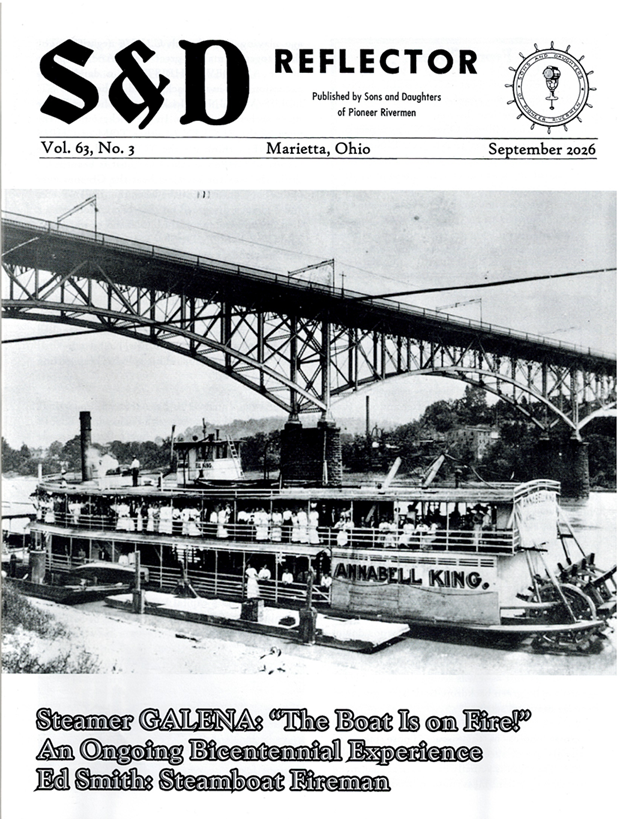
Ed’s river steamboat family was well represented, too, including the Hon. John “Corky” Bickel, president of the Hall of Fame; Chief Engineer Gary Frommel; Capt. Tom Dunn; former DELTA QUEEN deckhand, Ben Sandmel; and, of course, David and his son, Jonathan Tschiggfrie, all of whom knew or worked with Ed. Letters were also read to the gathering from Captain Bob Reynolds and me.
Seeing my long-time friend, mentor, and fellow steamboatman, Ed “Seth” Smith, inducted into the National Rivers Hall of Fame with other illustrious rivermen and women, including Mark Twain, Capt. Callie French, W. C. Handy, General U.S. Grant, and Captains Ernest E. Wagner, Clarke C. “Doc” Hawley, and Frederick Way, Jr., was one of the most satisfying and fulfilling moments in my long river odyssey. The move to include Ed Smith for such an illustrious honor began with a story in the NKYTribune written about him, which concluded with this simple statement:
“There’s even some chatter going around about nominating Ed for the National Rivers Hall of Fame in Dubuque, Iowa. If anyone ever on the river deserves the honor, it is undoubtedly Ed Smith.”
It’s remarkable what a few words can do if the right person reads them.
Interestingly enough, this quarter’s Reflector also features a story which began when I posted a picture of a handsome steamboat moored along a riverbank as laborers loaded the boat with plunder piled along the shore around 1900. Although the name of the pretty boat is undetectable, I posted the query:
“Too bad that I cannot get the name of this smart-looker. Anyone?”
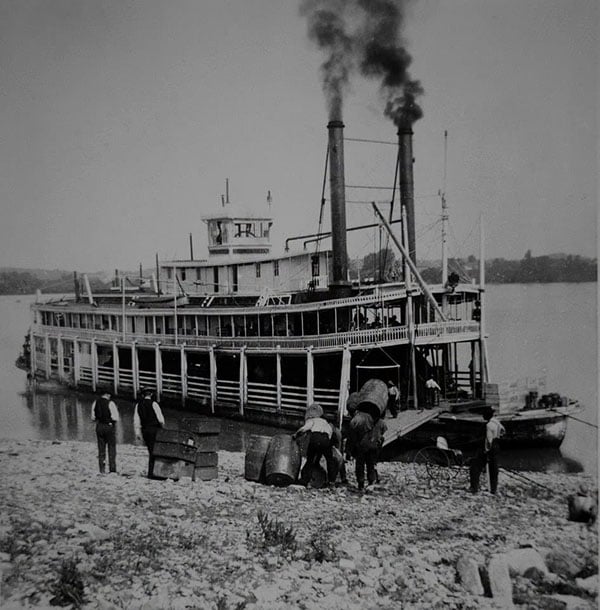
Rising to the challenge to identify the steamer, Frank X. Prudent, riverboat historian extraordinaire, sent a copy of the picture to Reflector editor David, who passed the challenge off to Jeff Spear, president of S&D, who did a bit of sleuthing and came up with a name — the Steamer E. G. RAGON (Way 1644), built at the Howard Shipyard in Jeffersonville, Indiana, in 1887 with a home port of Louisville. Her wooden hull dimensions were 165.0 x 31.0 x 4.5, or about the same size as the Steamer BELLE OF LOUISVILLE. Her steam engines had a cylinder bore of 14.5 inches and a piston stroke of 4.5 feet, and were later used on the steam sternwheel towboat DUFFY.
The E. G. RAGON was named for Edward Gustavus Ragon (1838-1902), a wholesale grocer from Evansville, Indiana. He and his brother Ferdinand H. Ragon operated a grocery and liquor business. Initially, the E. G. RAGON ran from Evansville, Indiana, to Nashville until the Louisville and Evansville Mail Line bought her in February 1893 and ran her until the side-wheeler MORNING STAR was built in 1901. After that, the lovely packet E. G. RAGON faded into the mists of time until resurrected only recently as a Facebook download.
This month’s S&D Reflector also contains many other interesting tales told by steamboat researchers and by men and women who lived and experienced life on steam-driven vessels on the mighty Mississippi River and its tributaries. By the way, the Sons & Daughters is meeting this weekend in Marietta, Ohio, as they’ve done nearly “forever.” If you’re particularly interested in steamboats and the people who built and operated them, then the S&D may be right for you.
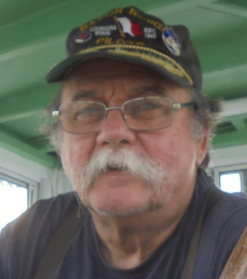
Captain Don Sanders is a river man. He has been a riverboat captain with the Delta Queen Steamboat Company and with Rising Star Casino. He learned to fly an airplane before he learned to drive a “machine” and became a captain in the USAF. He is an adventurer, a historian, and a storyteller. Now, he is a columnist for the NKyTribune and will share his stories of growing up in Covington and his stories of the river. Hang on for the ride — the river never looked so good.
Click here to read all of Capt. Don Sanders’ stories of The River.
Purchase Captain Don Sanders’ The River book
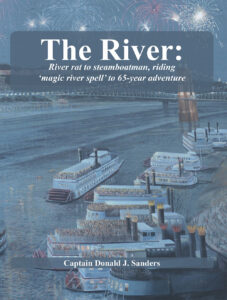
Capt. Don Sanders The River: River Rat to steamboatman, riding ‘magic river spell’ to 65-year adventure is now available for $29.95 plus handling and applicable taxes. This beautiful, hardback, published by the Northern Kentucky Tribune, is 264-pages of riveting storytelling, replete with hundreds of pictures from Capt. Don’s collection — and reflects his meticulous journaling, unmatched storytelling, and his appreciation for detail. This historically significant book is perfect for the collections of every devotee of the river.
You may purchase your book by mail from the Northern Kentucky Tribune — or you may find the book for sale at all Roebling Books locations and at the Behringer Crawford Museum and the St. Elizabeth Healthcare gift shops.
Click here to order your Captain Don Sanders’ ‘The River’ now.