














By Howard Whiteman
Murray State University
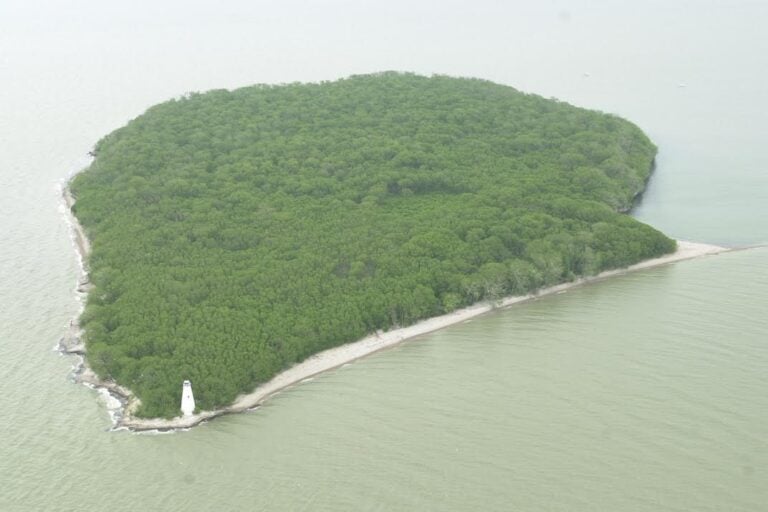
Stuck on West Sister island in Lake Erie, with only a cockroach-infested, dilapidated lighthouse for shelter, I wondered what the future held. A friend had graciously invited me to hunt for water snakes with him on this island; I gladly took him up on the adventure. A boat from the mainland field station had dropped us off hours ago, we had our fun catching snakes, and now an approaching storm suggested we might be spending a cold rainy night on a deserted island.
As the summer day turned darker and darker on the horizon, suddenly we saw a speedboat heading our way. “Get in!” the pilot yelled, and we did, grabbing for life vests as we held on to the gunwales as tight as we could. “This is going to be rough!”, and it was, with enormous, seemingly never-ending swells that threatened to capsize us on the way home. I remember closing my eyes and wondering if we might have been better off in the decrepit lighthouse for the night. But we made it, thanks to the skill and courage on the part of our savior.
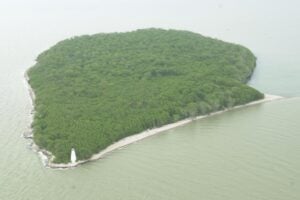
Islands are like that: they have inherently limited resources, and any potential lifelines depend on distance from the mainland. You cannot get around the limitations of an island. These characteristics are true whether we are talking about an island in the Great Lakes or a tropical paradise near the equator, and the consequences of not understanding them can be catastrophic. What I didn’t realize at the time, however, was how islands can scale up, creating even more important implications.
During a more recent trip to Scotland, my wife and I enjoyed learning about the history of the country and the beautiful countryside. But two lessons surprised me.
In many ways, these lessons were driven by the fact that the United Kingdom is one big island, something I didn’t appreciate before.
The first lesson was recycling. I was amazed that it seemed like almost everything in Scotland was recyclable, from yogurt lids to candy bar wrappers to frozen dinner containers. Everything, it seemed, could be recycled, and many products were the result of that successful recycling—reusing the same resource twice or even three times.
The successful recycling effort in the UK happens in part because the government mandates that companies create products that can be recycled and ships those products in recyclable packaging. Companies don’t get to produce waste, as the government makes them produce products, and packaging, that can be recycled.
The rest is up to the citizens.
It’s also easy to recycle, as there are bins everywhere. Wherever there is a trash can, there is a recycling bin, and often multiple ones for different types of recycling. Recycling is institutionalized, and is part of the culture — they just do it, every day, as part of their daily lives.
We could do this in the United States, as well, but we haven’t, at least in most communities. Why?
Another lesson involved energy. I noticed windmills on the Scottish landscape, and wondered how much energy they gain from renewable sources. It turns out that the UK produces over 50% of its energy use through renewables, and most of that comes from Scotland, which produced 113% percent of its energy demand using renewables, primarily through wind. In the U.S., renewables account for only about 25% of our energy, yet we have vast wind and solar resources waiting to be harvested.
Why are we so far behind on renewables, as well as recycling, compared to the UK?
The United Kingdom is an island the size of Oregon. As such, it doesn’t have the vast natural resources that the U.S. enjoys, nor does it have large spaces for landfills to bury waste. It doesn’t have abundant oil and natural gas reserves. It has to make its society work with the finite natural resources and space that all islands experience, which means institutionalizing recycling and renewable resources among many other things. That is how island nations prosper; by working within the finite nature of their situation.
In the U.S., we have been seduced to burn fossil fuels and throw out our waste rather than recycle it because we have such abundant resources and space that the negative consequences really haven’t hit us yet. Yes, we experience the pollution from our combustion and garbage in our streets, but it is always subtle or someone else’s problem, not ours, in part because we simply have so much space. We live our lives like we don’t inhabit an island like the UK does. One reason we think that, perhaps, is because the larger the island, the longer it takes for the finite natural resources and lifelines to matter.
The United States is finally starting to feel the same island pressure that the UK has felt for centuries. When the first European immigrants arrived in the U.S., they found an expansive land with abundant natural resources, and we continue to reap this bounty. But we can see that our own country is becoming more and more island-like every day. Our freshwater resources become scarcer each year, as pollution affects our water and overuse makes major rivers and aquifers run dry.
We are not self-sufficient in terms of energy, requiring lifelines to the Middle East, South America, and other regions for our oil. Yet we cannot seem to understand the fact that our country has finite resources, ones that must be used wisely, rather than exploited immediately. In a sense, the United Kingdom and other island nations are like a time machine: they show us the future.
Now consider even more extreme islands. When astronauts are away from Earth, they are completely dependent on the island that is their ship, for their oxygen, water, food, heat, and shelter. They have lifelines as well, from being able to turn around and come home or having supplies delivered on a regular basis, which is how we maintain the island that is the International Space Station. But the farther away they get from Earth — the more isolated they are from their “mainland” — the more independent they must become. You can call for help all you want in space, but at some point, NASA can’t do a thing about it. Sooner or later, there are no more lifelines, and that is where the biggest island of all currently sits.
The Earth is the largest island of life we know of, but it is still an island. We aren’t going to get any more fossil fuel resources once they are all used up. We won’t get any more space to dump our waste in once we have dug up every piece of ground.
There is only so much freshwater for drinking and for our crops and livestock. There is a limit to how many fish we can catch in our oceans. Whether we see it now or not, we are living on an island, one that has finite space and natural resources, just like the smaller-scale United Kingdom or even smaller West Sister. Earth is also an island without any mainland; there are no lifelines. All the resources on Earth are all we will ever have to use; there are no supply ships coming, no one to contact for help. Yet, as humans we keep moving forward as if resources are unlimited and that we can somehow simply expand into the limitless void of space.
It’s time we all thought a little bit more about living on an island, because whether we like it or not, or appreciate it or not, that is exactly what we are doing. We cannot hope for a speedboat or a spaceship to miraculously show up and save us from the impending storm. We can’t leave our island; we live on this island, we always have, and we always will. It’s time we started acting like we understand that fact, and the sooner, the better.
Dr. Howard Whiteman is the Commonwealth Endowed Chair of Environmental Studies and professor of Wildlife and Conservation Biology at Murray State University.