













By Howard Whiteman
Murray State University
I get overwhelmed at grocery stores sometimes. So many choices with so many decisions to make about what I can buy without breaking the bank. Most purchases are like that; trying to get the best product for the least cost. We attempt to make as wise a decision as we can.
We also get to make choices about people, like who we are friends with, who we date and perhaps marry, and who we want running our governments.
The latter choice is upon us and, as much as it seems to be a cliche these days, I’ll say it
anyway. It’s the most important election yet.
I don’t think that this election is especially important for many of the reasons you might suspect, although there are many motivations to be engaged right now. Rather, I believe that our choices this November are more important than ever because our representatives are still not taking climate change seriously. This includes implementing the solutions necessary to stop our country—and help other countries—from making the problem worse, as well as preparing for the future that we have already locked in.
Climate change is the biggest threat that humanity has ever faced. Although some deny that reality, it turns out that science really doesn’t care one bit about what anyone believes. Like certain diseases, space travel to the moon, a round Earth, and other things that some people do not believe, science is based on facts. Climate change is a scientific fact.
The consequences of the stark and somber realization that we have changed the climate of the planet are well known. Glaciers and ice caps are melting, raising sea levels in oceans that are becoming more acidified. Strong storms and wildfires are more frequent and violent. Species are going extinct, and other species are moving to find cooler climates. Humans are one of the many species that have become climate migrants, in part to avoid climate-induced famine and disease.
The economic and social costs are also becoming more and more obvious: more air conditioning means higher electric bills. Storm and fire damage and the health costs of heat waves and climate-induced diseases have all increased. The disparity between rich and poor, both within and between nations, is exasperated by climate change, as the rich find ways to adapt while the poor suffer the consequences of the actions of their rich neighbors.
What continues to amaze me is that we have the solutions to this nightmare through reduction of greenhouse gases like carbon dioxide. We know we can transition from combustion engines and burning coal because we have already created windmill and solar farms as well as viable electric vehicles. Those industries have occasionally benefited from government-mandated tax breaks, but nothing like the subsidies we provide for the fossil fuel industry. Rather than piecemeal investment, what we need is an Apollo-like project, investing our hard-earned tax dollars into the science and technology that will allow us to improve and scale up alternative energy sources—and create new ones —t o increase quality of life while reducing greenhouse gases.
Instead, our government often pretends as if the problem doesn’t exist. We are like an ostrich burying its head in the sand so that it won’t be able to see the obvious danger that confronts it. That may appease the masses in the short term, but the pain we are beginning to feel is the consequence of decades of inaction, from both sides of the aisle.
Congress was informed by NASA about the dangers of climate change in 1988, and yet our elected representatives have not taken the steps to address the problem seriously, perhaps because of massive campaign contributions by the fossil fuel industry. When politicians won’t even admit that there is a problem, you can bet they aren’t going to spend any time (or money) fixing it.
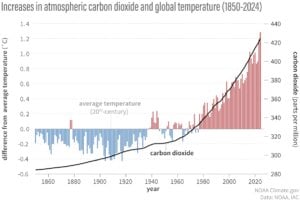
The current political reality of climate change in the U.S. is particularly problematic because the more we reduce our carbon dioxide production, the less we have to adapt. Adapting to a new climate, with all of the societal and infrastructure changes that will have to occur, is projected to be much more expensive than reducing our carbon footprint. Waiting, as we have done thus far, will be costly both in dollars and lives, as the longer we wait to transition to a clean energy future and prepare for a warmer planet, the more people will suffer.
Our decades-long delay is also of concern because of inertia. Some things are easy to stop, much like a canoe. A few quick paddles and mission accomplished. Climate change is more like a cruise ship. Get a cruise ship moving and you can’t stop it on a dime. Shut down all the engines and it will keep moving forward, and there is really nothing we can do about it until it stops on its own.
We haven’t come close to shutting down our engines, by reducing the production of greenhouse gases; in fact, we have continued to increase carbon dioxide production every year, and only slowed the rate at which we add it. So, the cruise ship is still moving full speed ahead, and every day we wait is one more day it is gaining speed, creating more problems and making our ability to slow or stop it even more difficult.
Imagine if aliens invaded Earth and started using their superior technology to warm the planet and make it more hospitable for their own species. Now imagine if politicians kept telling us that the aliens didn’t really exist, that it was all a ‘hoax’, even as we saw them all around us and felt the planet warming. We would all be outraged—we can see the aliens with our own two eyes, and it is obvious what they are doing.
Now look in the mirror. We are the aliens — each one of us.
Every day we make a choice to remain a climate alien or be part of the solution. Some of those choices might seem small—like buying local produce because of the reduced carbon footprint. Other choices are more important, such as how we would like our government to act.
I wish it was a hoax. I wish that I did not have to worry about the world that I am leaving for my children and their children. I wish it was just one giant conspiracy, or a bad dream. But it’s not, and we need to finally start acting like we are the adults in the room.
Things have to change, or people, and the planet, are going to suffer a lot worse than they already have.
I think we can all agree that deciding the future of the Earth is one of the most important choices each of us could ever make. It may not seem like you have the power to influence such a decision, and yet each of us has a vote. If we can open our eyes and see what the climate aliens within each of us are currently doing to transform the Earth, and with it the future of every species on the planet, including our own, we might begin making the choices that, dare I say, will literally save the world.
The choice is ours, as it always has been. Choose wisely.
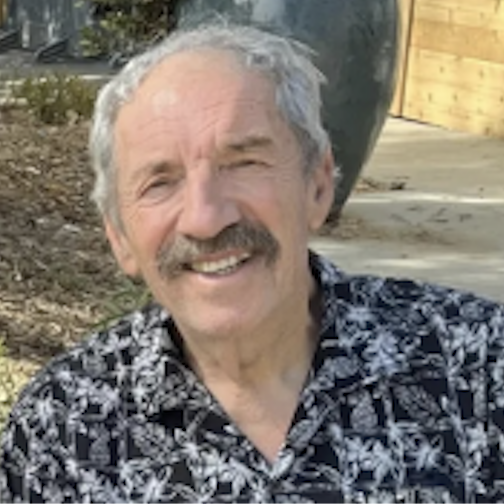
Dr. Howard Whiteman is the Commonwealth Endowed Chair of Environmental Studies and professor of Wildlife and Conservation Biology at Murray State University. He is a regular columnist for the NKyTribune.