















By Steve Flairty
NKyTribune columnist
Northern Kentuckian Eula Bingham Mattheis left an indelible mark on the field of workers’ rights and safety. Appointed by President Jimmy Carter, she served as the first female director of the Occupational Safety and Health Administration (OSHA) and was considered quite effective. Her career achievements ranged much further over the years, however, and she was recognized highly by her peers.
Eula was born an only child in Covington on July 9, 1929 and raised around the nearby Burlington area. Her father, Arthur Bingham, lost his railroad job during the Depression, and the family would consequently move to a farm outside of Burlington. After high school graduation, Eula was offered a job at Procter & Gamble but turned it down after her father insisted she go to college, though he would need to borrow money to make it happen.
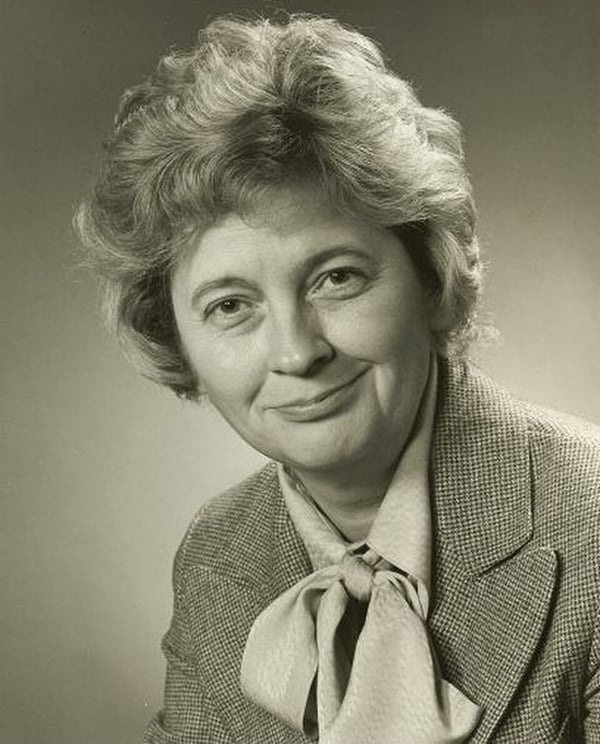
She started her college career down Richmond way at the then Eastern Kentucky College (now University) and gained a degree in chemistry and biology. From there, she enrolled at the University of Cincinnati (UC), where she received an M.S. in physiology and later, a Ph.D in zoology. Her career would start at UC, too, with her becoming a researcher at the school’s College of Medicine. She studied carcinogens and published over a hundred articles on subjects ranging from occupational and environmental respiratory hazards to health policy. She soon gained high credibility with her work and took on increasing responsibilities as a consultant and expert witness in workers’ safety lawsuits.
From there, she was appointed to government commissions and served as an advisor for the National Institute for Occupational Safety and Health from 1972 to 1976. She also advised the Department of Labor on coke oven emissions and carcinogens from 1973 to 1975, then was on the National Academy of Sciences’ Lead in Paint Commission from 1974 to 1975. She worked with the Food and Drug Administration and the Environmental Protection Agency from 1976 to 1977.
Likely Eula’s greatest recognition was when President Carter appointed her as Director of OSHA and she served from 1977 to 1981. Some examples of her achievements were getting a revised occupational standard and new regulations on workers and affording them their “right to know” about dangers at workplaces. She also led in removal of various regulations on items such as toilet seats and umbrellas. Eula pushed for and got safeguards on lead, benzene, cotton dust, and other potentially harmful agents.
I found a series of fond remembrances of Eula reported on the National Institute of Environmental Health Sciences site (niehs.nih.gov) from those who knew her work. Here’s one I think is particularly meaningful.
One stated that soon after starting work at OSHA, “it wasn’t long before I heard the name Eula Bingham. I learned about her stature in toxicology and occupational health. I learned about her persistence in demanding—not just any workplace safety regulations—but the most protective ones. I learned about her vision to build the capacity of workers to learn about their rights, train others to do the same, and act collectively to demand healthy and safe jobs.”
Eula’s OSHA staff pushed a narrative of “common sense” policies, and they would focus on the bigger problems of the workplace. There were three main parts: (1) to “get serious about serious dangers,” (2) to help small businesses through the process of complying with OSHA rules, and (3) to make more clear and simplify safety rules. A U.S. senator had eloquently made the point that previously OSHA had been about “minnows” (smaller problems) more than “whales” (more serious problems).
It wasn’t all rosy, however, as there was some pushback to OSHA policies from the Carter Administration because of perceived economic costs. Not all of her initiatives moved forward as she hoped, but she managed to stay the course with her position under Carter until she had to leave after Carter lost the 1980 election. Still, her achievements at OSHA are generally considered successful and even transformative, and they stand today, almost five decades later.
After leaving OSHA, she was back to Cincinnati, where she worked with construction workers and helped create the Former Worker Medical Screening Program, which screened workers at nuclear sites. She would also become the president of an organization called Collegium Ramazzini, showing her commitment to worker safety and health.
Eula died on June 13, 2020, and is buried at the Spring Grove Cemetery in Cincinnati.
Steve Flairty is a teacher, public speaker and an author of seven books: a biography of Kentucky Afield host Tim Farmer and six in the Kentucky’s Everyday Heroes series, including a kids’ version. Steve’s “Kentucky’s Everyday Heroes #5,” was released in 2019. Steve is a senior correspondent for Kentucky Monthly, a weekly NKyTribune columnist, and a former member of the Kentucky Humanities Council Speakers Bureau. Contact him at sflairty2001@yahoo.com or visit his Facebook page, “Kentucky in Common: Word Sketches in Tribute.”