













By Patricia A. Scheyer
NKyTribune reporter
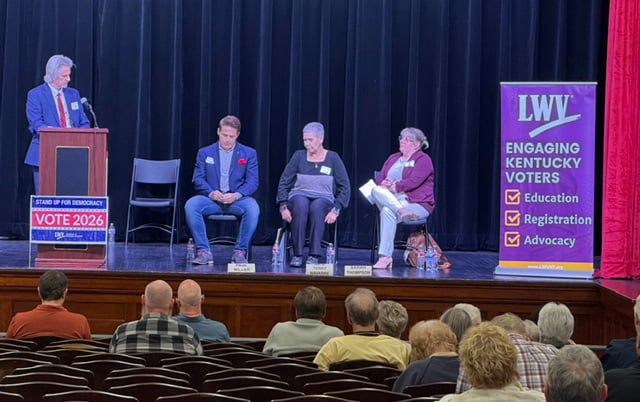
The Northern Kentucky Education Council held its annual convening meeting at the Ignite Institute in Erlanger Tuesday, touching base with members on progress from last year and news from this year.
Joe Buerkley, the NKYEC board chair, and superintendent of the Pendleton County School District, welcomed everyone, pointing out several people of note, and defining what the Education Council is, and what the mission intends to accomplish.
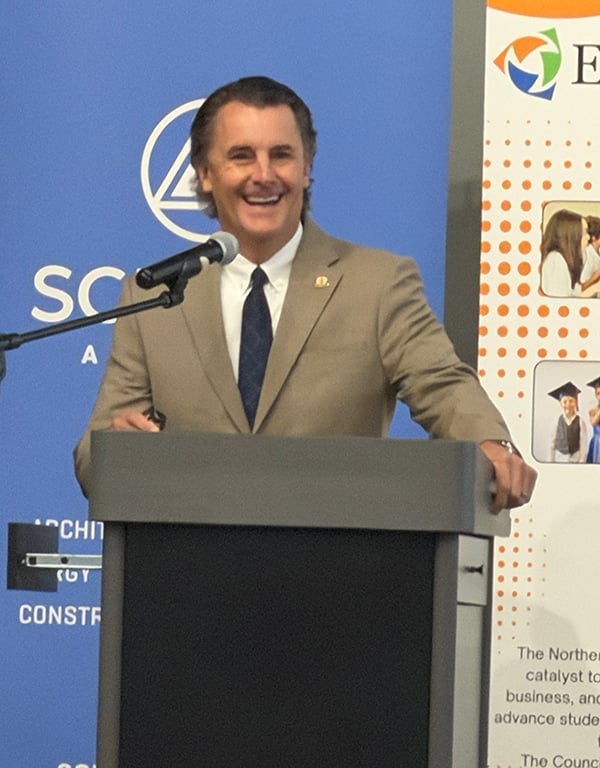
“The Northern Kentucky Educational Council unites education, business, and community partners to advance student success and wellbeing from early childhood through post secondary education and careers,” said Buerkley. “The council proudly serves eight counties throughout the area and we are grateful for the leadership of the 2026 -2027 board members.”
The keynote speaker was Kentucky State Representative from the 68th district, Mike Cline, who is also the vice chair of the House primary and secondary education committee.
He settled on four distinct themes to focus on, and the first was to be able to celebrate what is right in the world. He showed a short film about a photographer looking at the beauty of the world through his lens.
The second theme was ‘localism leads to regionalism’, and he remarked about one of his constituents who worked in the school system. Due to him, Cline said he was able to come up with House Bill 300, which is a bill of rights for teachers. He said he needs good ideas to come from the districts, and sometimes he can see to their implementation.
Theme three was ‘Kill a stupid rule’ but he didn’t like the word stupid, so he came up with different ways to achieve the same thing, such as retiring an obsolete policy, or ‘dismantling this absurdity masquerading as policy’, or ‘abolishing this exercise in futility’. Thoughts like this resulted in HB 48, red tape reduction Act, HB 430, School transportation, and HB 727, which improves access to educators.
The fourth theme is a vibrant public education system. Cline said since about 91 percent of all of Kentucky’s children attend public schools, they know they have to do well and then do better. Everyone has to work together to get things done.
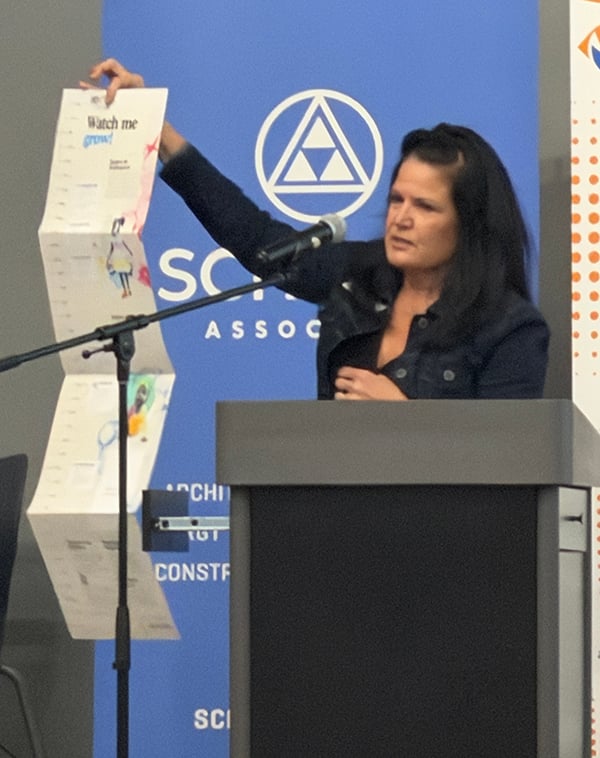
The next speaker was Sandy Woodall, Executive Director and Founder of EC Learn and School Partnerships.
Woodall explained how at first organizers had to try and get educational materials to children who were 4 and 5 because they knew that 90 percent of the brain is formed before 5 years old, but then they realized that 80 percent of the brain is formed before age 3, and the push was on for education from birth to age 5.
They were able to come up with a program called MyPreK.com to focus on babies getting ready to be born and following their progress all the way to Kindergarten readiness. They developed learning tools, like developmental wheels, and family guides as well as Kindergarten readiness magnets, so that families can keep track of their children’s progress.
Brian Robinson, Superintendent of Ft. Thomas School District, pointed out some good news for the 16 school districts in the Northern Kentucky area.
He said educators are always trying to think beyond just scores and take an overall picture of the progress. They are always looking for student adaptability, spotting critical thinking and innovative thinking in the students. He pointed out that they have closed some gaps between their numbers and the state’s average numbers.
Former Boone County Superintendent Randy Poe, now executive director of NKYEC, spoke next and pointed out that dual credit classes, classes that count as high school and college credit, were not in existence 15 years ago.
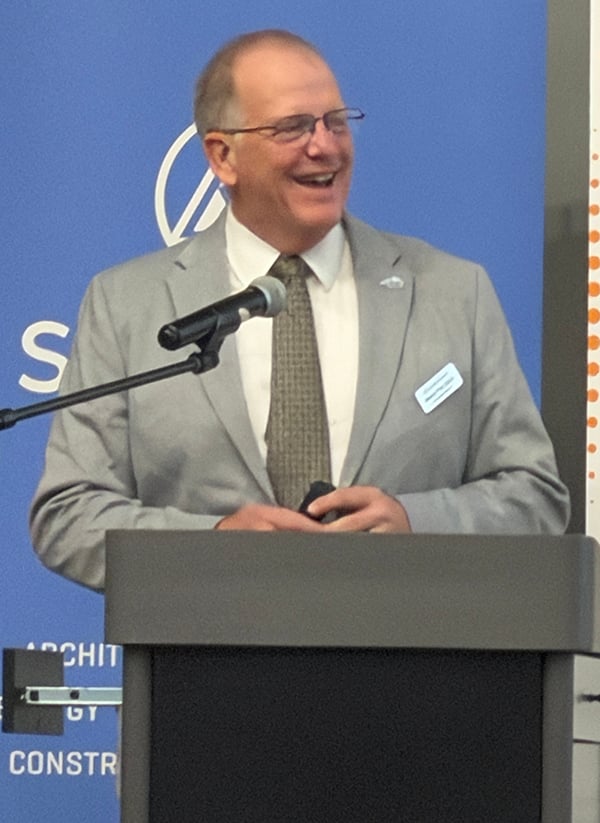
This is important because even now thousands of Kentucky students are not continuing their education after high school. Out of the graduating class of 2025, 83 percent of Kentucky students were post secondary ready, which is a high, but it is not high enough. He challenged the group, asking how they can address those students and interest them in going on with their education. The answer, Poe thought, would be to try to connect students to purpose, to pathways, and to support after high school. He said the numbers in the Northern Kentucky area are higher than the average state numbers, but they have to work to make them higher.
He also told the educators that AI is very important.
“Seventy five percent of the jobs that are current today will be augmented by AI,” he said. “So it is very important that we are teaching those competitive skills.”
Dr. Jason Steffen, Superintendent of Ludlow Schools, listed all the programs and partners that are already in place in this area, and he stressed that educators had to make use of these programs to help the students get ahead and achieve success.
Dr. Fernando Figueroa, president of Gateway Community and Technical College guided roundtable discussions to build teamwork and encourage commitments to keep the area on an upward transition.