










There are plenty of things a University of Kentucky student might reasonably worry about while walking across campus: getting swept up by the Patterson Office Tower wind tunnel or being hit by an electric scooter, for example.
Now, apparently, you can add being recorded by an automated license plate reader (LPR) to the list.
But don’t worry. UK has made it easy to know where you are being watched.
Well, sort of.
After initially refusing to provide locations of its Flock Safety cameras, UK eventually released a map to the Kentucky Center for Investigative Reporting after the news organization appealed the university’s denial under Kentucky’s open-records law, according to Louisville Public Media reporting.
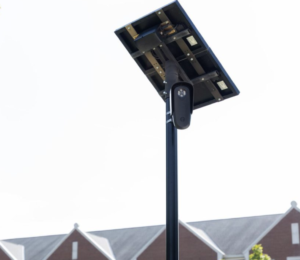
UK associate director of strategic and crisis communications Dani Jaffe said the university ultimately decided releasing the locations would “support our goal of ensuring transparency.”
So, in the spirit of transparency, here is your “UK Flock Survival Guide.” Please note it is based on the available maps sent to the Kentucky Kernel by UK.
Find a place where the cameras can’t see you
As the maps helpfully demonstrate, there are plenty of places on campus where a Flock camera is not standing watch.
The maps show clusters of cameras around the edges and through major roadways that surround campus, with additional cameras extending toward the heart of UK, such as the one by The 90.
The map depicting the academic core of campus provides some comfort— cameras tend to appear around major roadways to campus, while most interior pedestrian areas have no marked Flock cameras.
In other words, if you’re traveling campus on foot, you may have discovered that the greatest loophole in the system is walking.
According to the Flock Safety website, its cameras aren’t designed to recognize faces. Instead, its ALPR system captures license plates, vehicle characteristics, dates, times and location.
The Flock website also says its network connects agencies in 49 states and allows searches based on vehicle characteristics and license plates.
So if you’re wondering where on campus to avoid Flock, the answer is anywhere your car isn’t.
If you drive, good luck
The maps are less comforting for those who arrive on campus by vehicle. On map one, green camera icons appear around major roads near UK, including Cooper Drive, Alumni Drive and South Limestone. Map two shows another cluster of cameras around the roads surrounding the academic core, including Avenue of Champions, Administration Drive and South Limestone near Cornerstone Garage.
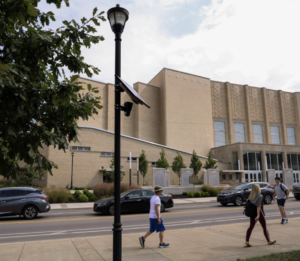
The maps also depict two red camera icons, which Jaffe described as Flock cameras in need of maintenance. It is unknown if these cameras are still operating.
In essence:
Green camera icon: Flock is watching.
Red camera icon: Flock might be watching.
No camera icon: You’re probably in the clear.
Remember to check Lexington’s map
While the maps so far have just depicted UK’s campus and the surrounding areas, the city of Lexington also maintains an official map of its LPRs, including Flock cameras.
According to their website, the city said it has a total of 125 LPRs throughout Fayette County; however, that number was last updated in Sept. 2024, with the map depicting Flock camera locations last updated in Dec. 2025.
At the time of publication, Lexington is directing the public to a map whose location data is almost a year old while Flock cameras continue to be installed, removed, deactivated and debated across the state.
Fortunately, if you’re looking for the most current information, there are always crowdsourced surveillance maps such as DeFlock and investigative groups such as KyCIR.
Meanwhile, Kentucky is having a Flock migration
The timing makes UK’s continued Flock use even more interesting.
Northern Kentucky cities such as Newport ended their Flock program in July, citing public feedback as a reason. Fort Mitchell followed in August. Independence also announced it would remove its cameras, with Florence following in September.
Lexington and UK, meanwhile, are still Flocking.
So while some Kentucky cities are rethinking Flock, UK appears to be saying: “What if we added another camera?”
Flock isn’t the only one watching
These privacy concerns are not just theoretical.
According to CNN reporting, a Shively, Kentucky, police officer was arrested after authorities alleged he used Flock cameras to track his ex-girlfriend more than 2,000 times.
The recent case has intensified scrutiny over who can access Flock data and how that access is controlled, raising the question: Who is watching the watchers?
According to the Flock website, every search is logged, and local agencies control who has access to information, while the city of Lexington states on its website that access is restricted to law enforcement and subject to audits.
Those safeguards may be meaningful, but safeguards are only as reassuring as the transparency surrounding them.
And that’s the part that makes UK’s initial refusal to release its camera locations and overall lack of communication to students so frustrating.
If the technology is safe, effective and responsibly managed, why hasn’t UK been more transparent with students?
Welcome to UK
There is a legitimate argument that Flock cameras can help police recover stolen cars, locate missing people and assist in investigative leads, with Lexington crediting the system with helping recover hundreds of stolen vehicles since 2022.
But public safety and privacy do not have to be mutually exclusive.
The Fourth Amendment does not become irrelevant simply because a camera is pointed at a license plate and not a face.
All students deserve to know what technology is operating around them, who can access the information, how long it is retained and the legislation surrounding it.
Until then, if you get the feeling you’re being watched while driving around, chances are, you probably are.
Abigail Wright is a senior at the University of Kentucky majoring in journalism and communication and assistant news editor for the Kentucky Kernel student newspaper where this commentary first appeared. She is also a freelance reporter for the NKyTribune.