














By Paul Tenkotte PhD
Special to NKyTribune
In 1963, Northern Kentucky’s public and Catholic schools were experiencing the full force of the Baby Boom. The generation born during the post-World War II years, from 1946 to 1964, filled classrooms across the region, with the oldest Boomers already in high school.
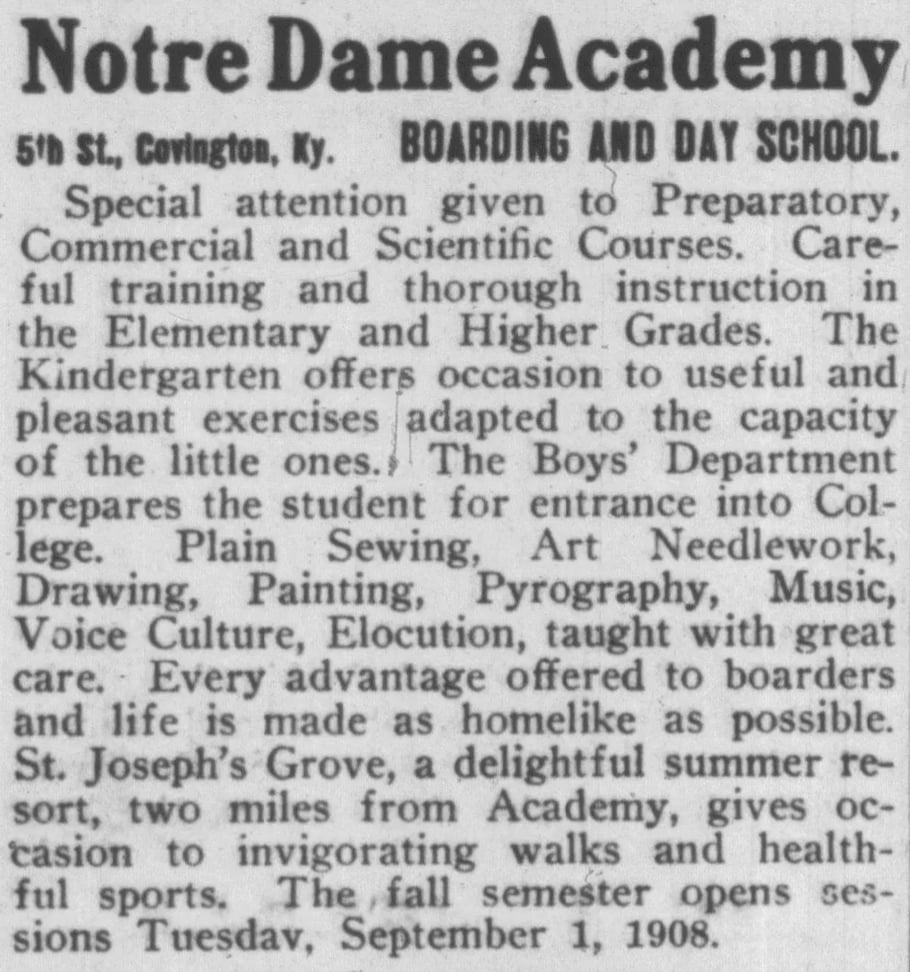
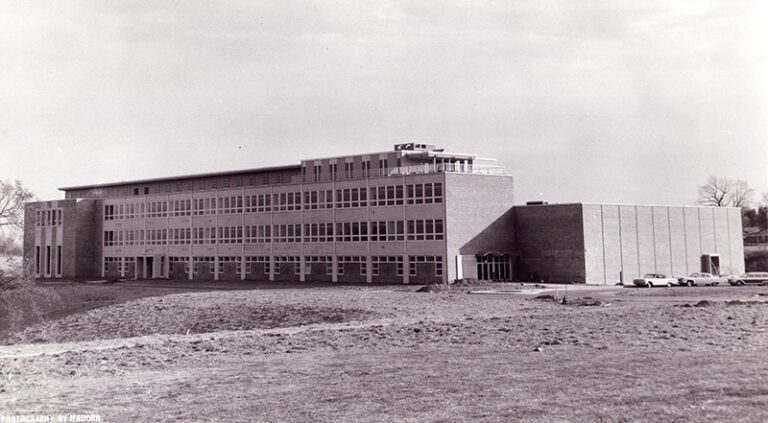
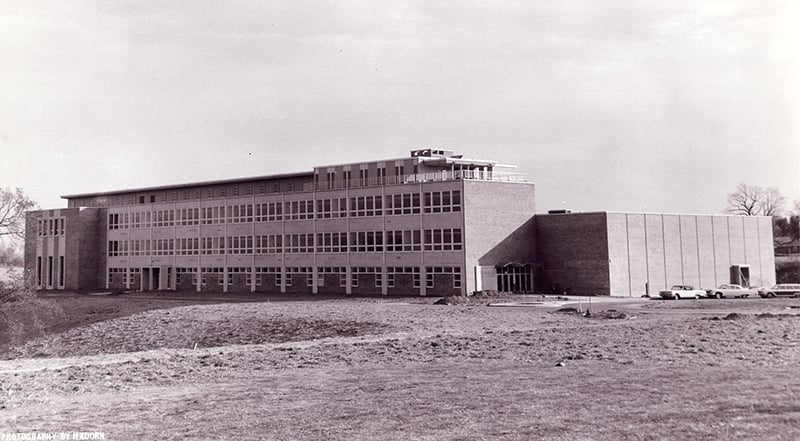
At Notre Dame Academy, an all-girls high school located at 37-39 West Fifth Street in Covington, Kentucky, faculty, staff, and students were preparing for a momentous transition. Record enrollment had reached 645 students, straining the capacity of the academy’s aging brick buildings. On Friday, October 11, 1963, classes were held for the final time in the sprawling yet beloved campus. Following a two-week break, students and teachers would begin classes at a new $1.5 million facility in suburban Park Hills, Kentucky. Adjusted for modern construction standards, educational technology, and contemporary secondary school building codes, a comparable campus in 2026 could cost more than $40 million to build.
Notre Dame Academy traces its roots to a remarkable journey of faith and perseverance. In 1874, nine Sisters of Notre Dame from Coesfeld, Germany, then part of Prussia, fled the anti-Catholic Kulturkampf, or “cultural struggle,” led by Chancellor Otto von Bismarck. Responding to an invitation from Bishop Richard Gilmour of Cleveland, Ohio, they set out to establish a new religious community in his diocese.
After a sixteen-day voyage across the Atlantic aboard the sailing-ship, the “SS Rhein,” the sisters arrived in New York Harbor at sunset on July 3, 1874. The following day, they stepped ashore amid the excitement of Independence Day celebrations, bewildered by the fireworks and festivities surrounding them. The Sisters of the Poor of St. Francis in Hoboken, New Jersey, warmly welcomed the travelers, providing hospitality and lodging for the night. On July 5, the nine sisters continued their journey, boarding a train bound for Cleveland, where they would begin a new chapter in the history of their religious congregation.
Shortly after the sisters arrived in Cleveland in 1874, Bishop Augustus Maria Toebbe (Többe) of Covington, whose sister was a member of the Sisters of Notre Dame, visited the newly established community and invited the congregation to expand its mission to Northern Kentucky. Responding to his request, two sisters traveled to Covington in August 1874 and assumed responsibility for the elementary school at Mother of God Church on West Sixth Street.
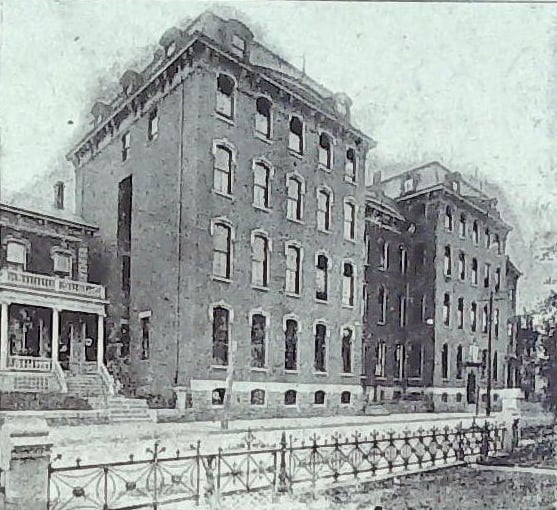
Additional sisters soon joined them, including Bishop Többe’s sister, Sr. Mary Modesta Többe. As the mission grew, the congregation began construction of a four-story convent and school on West Fifth Street in 1875. The building was dedicated on July 26, 1876, providing a permanent home for the sisters’ educational and religious work. Continued growth led to major additions in 1895 and 1897—including a fifth floor—reflecting the expanding influence of the Sisters of Notre Dame in the Covington Diocese.
Notre Dame Academy opened in 1875 with an enrollment of just seven students. The following year, upon completion of their new building, the sisters expanded the institution by establishing a boarding school. Over time, the academy grew to include day and boarding students in kindergarten and elementary grades for both boys and girls, as well as a girls’ high school offering both a two-year commercial program and a four-year academic curriculum. In 1925, the Kentucky Association of Colleges of the State Department of Education awarded the high school an AA rating, a distinction described as “a very rare honor.” At the time, only seven institutions in Kentucky held this designation, and Notre Dame was one of only two Roman Catholic schools in the Commonwealth to receive it (“Academy Given High Rating,” “Kentucky Post,” August 24, 1925, p. 1).
As enrollment continued to grow, overcrowding at the Sisters of Notre Dame’s Fifth Street campus became increasingly difficult to manage. A June 1927 “Kentucky Post” article, quoting directly from a statement prepared by the sisters, described the situation in stark terms. The Fifth Street campus “had to serve as a convent for the sisters, a grade school, a commercial school, a high school, a music school, a novitiate and training school for teaching sisters and a vacation home for the 160 sisters who, during the school year, are employed in 17 parochial schools and one high school” (“Flag Raising on Picnic Program,” “Kentucky Post,” June 28, 1927, p. 2).
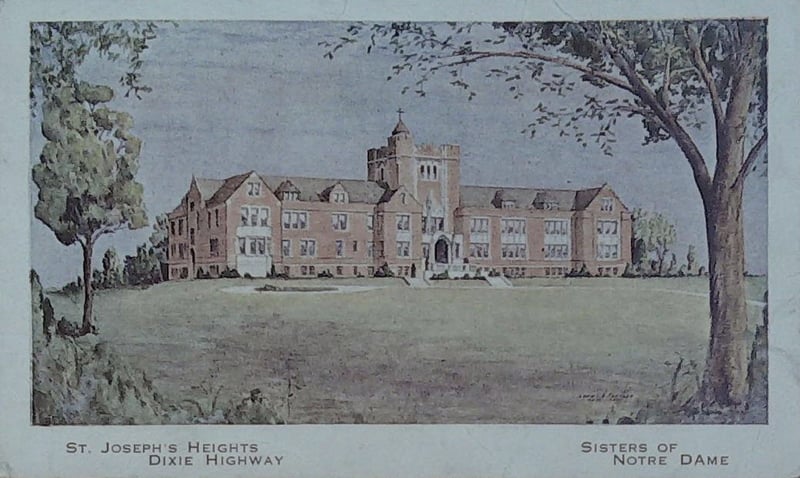
The overcrowding was eased temporarily in 1927 with the dedication of a new motherhouse, St. Joseph Heights, on Dixie Highway in suburban Park Hills. The new convent provided accommodations for “aged and infirm sisters” and served as the headquarters of the Covington Province’s novitiate. It also functioned as a summer residence for the order’s teaching sisters (“Kentucky Post,” June 28, 1927).
Nevertheless, continued enrollment growth soon placed the Fifth Street campus under renewed pressure. By 1929, the sisters responded by enlarging seven high school classrooms. The improvements also included the installation of a new main staircase of wrought iron and terrazzo steps to replace the aging wooden stairway, as well as upgrades to the school’s physics and chemistry laboratories (“New Equipment at Notre Dame: Old Building Is Remodeled; Rooms Enlarged,” “Kentucky Post,” Sept. 1, 1929, p. 7).
Despite discontinuing its elementary school and two-year commercial program in 1938, Notre Dame’s Fifth Street campus continued to face space constraints. By the 1950s, the Sisters of Notre Dame concluded that their landlocked urban campus was obsolete and began planning for a new school adjacent to St. Joseph Heights in Park Hills. In March 1955, Sister Mary Agnetis wrote to hotel magnate Conrad Hilton seeking financial support for the project. After visiting St. Joseph Heights the following year, Hilton responded with a remarkable pledge of $500,000 toward construction. Today, Hilton Drive, which leads to the academy, commemorates his generosity and enduring connection to the school.
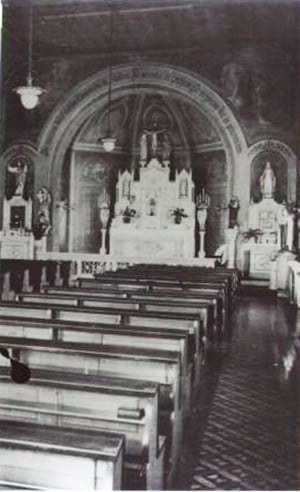
Community fundraising efforts continued at a steady pace, bolstered by proceeds from the sisters’ annual Fourth of July picnic at their motherhouse. Construction of the new Park Hills campus began in 1961, and a cornerstone-laying ceremony followed in September 1962. As work progressed on the new facility, the sisters placed their Fifth Street campus on the market. After acquiring the property, Howard Adams eventually demolished the academy’s main building to create a car sales lot. The chapel was the lone survivor. Rather than tearing it down, Adams remodeled it into his dealership’s sales offices.
The new Notre Dame Academy in Park Hills opened in October 1963 with space for 600 students. Demand proved so great, however, that the growing baby boom generation had effectively outgrown the facility before construction was even finished.
Nevertheless, the sparkling new campus offered a welcome relief from the severe overcrowding of the school’s charming but constrained urban facility. More importantly, the Sisters of Notre Dame continued to provide the exceptional education for which they had long been admired and respected.
Paul A. Tenkotte, PhD is editor of the “Our Rich History” weekly series and Professor of History at Northern Kentucky University (NKU). To browse more than ten years of past columns, click here. Tenkotte also serves as Director of the ORVILLE Project (Ohio River Valley Innovation Library and Learning Engagement). For more information see orvillelearning.org. He can be contacted at tenkottep@nku.edu.